Bedding & Home
Flame retardants in furniture: the label answers it
This is the rare question with a printed yes-or-no answer attached to the product. Most people have never looked at it.
Last reviewed October 13, 2026 — Selena H.
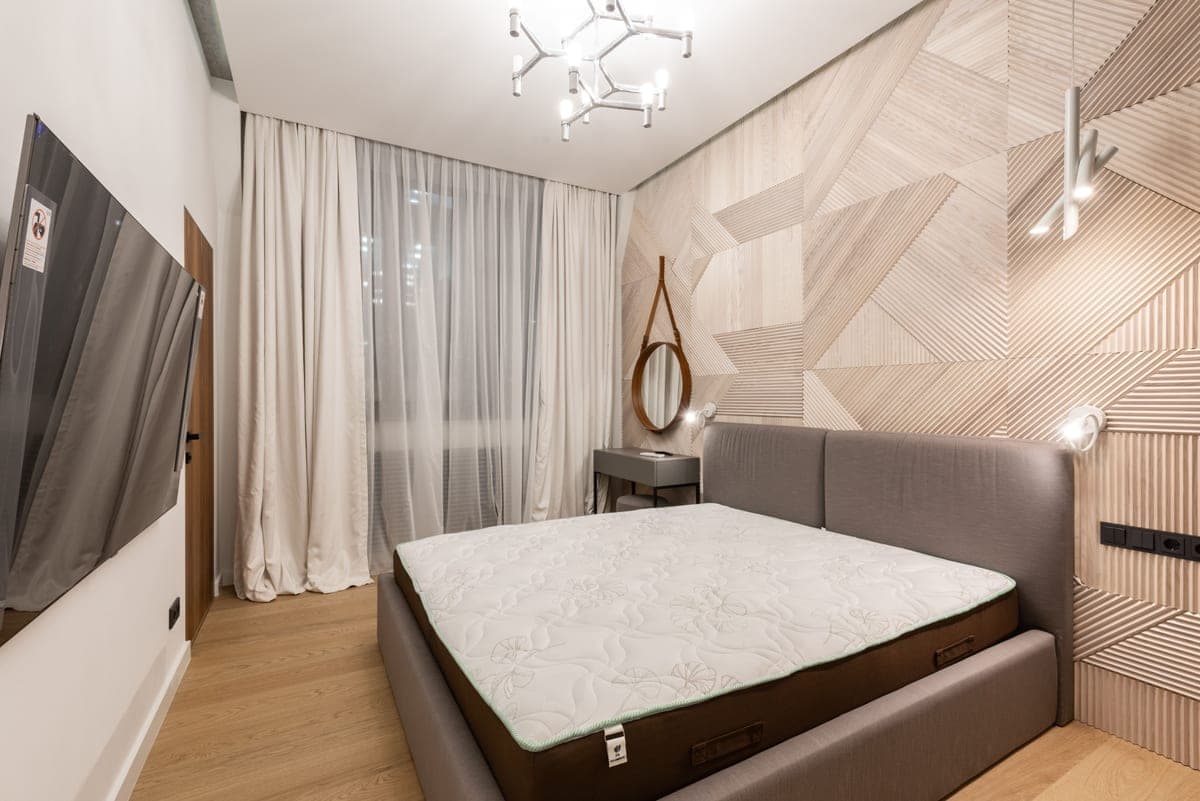
Added flame retardant chemicals in upholstered furniture and mattresses are one of the few lower-tox questions with a definitive, printed answer on the product. Under California's SB 1019, manufacturers of covered products must state on the label whether the item contains added flame retardant chemicals — a checkbox next to one of two statements.
Covered products are flexible polyurethane foam and upholstered or reupholstered furniture sold in California that must meet TB117 test requirements. Because California is the market nobody skips, those tags are on furniture nationwide.
Quick picks
| # | Product | Best for | Material | Price |
|---|---|---|---|---|
| 1 | Avocado Green MattressWool flame barrier with no added flame retardant chemicals per the brand, plus GOTS, GOLS, MADE SAFE and GREENGUARD Gold. | Wool barrier, fully certified | GOLS-certified organic Dunlop latex | |
| 2 | Naturepedic Organic MattressNo added flame retardants per the brand, with MADE SAFE and GREENGUARD Gold. | Certified without latex | Organic cotton | |
| 3 |  Naturepedic Organic Crib MattressNo added flame retardants, polyethylene waterproofing rather than vinyl, MADE SAFE and GREENGUARD Gold. | Nursery | Organic cotton surface with a food-grade polyethylene waterproof layer |
Tap a row to jump to that write-up. Prices are not shown on this site because they change — the button sends you to the live Amazon listing.
What the law actually requires
SB 1019 requires the label to indicate whether a covered product contains added flame retardant chemicals, by checking the box beside either "contains added flame retardant chemicals" or "contains NO added flame retardant chemicals". Manufacturers must retain documentation supporting whichever box they check — a written affidavit from the supplier of each component attesting that flame retardants were or were not added is sufficient documentation.
That is an unusually clean piece of consumer information: a binary claim, printed on the product, with a paper trail behind it.
What TB117-2013 changed
The label law followed Technical Bulletin 117-2013, California's revised flammability standard, which replaced an open-flame test for upholstered furniture with a smolder test. The standard does not prohibit the use of added chemicals — but many companies found they could meet the smolder test without them.
That is the crucial mechanism. Before 2013, meeting the standard essentially required treating foam. After 2013, it did not, which is why "contains NO added flame retardant chemicals" became a box manufacturers could honestly check. The change is why this problem is substantially solvable by shopping rather than by a hazmat response.
How to read the tag
- Find the law tag. On a sofa it is usually under a cushion or beneath the frame; on a mattress it is sewn to a side panel.
- Look for the two statements with checkboxes. One will be marked.
- "Contains NO added flame retardant chemicals" is the one you want.
- If there is no tag, the item may predate the requirement or may not be a covered product. Ask the retailer.
- Do not accept a website claim over the tag. The tag is the regulated statement.
What to do about furniture you already own
Pre-2013 foam furniture is the category most likely to contain added flame retardants, and the honest answer is that replacing a functional sofa over it is a large expense for a modest return. More useful, and much cheaper: keep foam enclosed — a torn cushion cover releasing foam crumb is a worse situation than intact upholstery — vacuum regularly, since household dust is a meaningful exposure route, and wash hands before eating, which is the standard advice for dust-borne exposures generally.
When a piece does reach the end of its life, that is the moment to apply this page.
Mattresses, where it is easiest
Mattresses are the category where the no-added-flame-retardant option is most available and most clearly certified. Wool is the common natural barrier: it meets flammability requirements without added chemicals, and the better brands state exactly that alongside their other certifications.
Several products hold GOTS finished-product certification, MADE SAFE and GREENGUARD Gold simultaneously, which makes this the one furniture category where you can verify rather than trust.
What to buy
Mattresses using wool as the flame barrier, with certification behind the claim.
The picks in full
1. Best for Wool barrier, fully certified
Avocado Green Mattress
Wool flame barrier with no added flame retardant chemicals per the brand, plus GOTS, GOLS, MADE SAFE and GREENGUARD Gold.
- Made of
- GOLS-certified organic Dunlop latex, organic wool, organic cotton, steel coils
- Certified to
- Certified: GOTS finished product, GOLS latex, MADE SAFE, GREENGUARD GoldThird-party certified to GOTS finished product, GOLS latex, MADE SAFE, GREENGUARD Gold.
- Certifications
- GOTS, GOLS, MADE SAFE, GREENGUARD Gold, OEKO-TEX 100 Class I
- Flame barrier
- Wool, no added flame retardant chemicals per the brand
- Weight
- Heavy. Two people to move it
The clearest example of TB117-2013 being met without added chemicals, in a product whose other claims are independently certified — which is what makes the flame-retardant statement credible rather than merely asserted.
What you give up
Expensive and very heavy.
Who it's for
Anyone acting on this page with a mattress purchase.
Who should skip it
Latex allergies and tight budgets.
2. Best for Certified without latex
Naturepedic Organic Mattress
No added flame retardants per the brand, with MADE SAFE and GREENGUARD Gold.
- Made of
- Organic cotton, organic wool or PLA batting, encased coils
- Certified to
- Certified: MADE SAFE, GREENGUARD GoldThird-party certified to MADE SAFE, GREENGUARD Gold.
- Certifications
- MADE SAFE and GREENGUARD Gold across the bedding line
- Latex
- Optional, not standard
- Note
- Also makes the matching crib mattresses
The same flame-barrier position for a household that cannot have latex, with certification running across the whole bedding line rather than one product.
What you give up
Expensive, and a firmer more traditional feel without latex.
Who it's for
Latex-sensitive buyers.
Who should skip it
Anyone wanting a contouring feel.
3. Best for Nursery
Naturepedic Organic Crib Mattress
No added flame retardants, polyethylene waterproofing rather than vinyl, MADE SAFE and GREENGUARD Gold.
- Made of
- Organic cotton surface with a food-grade polyethylene waterproof layer
- Certified to
- Certified: MADE SAFE, GREENGUARD GoldThird-party certified to MADE SAFE, GREENGUARD Gold.
- Waterproofing
- Polyethylene, not vinyl
- Flame retardants
- None added per the brand
- Firmness
- Firm, as infant guidance requires
The highest-contact item in a nursery, with the flame-retardant question answered and the waterproof layer named. Firm and flat as infant-sleep guidance requires.
What you give up
Expensive for a few years of use, though it resells well.
Who it's for
Cribs.
Who should skip it
Toddler beds, which need the next size.
How we chose, and what we did not do
Every product on this page was checked against its published material composition and its third-party certifications, with each claim labeled as certified, manufacturer-stated or independently tested by a named party. We do not run a lab and we do not claim to have used these products — the full method is here.
Questions people actually ask
How do I know if my furniture has flame retardants?
Read the law tag. Under California's SB 1019, covered products must state whether they contain added flame retardant chemicals by checking one of two boxes. On a sofa the tag is usually under a cushion; on a mattress it is on a side panel.
Did TB117-2013 ban flame retardants?
No. It replaced an open-flame test with a smolder test, which does not prohibit added chemicals — but many manufacturers found they could meet the new standard without them, which is why the no-added option became widely available.
Should I replace pre-2013 furniture?
Generally not on this basis alone. Keep foam enclosed and intact, vacuum regularly since dust is a meaningful exposure route, and apply this page when the piece reaches the end of its life.
What do manufacturers use instead?
Most commonly wool, which meets flammability requirements as a natural barrier. The better mattress brands state this explicitly and back it with finished-product certifications.
Sources
- California Bureau of Household Goods and Services — SB 1019 flame-retardant labeling advisory — The TB117-2013 label that states whether flame retardants were added
- Avocado Green Mattress — organic mattress certifications
- MADE SAFE — Naturepedic certified bedding
- California OEHHA — Proposition 65 guidance for businesses — Safe-harbour levels, and when a warning is and is not required
Read next
Bedding & Home
Best non-toxic mattresses
Mattresses with stacked finished-product certifications, and how to read the TB117-2013 flame-retardant tag.
Kitchen & Cookware
What a Proposition 65 warning actually means
Prop 65 decoded: safe-harbour levels, the one-in-100,000 cancer threshold, and how to read a warning label.
Bedding & Home
Non-toxic bedding: what actually varies
The five bedding variables, the certifications that cover them, and a ninety-second label check.
Baby & Kids
Best non-toxic kids and crib mattresses
Certified crib and children's mattresses, with the firmness rule and the flame-retardant tag explained.
Written by Selena H., owner of Glass & Cotton.