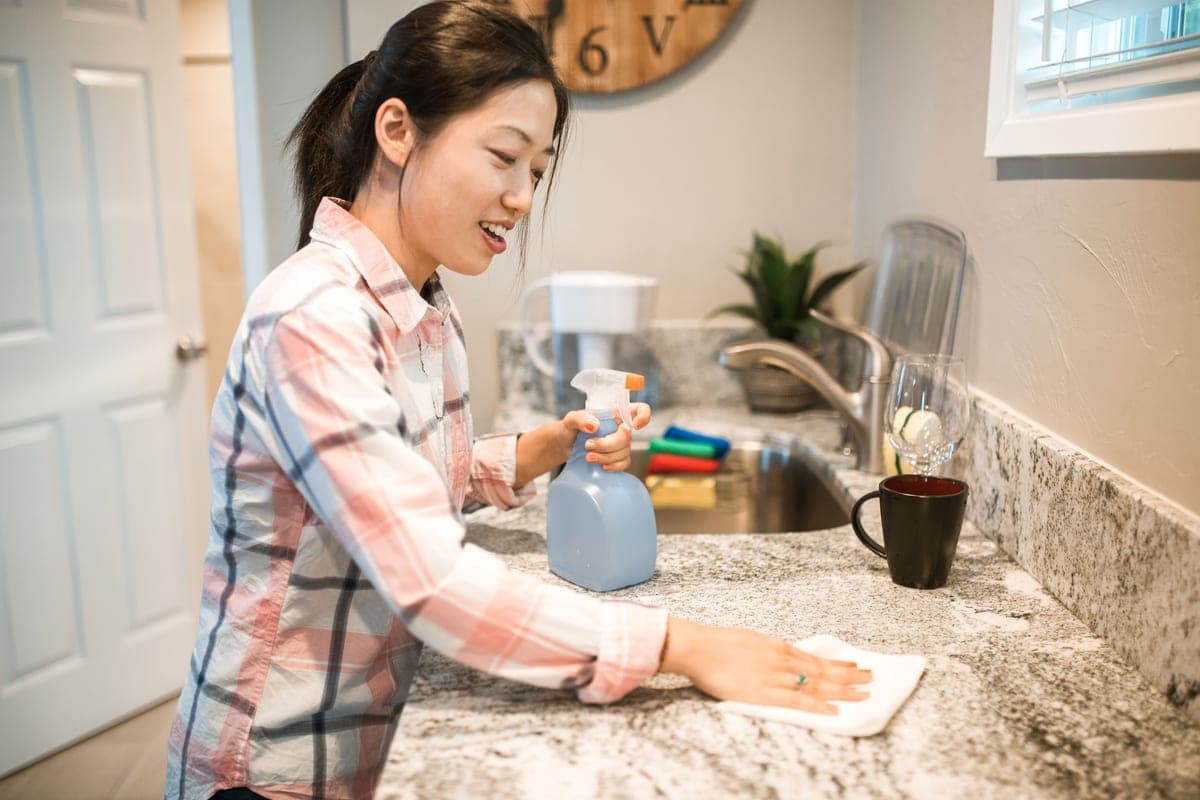
Best all-purpose cleaner
Best non-toxic all-purpose cleaners
All-purpose cleaners with disclosed formulas and real certifications, plus what the marks actually cover.
Cleaning & Laundry
Everything else in the house sits still. A cleaner is aerosolized into the air of a small room on purpose.
Start here
One all-purpose cleaner replaces four single-purpose bottles under most sinks, and it is the one you spray in the air most often. Fix that before anything else.
This category is different from the rest of the house in one important way: you inhale it. A spray cleaner is deliberately turned into an airborne mist in a bathroom with the door shut, and the people who get hurt by cleaning chemistry are overwhelmingly the people exposed to it repeatedly — cleaners, nurses, parents of small children. Occupational asthma from disinfectants is a documented, measured effect, not a wellness theory.
It is also the category with the worst signal-to-noise ratio. "Plant-based", "natural" and "non-toxic" are unregulated on a cleaning label. Meanwhile the ingredient disclosure rules for cleaning products are weaker than for food, so the thing you most want to know is often the thing you cannot read. Two marks genuinely help: EPA Safer Choice, which reviews every ingredient regardless of its percentage and also requires the product to clean as well as a conventional one; and MADE SAFE, which screens the full formula against a list of substances known or suspected to harm health.
The other half of the job is knowing when you need a disinfectant at all. Most household cleaning is soil removal, which soap and water do. Disinfection is a separate, narrower job with a dwell time on the label, and reaching for a quat-based disinfectant wipe to clean a crumb off a counter is the most common unnecessary exposure in the house.
A cleaner lifts soil off a surface. A disinfectant kills a specified list of organisms, at a specified concentration, after sitting wet on the surface for a specified time — typically several minutes, which almost nobody actually waits. If you wipe a disinfectant off after thirty seconds, you have used a pesticide as a cleaner and got the exposure without the claim.
Disinfectants in the US are registered pesticides under FIFRA, which is why they carry an EPA registration number. Nearly half the products on EPA's List N use a quaternary ammonium compound as the active. Quats appear on the Association of Occupational and Environmental Clinics list of asthmagens, and the occupational evidence links exposure to rhinitis and asthma. That is not an argument for never disinfecting; it is an argument for disinfecting the bathroom after someone has been ill, and using soap the rest of the time.
Acetic acid dissolves mineral scale and cuts grease. Sodium bicarbonate is a mild abrasive and a deodorizer. Between them they handle a real share of household cleaning for almost no money, and they are the honest answer to half the "best non-toxic cleaner" searches.
What they do not do: disinfect. Vinegar is not an EPA-registered disinfectant and should not be used as one on a surface that matters. They also should not be mixed — combine an acid and a base and you get carbon dioxide, water and a sodium acetate solution weaker than either input. And vinegar should stay off natural stone, unsealed grout and cast iron, where the acid does real damage. The vinegar comparison covers where each wins.
Laundry detergent is where ingredient lists get shortest and most legible, because a powder does not need the preservatives, viscosity modifiers and solubilizers a liquid does. Several of the cleanest formulas available are four or five ingredients long, fully declared, and cheaper per load than the mainstream liquid. The trade-off is cold-water performance and a scoop instead of a pod.
The two things worth avoiding in laundry are optical brighteners, which are dyes engineered to stay on the fabric and fluoresce, and heavy fragrance, which stays on fabric by design and is the one scent you cannot walk away from. The laundry detergent picks and powder versus liquid go through both.
Best all-purpose cleaner
All-purpose cleaners with disclosed formulas and real certifications, plus what the marks actually cover.
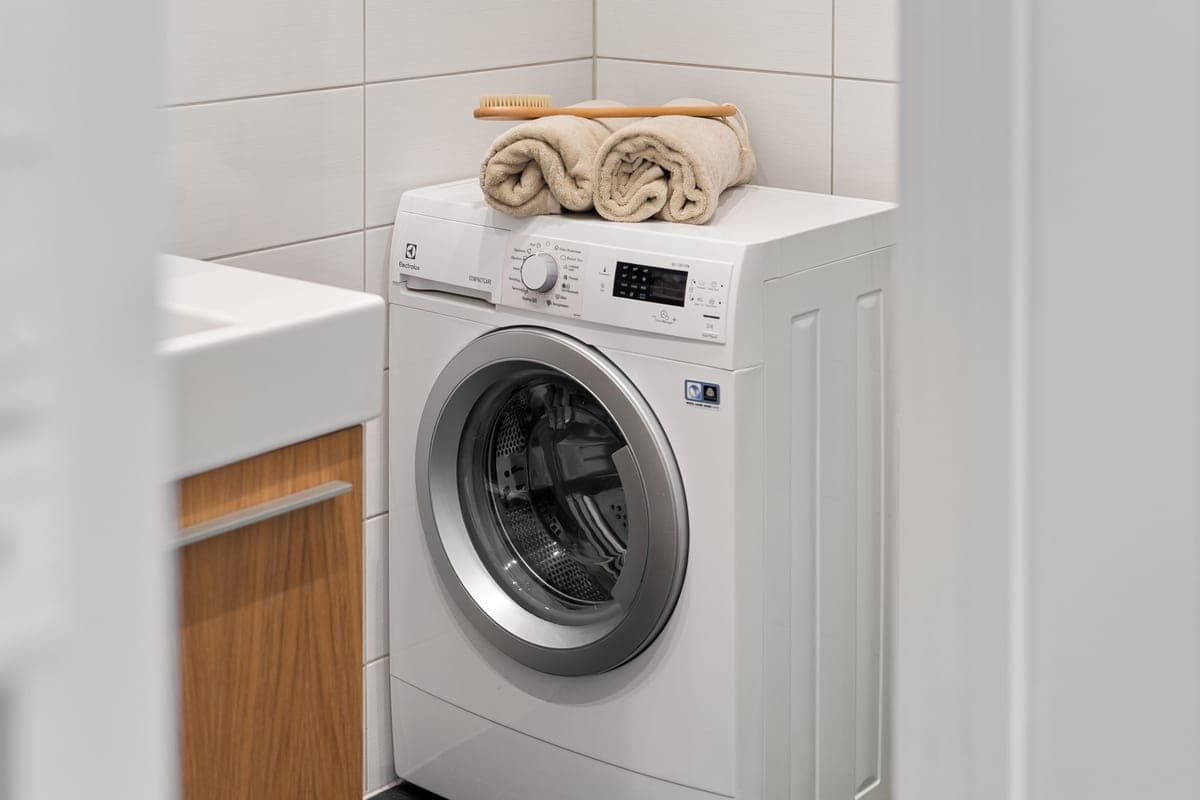
Best laundry detergent
Detergents with the shortest declared formulas, and why powder lists beat liquid lists.
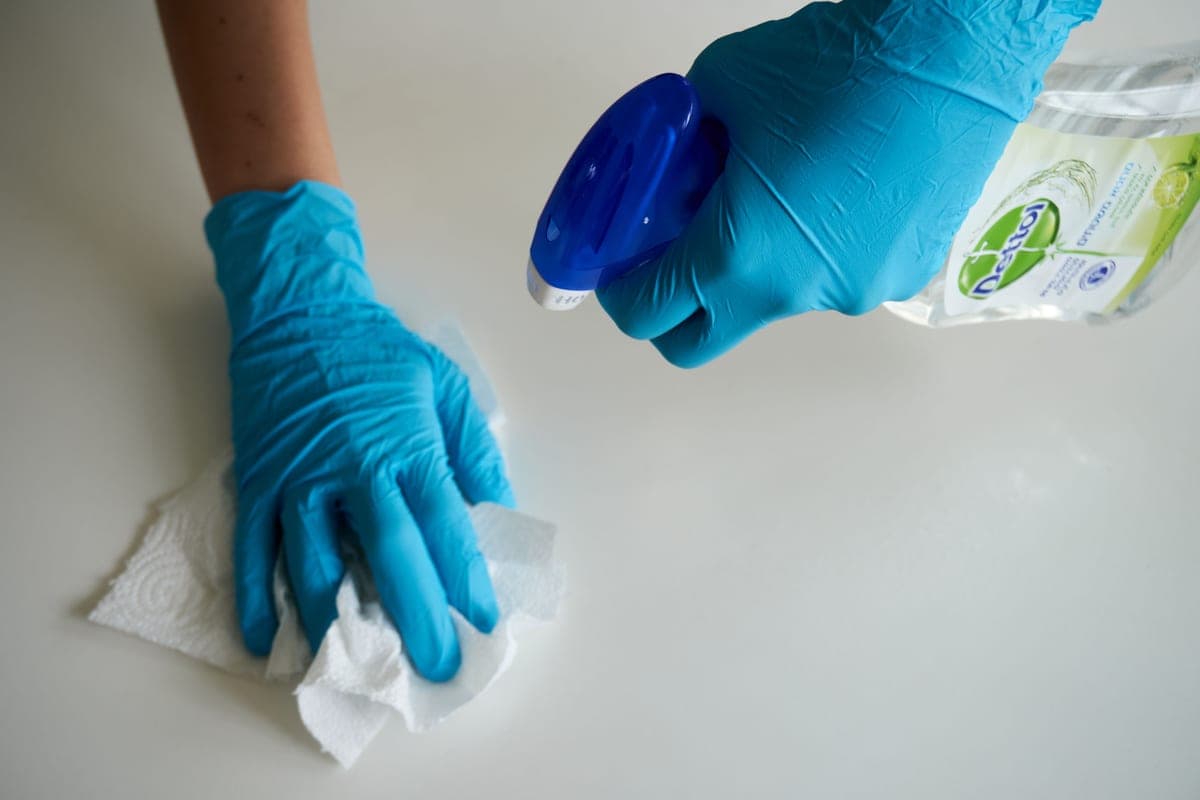
Best disinfectant
EPA-registered disinfectants that avoid quats, plus why dwell time is the whole product.

Best pet-safe cleaner
Cleaners chosen for animals that groom their paws, including why essential oils are the wrong answer for cats.
Cleaning & Laundry
MADE SAFE explained: full-formula hazard screening, the categories it spans, and what it deliberately ignores.
Cleaning & Laundry
What vinegar actually cleans, what it cannot disinfect, and where a formulated product earns its price.
Cleaning & Laundry
Why powder formulas are shorter, why liquids need more additives, and which to choose for how you wash.
Cleaning & Laundry
The trade-secret rule that lets fragrance be one word, where it appears, and the unscented workaround.
Cleaning & Laundry
Six label checks for cleaning products, including the only number on the bottle that is regulated.
Cleaning & Laundry
What the occupational evidence on quats shows, and the registered alternatives that avoid them.
Some do. A product only makes a disinfection claim if it is an EPA-registered pesticide, and registered options exist that use hydrogen peroxide or hypochlorous acid instead of quats. A plant-based cleaner with no registration number cleans but does not disinfect, and that is the correct product for most jobs.
No. Vinegar is an effective cleaner and descaler but is not EPA-registered as a disinfectant, so it should not be relied on where disinfection matters, such as after illness or raw-meat contact.
A mixture that can run to dozens of individual components. FDA's cosmetic rules let the entire blend be listed as one word because fragrance formulas are treated as trade secrets, and household products follow the same convention. Fragrance and phthalates explains what that means in practice.
Next swap
Beauty & Grooming