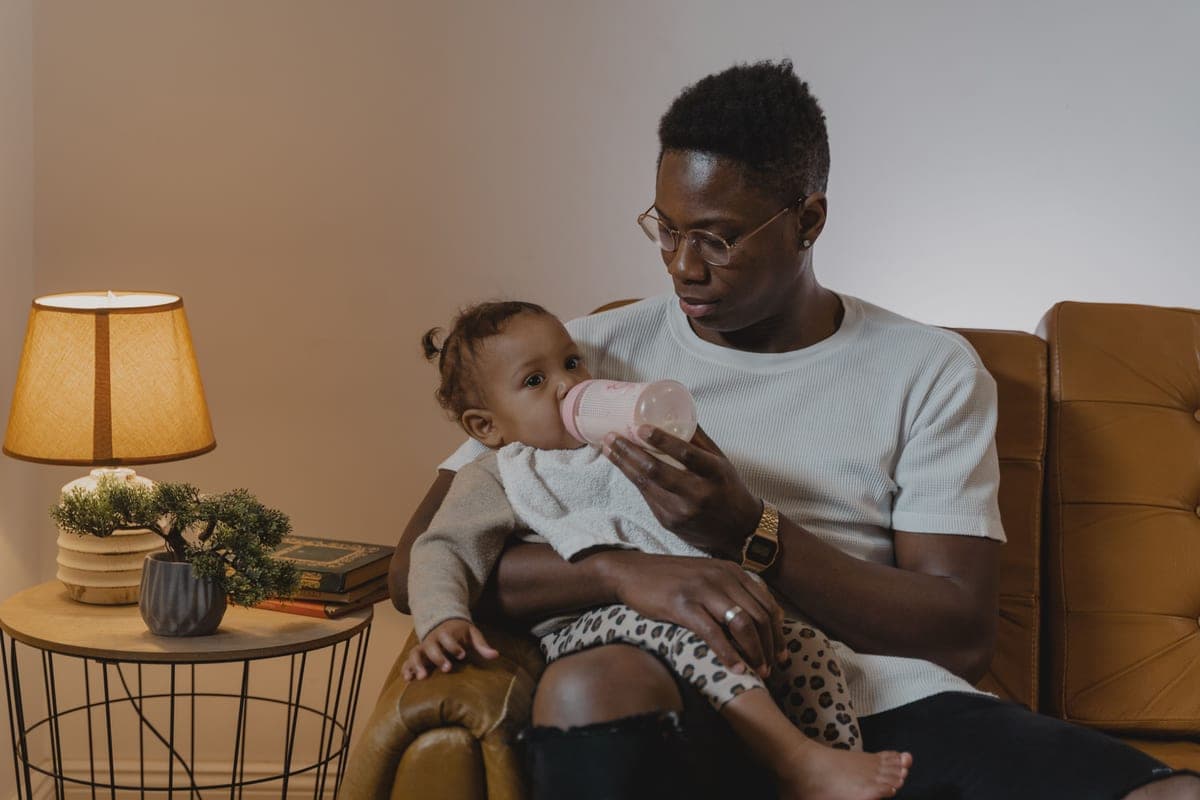
Best baby bottle
Best non-toxic baby bottles
Glass and stainless bottles that avoid the polypropylene microplastics route, with the study explained.
Baby & Kids
This is the one category where a cautious choice needs no further justification, and also the one with the most fear-selling. Both things are true.
Start here
Bottles and cups are heated, sterilized and in the mouth several times a day. Nothing else in a nursery gets that treatment, which is why it is the swap with the clearest evidence behind it.
Infants take in more per kilogram of body weight than adults do, their systems are still developing, and they have an entire life for a cumulative exposure to accumulate. That is why caution in this category is reasonable on its own terms, without needing a scary headline to justify it.
It is also why this category attracts the worst marketing in the lower-tox world. We are not going to do the thing where a product category is described as poisoning your family. What we will do is point at the one piece of evidence here that genuinely changed how we would set up a kitchen for a baby.
In 2020, researchers at Trinity College Dublin published a study in Nature Food measuring microplastic release from polypropylene infant feeding bottles prepared according to WHO formula guidance. Release rates ran from a few thousand to as high as 16.2 million particles per liter, and estimated infant exposure across 48 regions ran from 14,600 to 4.55 million particles per day. Sterilization and high-temperature water were what drove the numbers up. Nobody has established a health effect from that exposure — that work has not been done — but the measurement itself is solid, and the behavior that produced the highest numbers is exactly the behavior every bottle instruction sheet tells parents to follow.
For toys, almost all the useful information is in the material and the finish. Solid wood with a water-based or plant-oil finish has very little to go wrong. Painted or stained wood depends entirely on what the paint is, and the good brands publish it. Plastic toys vary from inert to unknowable depending on the polymer and the softener, and "BPA-free" has become a claim about one molecule in a family of related ones — see BPA, BPS and BPF.
The one genuinely useful rule is age labeling, and it is not a chemistry rule: small parts are a mechanical hazard with an actual body count, which is a far more likely way for a toy to hurt a child than its polymer. Follow the age marking before you follow any ingredient instinct.
We will not tell you that a product category is poisoning your child, because it is not a true sentence and because fear is the main currency this niche trades in. The honest version is duller: a handful of swaps measurably lower a measurable exposure, the evidence for a resulting health benefit is mostly absent rather than negative, and the main cost of over-worrying is money and sleep you do not have. Our full nursery checklist is ordered by what the evidence supports, not by what sells.
Best baby bottle
Glass and stainless bottles that avoid the polypropylene microplastics route, with the study explained.
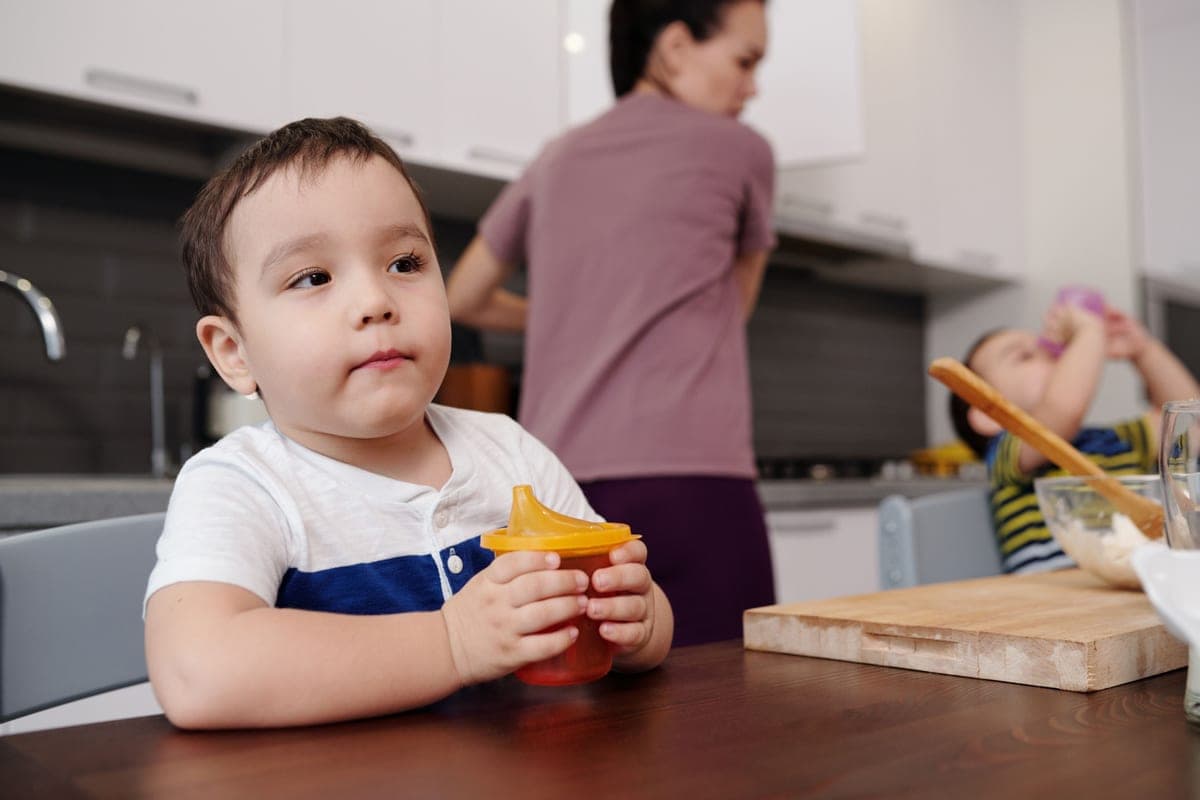
Best sippy cup
Glass and stainless toddler cups, plus the straw and valve hygiene problem nobody mentions.
Best toys
Solid-wood toys with published finishes, and why the age label outranks every material question.
Best kids mattress
Certified crib and children's mattresses, with the firmness rule and the flame-retardant tag explained.
Best baby gift
Baby gifts that work without knowing the nursery or the registry, and which ones to avoid entirely.
Baby & Kids
Glass against silicone bottles: inertness, breakage, weight and what the microplastics study actually found.
Baby & Kids
Wood against plastic on materials and finishes, and why the age label outranks both.
Baby & Kids
The Trinity College Dublin bottle study, what it measured, what it did not, and the four practical responses.
Baby & Kids
Why BPA-free is a claim about one molecule, what replaced it, and how to avoid the whole question.
Baby & Kids
Nursery priorities in evidence order, with the sleep-safety rules that outrank every material question.
The measured finding is that polypropylene bottles release microplastics, in quantities that rise sharply with sterilization and high-temperature water — up to 16.2 million particles per liter in the Trinity College Dublin study. No health effect has been established from that exposure. A glass or stainless bottle avoids the route; the bottles you have already used are not a reason to panic.
BPA-free means one specific molecule is absent. Common replacements such as BPS and BPF are structurally related, and the evidence base for them is thinner because they are newer, not because they are cleaner. BPA, BPS and BPF explains the substitution problem.
The crib mattress, on contact hours alone — a baby spends more time on it than on everything else in the room combined. Look for MADE SAFE or GREENGUARD Gold, a polyethylene rather than vinyl waterproof layer, and no added flame retardants on the TB117-2013 tag.
Next swap
Pets & Fitness