Kitchen & Cookware
The safest cookware materials, in one table
No material is safest at everything. This is which material is safest for which job, with the trade-off in the same row.
Last reviewed October 13, 2026 — Selena H.

The safest cookware materials are the ones with nothing applied to them: stainless steel, cast iron, carbon steel, fired enamel, glass, stoneware and solid ceramic. Each has a specific weakness — stainless leaches small amounts of nickel into long acidic cooks, bare iron adds iron and cannot hold tomato, enamel chips, glass and ceramic break — so the useful question is not which is safest overall, but which is safest for what you are cooking.
Everything below is one table and then the detail behind it. If you read nothing else on this site, read the table.
Quick picks
| # | Product | Best for | Material | Price |
|---|---|---|---|---|
| 1 | Made In Stainless Clad Set5-ply clad with a 304 stainless surface. Nothing applied, nothing consumable. | Stainless | 5-ply stainless clad: 304 stainless cooking surface | |
| 2 | 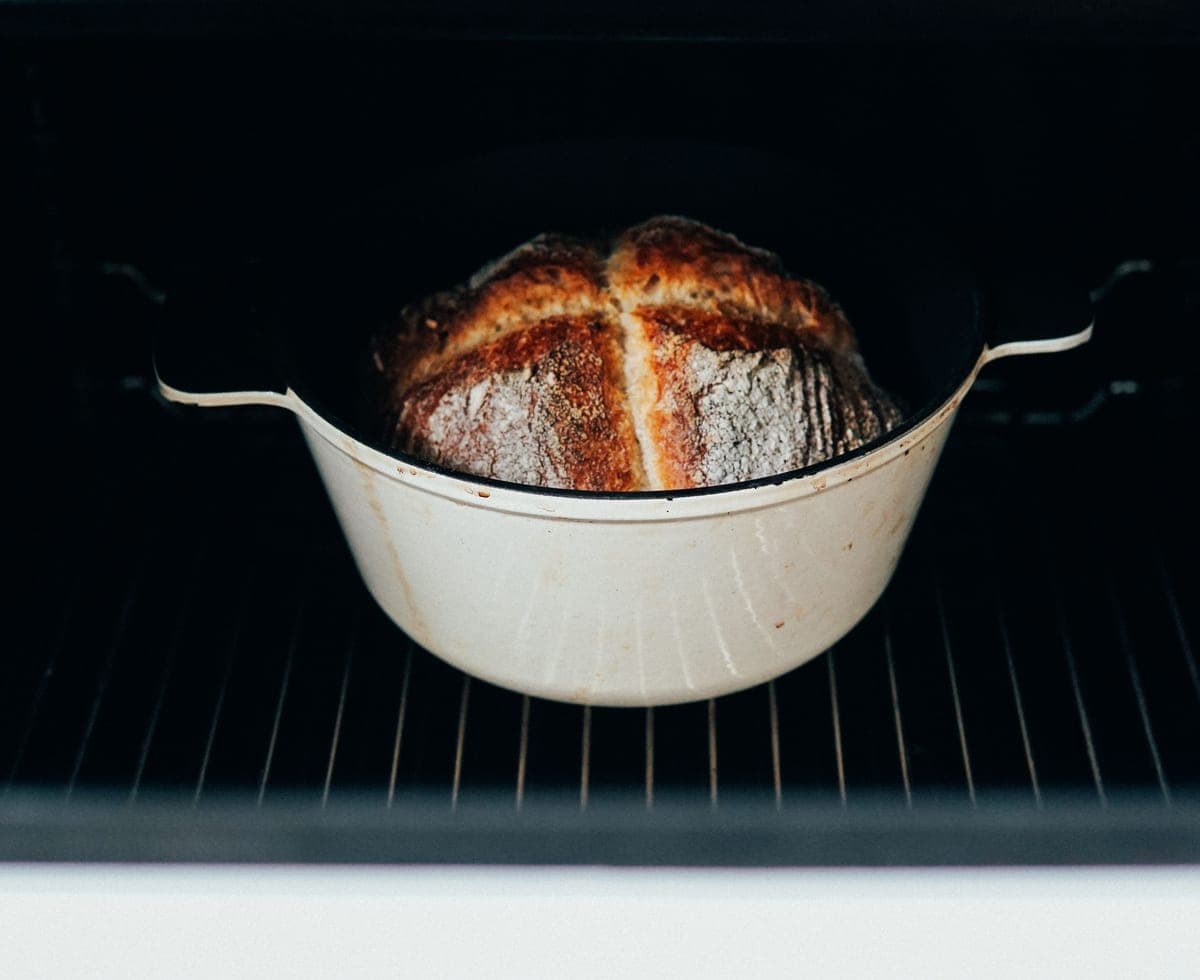 Le Creuset Enameled Dutch OvenFired glass over iron. The answer to the acidic-cooking column. | Enameled cast iron | Cast iron core with a fired vitreous enamel interior and exterior | |
| 3 |  Lodge Cast Iron Skillet (10.25 in)Iron and polymerized oil, for under thirty dollars. | Cast iron | Bare cast iron |
Tap a row to jump to that write-up. Prices are not shown on this site because they change — the button sends you to the live Amazon listing.
The table
| Material | PFAS / PTFE | Max safe heat | Leaching concern | Lifespan | Best for |
|---|---|---|---|---|---|
| Stainless steel (304 / 18-10) | None | No practical limit | Small, measured nickel and chromium into long acidic cooks | Decades | General cooking, browning, pan sauces |
| Cast iron (bare, seasoned) | None | No practical limit | Iron transfer — a benefit for most, a problem in iron overload | Effectively indefinite | Searing, baking, high heat |
| Carbon steel (seasoned) | None | No practical limit | Iron transfer, as cast iron | Decades | Responsive high-heat cooking |
| Enameled cast iron | None | High; avoid empty preheating | None while the enamel is intact. Retire if chipped | Decades | Acidic braises, stews, bread |
| Solid ceramic | None | High, oven and broiler | Glaze composition is the maker's disclosure | Indefinite unless broken | Low and slow, oven to table |
| Glass (tempered) | None | Oven temperatures; thermal shock is the limit | None. Inert | Decades | Baking, roasting, storage |
| Stoneware (glazed) | None | Around 500F per most makers | Glaze provenance on handmade, imported or vintage pieces | Decades | Baking, slow cooking |
| Ceramic coating (sol-gel) | No PTFE | Varies by product; 450-600F stated | Coating wear rather than leaching | 1-3 years of good release | Eggs and fish without a fluoropolymer |
| Hard-anodized aluminum (uncoated) | None | High | Reacts with strongly acidic food over long cooks | Decades | Bakeware, sheet pans |
| PTFE non-stick | PTFE is a PFAS | Degrades above roughly 500F | Coating breakdown when overheated; shedding when scratched | 2-5 years | Maximum release. Not with birds in the house |
Ranked, if you want a list
- Stainless steel — nothing to wear off, and the only weakness is a small measured transfer into long acidic cooks.
- Enameled cast iron — inert fired glass over iron. The best answer for acidic cooking, with chip risk as its cost.
- Cast iron and carbon steel — no synthetic coating, repairable surface, iron transfer as the only consideration.
- Glass and stoneware — fully inert for baking and storage; thermal shock and breakage are the limits.
- Solid ceramic — no metal and no coating, at the cost of speed and fragility.
- Sol-gel ceramic coating — no PTFE, genuine non-stick, and a one-to-three-year consumable.
- Uncoated anodized aluminum — excellent bakeware, reacts with acid over long bakes.
- PTFE non-stick — best release, degrades when overheated, and lethal to birds when it does.
What the evidence actually says about each concern
Nickel and chromium from stainless. Kamerud et al. (2013), in the Journal of Agricultural and Food Chemistry, cooked tomato sauce in several stainless grades and measured increases of up to 26-fold for nickel and 7-fold for chromium after six hours, with further rises over longer cooks. Leaching decreased across repeated cooking cycles and stabilized after about the sixth. At the tenth cycle, a 126 g serving carried on average 88 micrograms of nickel and 86 of chromium. Microgram quantities, from a six-hour acidic simmer, declining with pan age — real, small, and worth knowing if you are nickel-sensitive.
PTFE breakdown. Science News, reviewing four decades of work, reports that PTFE emits airborne degradation products at high temperatures, that the fumes can kill birds, and that people exposed can develop polymer-fume fever. The commonly cited threshold is around 500F, which an empty pan on high heat reaches in minutes.
Lead in glazes. FDA assesses lead release from ceramicware using ASTM C738, a 24-hour leach in 4% acetic acid, and tableware exceeding the limits cannot legally be sold in the US — 3 micrograms per milliliter for dinnerware. The unresolved risk is in handmade, imported and pre-1950s pieces that never went through that test.
Aluminum and acid. Bare aluminum reacts with strongly acidic foods, which discolors the pan and transfers some aluminum. It is a reason to use glass or stoneware for a long tomato bake rather than a reason to avoid aluminum sheet pans.
Picking by what you cook
| If you mostly cook | Use | Avoid |
|---|---|---|
| Eggs and fish | Sol-gel ceramic coating, or well-seasoned carbon steel | Bare stainless, if you will not learn the technique |
| Steak and roasts | Cast iron, carbon steel | Any coating — the heat ends it |
| Tomato, wine, vinegar | Enameled cast iron, glass, stoneware | Bare iron, bare aluminum |
| Rice and grains | Clad stainless, stainless multicooker pot | Coated pots, which are the category norm |
| Baking | Glass, stoneware, uncoated aluminum, cast iron | Coated bakeware, which parchment replaces |
| Everything, one pan | Carbon steel | Nothing in particular |
What to buy in each of the top three materials
One pick each for the three materials at the top of the list, so the table leads somewhere.
The picks in full
1. Best for Stainless
Made In Stainless Clad Set
5-ply clad with a 304 stainless surface. Nothing applied, nothing consumable.
- Made of
- 5-ply stainless clad: 304 stainless cooking surface, aluminum core layers
- Certified to
- Manufacturer claimManufacturer claim; no third-party certification published.
- Construction
- 5-ply clad
- Cooking surface
- 304 stainless steel
- Coating
- None
The material at the top of the table, in its best domestic form: a full aluminum core for even heat, a 304 stainless cooking surface, and published construction details.
What you give up
Technique for eggs, weight, and real scrubbing.
Who it's for
A kitchen's main pans.
Who should skip it
Fat-free egg cooking.
2. Best for Enameled cast iron
Le Creuset Enameled Dutch Oven
Fired glass over iron. The answer to the acidic-cooking column.
- Made of
- Cast iron core with a fired vitreous enamel interior and exterior
- Certified to
- Manufacturer claimManufacturer claim; no third-party certification published.
- Interior
- Sand-colored vitreous enamel
- Seasoning needed
- No
- Induction
- Yes
Enamel is inert against tomato, wine and vinegar indefinitely, which is the one thing stainless does least well and bare iron cannot do at all.
What you give up
Weight, price, and chip risk — a chipped interior ends its life.
Who it's for
Braises, stews and bread.
Who should skip it
High-heat dry searing.
3. Best for Cast iron
Lodge Cast Iron Skillet (10.25 in)
Iron and polymerized oil, for under thirty dollars.
- Made of
- Bare cast iron, factory-seasoned with vegetable oil
- Certified to
- Manufacturer claimManufacturer claim; no third-party certification published.
- Coating
- None. Polymerized oil seasoning only
- Oven safe
- Manufacturer states oven, grill and campfire safe
- Induction
- Yes
The cheapest material in the table and the longest-lived. No coating, repairable surface, works on every heat source.
What you give up
Weight, upkeep, no acidic simmering.
Who it's for
Searing and baking.
Who should skip it
Iron-overload conditions.
How we chose, and what we did not do
Every product on this page was checked against its published material composition and its third-party certifications, with each claim labeled as certified, manufacturer-stated or independently tested by a named party. We do not run a lab and we do not claim to have used these products — the full method is here.
Questions people actually ask
What is the safest non-toxic cookware material?
Uncoated stainless steel for general cooking, enameled cast iron for acidic food, and bare cast iron or carbon steel for high heat. All three have no applied coating, which is the property that matters most.
Which cookware material lasts longest?
Cast iron, effectively indefinitely — it can be stripped and re-seasoned no matter how badly it has been treated. Clad stainless and carbon steel last decades. Coated pans last one to five years depending on the coating.
Does stainless steel leach into food?
In small, measured amounts, mostly into acidic food and mostly when the pan is new. Kamerud et al. (2013) measured up to a 26-fold nickel increase in tomato sauce after six hours, with leaching declining across repeated cooking cycles.
Is ceramic coating safer than PTFE?
It contains no fluoropolymer, which is the specific thing most shoppers are avoiding. It is less durable: one to three years of good release against two to five for a well-treated PTFE pan.
What material should I avoid entirely?
Any coated pan whose surface is scratched, flaking or chalky, whatever the coating is. And PTFE specifically if there is a bird in the house, because overheated PTFE fumes kill birds within minutes.
Sources
- Kamerud, Hobbie and Anderson (2013), Stainless Steel Leaches Nickel and Chromium into Foods During Cooking, Journal of Agricultural and Food Chemistry
- Oregon State University Superfund Research Program — publication record for Kamerud et al. (2013)
- Science News — Sticky situation: nonstick surfaces can turn toxic at high heat
- PTFE toxicosis in pet birds (review, NIH PubMed Central)
- US FDA — compliance policy guidance on lead in ceramicware (ASTM C738 leach test)
- US EPA — Our Current Understanding of the Human Health and Environmental Risks of PFAS — Regulator overview of PFAS persistence and health endpoints
Read next

Kitchen & Cookware
Is ceramic cookware safe?
What a sol-gel ceramic coating is, how it fails, and the one-to-three-year lifespan nobody publishes.
Kitchen & Cookware
Is stainless steel cookware safe?
The nickel and chromium leaching evidence stated with actual numbers, plus who should act on it.
Kitchen & Cookware
Best non-toxic cookware of 2026 — certification-checked picks
The flagship roundup: six cookware options sorted by material, each with its published composition and certification position.
Kitchen & Cookware
Ceramic vs stainless steel cookware: which is actually safer?
The category's central decision: a consumable coating against a measured trace metal transfer.
Written by Selena H., owner of Glass & Cotton.