Kitchen & Cookware
Brita vs ZeroWater
One is certified to a named standard and cheap to run. The other strips more and tells you when it has stopped.
Last reviewed October 17, 2026 — Selena H.
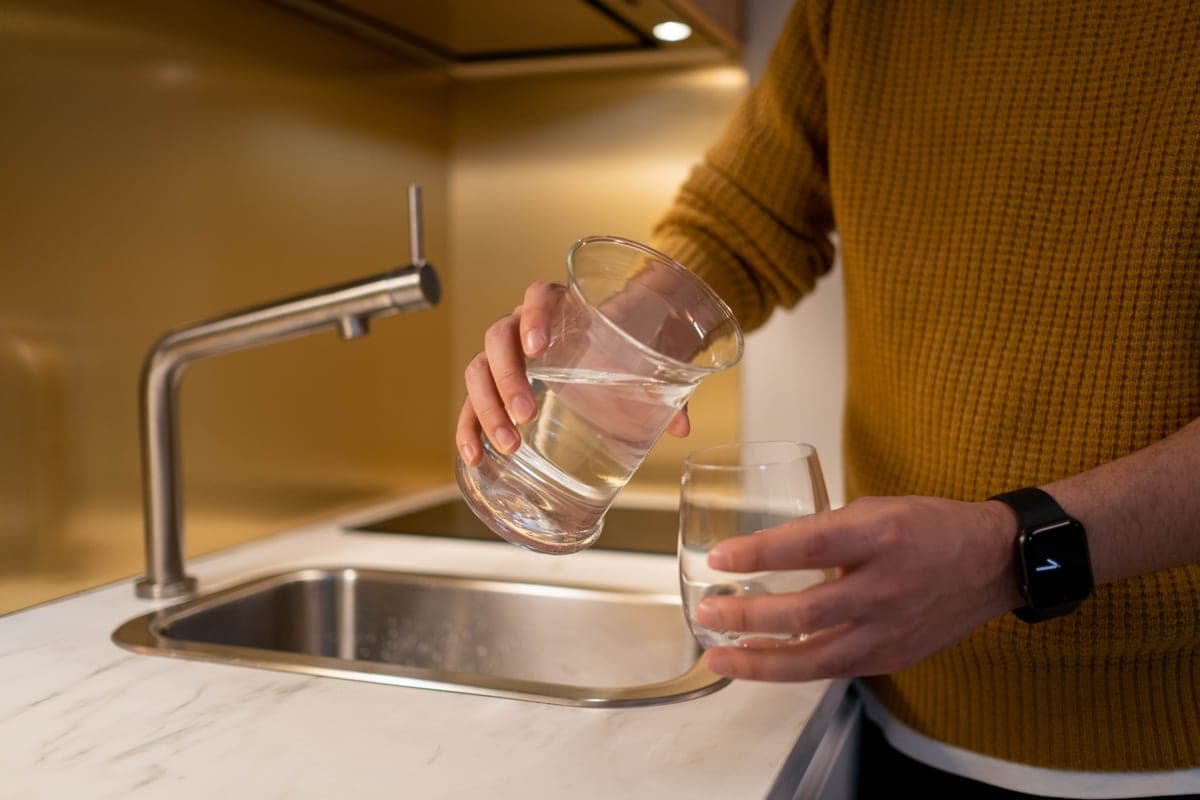
Buy Brita with the Elite filter if you want a third-party certification mark and the lowest running cost — it is certified to NSF/ANSI 53 for lead reduction, with 42 and 401 claims on its data sheet, and a six-month filter life. Buy ZeroWater if you want the most aggressive reduction of dissolved solids and a meter that tells you when the cartridge is finished, and you accept that in hard water the cartridges will not last long.
They are not competing versions of the same product. Brita's Elite is an activated carbon block, which adsorbs organic compounds, chlorine and metals it is certified for. ZeroWater is a five-stage filter ending in ion-exchange resin, which strips dissolved ions until the resin is exhausted. Different mechanisms, different claims, and a running cost that differs by several times.
Quick picks
| # | Product | Best for | Material | Price |
|---|---|---|---|---|
| 1 | Brita Pitcher with Elite FilterNSF/ANSI 53 certified for lead reduction, with 42 and 401 claims, and six-month filters. | A certification mark and a realistic cost | Plastic pitcher body | |
| 2 | ZeroWater Filter PitcherFive-stage ion exchange plus a meter — the only pitcher that tells you it is spent. | Maximum reduction, with a replacement signal | Plastic pitcher with a five-stage ion-exchange filter | |
| 3 | Clearly Filtered Water PitcherBrand-published third-party lab reports contaminant by contaminant, including PFAS. | Published per-contaminant testing | Tritan plastic pitcher with a multi-stage composite filter | |
| 4 | LifeStraw Home Glass PitcherGlass body with a membrane and carbon cartridge, and results published by contaminant. | A glass pitcher | Glass pitcher body with a membrane and carbon filter cartridge |
Tap a row to jump to that write-up. Prices are not shown on this site because they change — the button sends you to the live Amazon listing.
The comparison that matters
| Brita with Elite filter | ZeroWater | |
|---|---|---|
| Mechanism | Activated carbon block | Five stage, ending in ion exchange |
| Third-party certification | NSF/ANSI 53 for lead, plus 42 and 401 claims | Check the current claims per the brand |
| Dissolved solids (TDS) | Largely unchanged | Near zero while resin is live |
| Filter life | Manufacturer states 6 months | Weeks to months, depends on water hardness |
| Spent-filter signal | Calendar or indicator | Included TDS meter |
| Cost per gallon | Lowest in the category | Highest in the category |
| Flow rate | Reasonable | Slow |
| Body | Plastic | Plastic |
| Taste | Chlorine removed | Flat, occasionally slightly acidic |
What the meter actually measures
A TDS meter measures electrical conductivity and converts it to total dissolved solids. That number includes calcium, magnesium, sodium, chloride and sulfate — most of which are harmless minerals that make water taste like water. It is not a contamination score. A spring water with excellent mineral content reads high; distilled water with a pesticide in it reads zero.
So the meter is extremely useful for one thing and misleading for another. Useful: it tells you when the ion-exchange resin is exhausted, which is a real and otherwise invisible event. Misleading: a zero reading says nothing about lead, PFAS, chlorine byproducts or bacteria, because those are present at concentrations far too low to move a conductivity reading. If PFAS is the concern, the standard to look for is NSF/ANSI 53 or 58 with PFOA and PFOS named — see best water filters for PFAS.
Read your own water report first
Both pitchers are the wrong purchase if you do not know what is in your water. Public water systems publish annual reports, and EPA's 2024 PFAS rule means PFAS results are increasingly in them — the enforceable limits are 4.0 parts per trillion for PFOA and PFOS, with public systems having until 2029 to comply.
What to do with the report: if lead is the concern, the NSF/ANSI 53 certification on the Brita Elite addresses it directly and cheaply. If the water is hard and tastes mineral, ZeroWater will change the taste dramatically and cost you accordingly. If PFAS appears above the limits, neither of these is the primary answer and you should be looking at a unit certified to 53 or 58 with PFAS named. Our NSF/ANSI water standards page explains which number covers what.
The running cost nobody puts on the box
This is where the comparison is decided for most households. A Brita Elite filter is rated for six months, which in a two-person home is two cartridges a year. A ZeroWater cartridge in hard water can be exhausted in three to six weeks, which is eight to seventeen cartridges a year at a higher unit price.
That is not a reason to reject ZeroWater — if you want near-zero dissolved solids, nothing else in a pitcher does it. It is a reason to check your water hardness before buying, because the same pitcher is a reasonable purchase in a soft-water city and an expensive mistake in a hard-water one.
The picks in full
1. Best for A certification mark and a realistic cost
Brita Pitcher with Elite Filter
NSF/ANSI 53 certified for lead reduction, with 42 and 401 claims, and six-month filters.
- Made of
- Plastic pitcher body, activated carbon block filter
- Certified to
- Certified: NSF/ANSI 53 (lead reduction)Third-party certified to NSF/ANSI 53 (lead reduction).
- Certified claims
- NSF/ANSI 42, 53 and 401 claims per the data sheet
- Filter life
- Manufacturer states 6 months
- Body
- Plastic
This is the pick when you want someone other than the manufacturer standing behind the claim. The Elite filter's lead reduction is certified to NSF/ANSI 53, and the data sheet carries 42 (chlorine taste and odor) and 401 (emerging contaminants) claims. Six-month filter life is the underrated part: a filter that only needs changing twice a year actually gets changed.
What you give up
Carbon does not reduce dissolved solids, so the water will not read low on a meter and will not taste different in a hard-water area. Plastic pitcher body. Check the data sheet for any contaminant you specifically care about rather than assuming breadth.
Who it's for
Lead concerns, chlorine taste, and households that want low running cost.
Who should skip it
Anyone chasing a low TDS reading, or who wants a glass body.
2. Best for Maximum reduction, with a replacement signal
ZeroWater Filter Pitcher
Five-stage ion exchange plus a meter — the only pitcher that tells you it is spent.
- Made of
- Plastic pitcher with a five-stage ion-exchange filter
- Certified to
- Manufacturer claimManufacturer claim; no third-party certification published.
- Approach
- Ion exchange, not just carbon
- Included meter
- Tells you when the filter is spent
- Check
- Read which standards the claims are certified to
Ion exchange removes dissolved ions that carbon leaves behind, which is why ZeroWater reads near zero on a dissolved-solids meter where carbon pitchers do not. The included meter is the genuinely valuable feature: a spent cartridge is the most common reason any filter stops working, and this is the one that measures rather than guesses.
What you give up
Cartridge life collapses in hard water — a high-TDS supply can exhaust one in a few weeks, which makes this by far the most expensive option per gallon. The meter measures dissolved solids, not specific contaminants, so a zero reading is not evidence about PFAS or lead. Water can taste slightly acidic.
Who it's for
Soft-water areas, specific dissolved-solid concerns, and anyone who wants a measured change signal.
Who should skip it
Hard-water households on a budget.
3. Best for Published per-contaminant testing
Clearly Filtered Water Pitcher
Brand-published third-party lab reports contaminant by contaminant, including PFAS.
- Made of
- Tritan plastic pitcher with a multi-stage composite filter
- Certified to
- Manufacturer claimManufacturer claim; no third-party certification published.
- Claim basis
- Brand publishes third-party lab reports; read the standard tested to
- Flow rate
- Slow by design
- Filter life
- Manufacturer states around 100 gallons
If the reason you are comparing pitchers is a specific contaminant, this is the one that publishes results in a form you can check: lab reports broken out by contaminant rather than one headline percentage. It is the third option people land on once they realize the Brita-versus-ZeroWater question does not answer "what about PFAS".
What you give up
Slow flow by design, cartridges rated around 100 gallons, and the claims rest on the brand's published testing rather than an NSF certification mark.
Who it's for
Households targeting named contaminants and willing to read test data.
Who should skip it
Anyone who only trusts a certification mark, or who needs fast flow.
4. Best for A glass pitcher
LifeStraw Home Glass Pitcher
Glass body with a membrane and carbon cartridge, and results published by contaminant.
- Made of
- Glass pitcher body with a membrane and carbon filter cartridge
- Certified to
- Manufacturer claimManufacturer claim; no third-party certification published.
- Body
- Glass
- Claim basis
- Brand publishes test results by contaminant
- Note
- Glass body is the reason to pick it
Both pitchers above store filtered water in plastic. If that undercuts the point for you, this is the pitcher that does not: a glass body, a membrane plus carbon cartridge, and published test results by contaminant. It is the answer to a different question than Brita versus ZeroWater, and often the right one.
What you give up
Heavy, breakable, more expensive than either pitcher above, and shorter cartridge life than the Brita.
Who it's for
Anyone avoiding plastic in food and drink contact.
Who should skip it
Households with young children handling the pitcher.
How we chose, and what we did not do
Every product on this page was checked against its published material composition and its third-party certifications, with each claim labeled as certified, manufacturer-stated or independently tested by a named party. We do not run a lab and we do not claim to have used these products — the full method is here.
Questions people actually ask
Is ZeroWater better than Brita?
It reduces dissolved solids far more, and it tells you when the cartridge is spent. Brita's Elite filter carries an NSF/ANSI 53 lead certification and costs a fraction as much to run. Which is better depends entirely on whether your concern is a specific certified claim or the overall mineral content.
Does a zero TDS reading mean the water is clean?
No. TDS measures dissolved minerals and salts via conductivity. Lead, PFAS and disinfection byproducts occur at concentrations far too low to register, so a zero reading says nothing about them.
Why does my ZeroWater filter die so fast?
Hard water. Ion-exchange resin is consumed by the dissolved minerals it removes, so the higher your starting TDS, the faster the cartridge exhausts. In a hard-water area a few weeks is normal.
Do either of these remove PFAS?
Check the specific filter's current claims rather than assuming. The Brita Elite's certification is NSF/ANSI 53 for lead, which is a separate claim from PFAS. For PFAS specifically, look for NSF/ANSI 53 or 58 with PFOA and PFOS named, or a filter publishing per-contaminant test data.
Is filtered water in a plastic pitcher a problem?
It is an inconsistency worth noticing rather than a measured hazard. If the point of filtering is reducing what is in your water, a glass-bodied pitcher is the version that does not reintroduce a plastic storage step.
Sources
- Brita — lead reduction and NSF/ANSI 53 certification for the Elite filter
- NSF — Forever Chemicals and the Advancement of Filtration Standards — Why NSF P473 was retired into NSF/ANSI 53 and 58 in June 2021
- US EPA — Per- and Polyfluoroalkyl Substances (PFAS) under the Safe Drinking Water Act — The 2024 national primary drinking water regulation: 4.0 ppt for PFOA and PFOS
- ZeroWater (manufacturer)
- Clearly Filtered (manufacturer)
- LifeStraw (manufacturer)
Read next
Kitchen & Cookware
Best water filter pitchers, judged on their certified claims
Filter pitchers compared on their actual NSF/ANSI certified claims, with the retired P473 standard explained.
Kitchen & Cookware
Best water filters that remove PFAS
Four pitcher filters with published PFAS reduction claims, plus the standard to check before you buy.
Kitchen & Cookware
NSF/ANSI water filter standards, and the retired one
What NSF/ANSI 42, 53, 58 and 401 each cover, and why a filter citing NSF P473 is quoting a retired standard.
Kitchen & Cookware
What PFAS actually means in cookware
PFAS, PFOA and PTFE separated with sources, plus what the labels can and cannot promise.
Written by Selena H., owner of Glass & Cotton.