Kitchen & Cookware
Best water filters that remove PFAS
PFAS reduction is a testable claim with a named standard behind it. Most filters do not make it.
Last reviewed October 17, 2026 — Selena H.
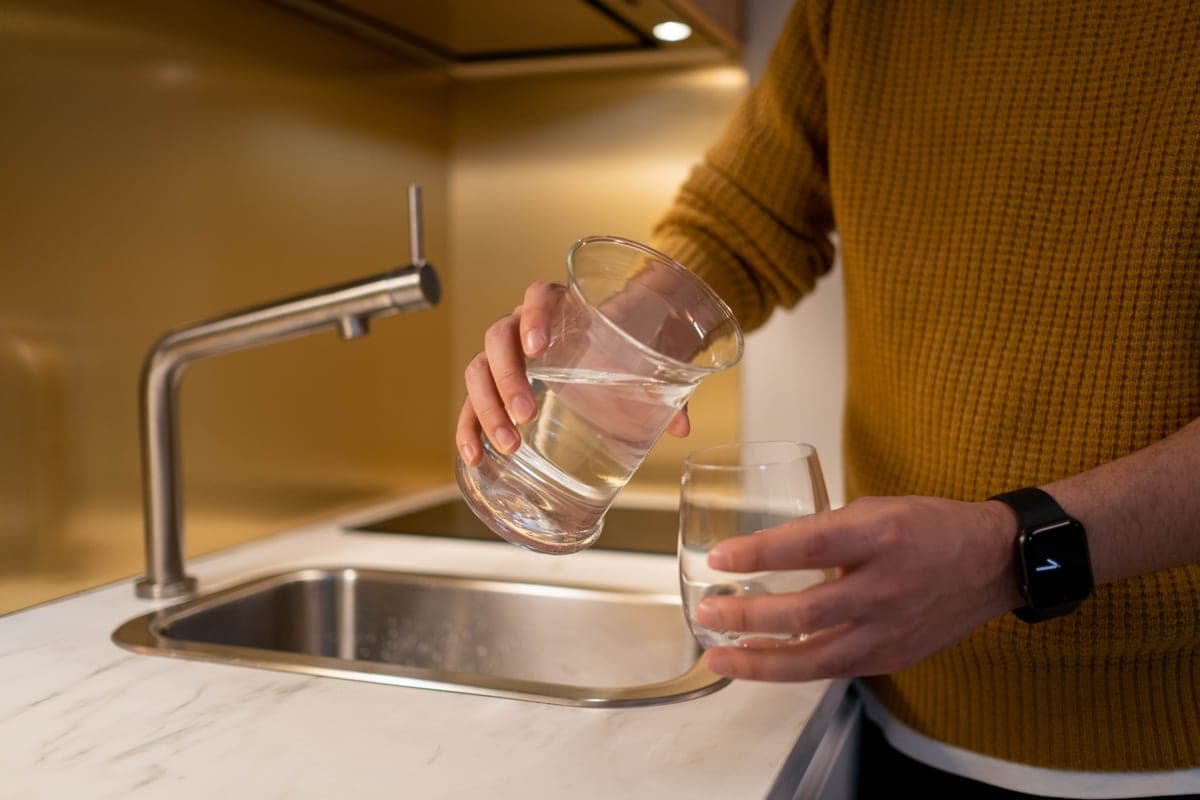
If you want a pitcher that reduces PFAS, the Clearly Filtered Water Pitcher is the pick to start with, because the brand publishes third-party lab reports by contaminant rather than a single marketing percentage. ZeroWater is the alternative that works by ion exchange instead of carbon alone, and includes a meter that tells you when the filter is spent — which matters more than the headline number.
The reason this page exists is that EPA set enforceable national limits for PFAS in drinking water in 2024: 4.0 parts per trillion for PFOA and for PFOS, 10 ppt each for PFHxS, PFNA and HFPO-DA, and a hazard index of 1 for mixtures. Public water systems have until 2029 to comply. Until then, a filter is the only control a household has, and the only thing worth buying on is a tested claim.
Quick picks
| # | Product | Best for | Material | Price |
|---|---|---|---|---|
| 1 | Clearly Filtered Water PitcherThe brand publishes third-party lab reports contaminant by contaminant, PFAS included. | Published per-contaminant test data | Tritan plastic pitcher with a multi-stage composite filter | |
| 2 | ZeroWater Filter PitcherFive-stage ion exchange, plus a meter that tells you when to change it. | Knowing when the filter is spent | Plastic pitcher with a five-stage ion-exchange filter | |
| 3 | LifeStraw Home Glass PitcherGlass pitcher with a membrane and carbon cartridge, and published results by contaminant. | A glass body | Glass pitcher body with a membrane and carbon filter cartridge | |
| 4 | Brita Pitcher with Elite FilterThe one pitcher here carrying an NSF/ANSI certification for lead reduction. | A certified mark, at the lowest price | Plastic pitcher body |
Tap a row to jump to that write-up. Prices are not shown on this site because they change — the button sends you to the live Amazon listing.
The 2024 rule, and why it changed the question
EPA's national primary drinking water regulation for PFAS set enforceable maximum contaminant levels for the first time: 4.0 parts per trillion for PFOA and PFOS individually, 10 ppt each for PFHxS, PFNA and HFPO-DA, and a hazard index of 1 for mixtures containing two or more of PFHxS, PFNA, HFPO-DA and PFBS. Public water systems have five years — to 2029 — to implement solutions, and a rule proposed in May 2026 would allow systems to request two more years.
Two consequences for a household. First, your utility's PFAS results are becoming public information, so the right first step is reading your own water report rather than buying a filter blind. Second, 4.0 ppt is a very low number, which means a filter claim stated as a percentage without a starting concentration tells you almost nothing.
Which standard a PFAS claim should name
NSF/ANSI P473 used to be the standalone PFOA and PFOS reduction standard. In June 2021 it was retired and folded into NSF/ANSI 53 for drinking water treatment units and NSF/ANSI 58 for reverse osmosis, which is why a filter box printed before that date and one printed after name different standards for the same claim.
So the check is specific: look for NSF/ANSI 53 (or 58 for an RO system) with PFOA and PFOS named in the claims, not a generic "NSF certified" line. A unit can be certified to NSF/ANSI 42 for chlorine taste and odor and have no PFAS claim whatsoever. Our NSF/ANSI water standards reference breaks down what each number covers.
Pitcher, under-sink or reverse osmosis
A pitcher is the right starting point for most households because it is the one that actually gets used. If your utility reports PFAS above the new limits, an under-sink or reverse osmosis system certified to NSF/ANSI 53 or 58 is the step up.
| Format | PFAS potential | Trade-off |
|---|---|---|
| Carbon pitcher | Varies widely by cartridge | Cheapest, slowest, needs frequent changes |
| Ion exchange pitcher | Good, while the resin is live | Highest cartridge cost in hard water |
| Under-sink carbon block | Good, with a named 53 claim | Install, and plumbing access |
| Reverse osmosis | Strongest, under NSF/ANSI 58 | Wastes water, needs a tank, removes minerals too |
| Refrigerator filter | Usually taste and odor only | Rarely carries a PFAS claim at all |
| Pitcher with no named standard | Unknown | Avoid |
What we ruled out
Filters whose PFAS claim is a percentage with no named standard and no published test. Refrigerator and faucet filters sold on taste and odor, which generally carry NSF/ANSI 42 claims and nothing relevant here. Alkaline and "structured water" pitchers, which make no contaminant reduction claim at all. And boiling, which concentrates PFAS rather than removing them — the compounds do not break down at cooking temperatures. For the underlying chemistry see what PFAS actually means.
The picks in full
1. Best for Published per-contaminant test data
Clearly Filtered Water Pitcher
The brand publishes third-party lab reports contaminant by contaminant, PFAS included.
- Made of
- Tritan plastic pitcher with a multi-stage composite filter
- Certified to
- Manufacturer claimManufacturer claim; no third-party certification published.
- Claim basis
- Brand publishes third-party lab reports; read the standard tested to
- Flow rate
- Slow by design
- Filter life
- Manufacturer states around 100 gallons
Most filter marketing gives you one percentage and no standard. Clearly Filtered publishes lab reports broken out by contaminant, which is the form that lets you check whether PFOA and PFOS specifically were tested rather than assuming they were covered. The multi-stage composite filter is built for breadth rather than speed.
What you give up
Slow by design — a full pitcher takes real time, and the filter is a consumable rated around 100 gallons. The claims are the brand's own published testing rather than an NSF certification mark, so read which standard each report tested to.
Who it's for
Households that want to read the actual test data before buying.
Who should skip it
Anyone who needs fast flow, or who only trusts a certification mark.
2. Best for Knowing when the filter is spent
ZeroWater Filter Pitcher
Five-stage ion exchange, plus a meter that tells you when to change it.
- Made of
- Plastic pitcher with a five-stage ion-exchange filter
- Certified to
- Manufacturer claimManufacturer claim; no third-party certification published.
- Approach
- Ion exchange, not just carbon
- Included meter
- Tells you when the filter is spent
- Check
- Read which standards the claims are certified to
Ion exchange removes dissolved solids that carbon alone leaves behind, and the included meter is the genuinely useful part: a spent filter is the most common reason a filter stops reducing anything, and almost no other pitcher tells you. Reading zero on the meter is a measurement rather than a guess about how many weeks have passed.
What you give up
Filters exhaust quickly in hard water, which makes the running cost the highest here. Check which standards the PFAS claims are certified to rather than reading the meter as proof of PFAS removal — the meter measures dissolved solids, not PFAS.
Who it's for
Hard-water areas, and anyone who wants a replacement signal rather than a calendar reminder.
Who should skip it
Low budgets, since the cost is in the cartridges.
3. Best for A glass body
LifeStraw Home Glass Pitcher
Glass pitcher with a membrane and carbon cartridge, and published results by contaminant.
- Made of
- Glass pitcher body with a membrane and carbon filter cartridge
- Certified to
- Manufacturer claimManufacturer claim; no third-party certification published.
- Body
- Glass
- Claim basis
- Brand publishes test results by contaminant
- Note
- Glass body is the reason to pick it
If the point of filtering is reducing what is in your water, storing the filtered water in plastic is an odd final step. This is the pitcher that solves that: the body is glass, and the brand publishes test results by contaminant so the PFAS claim can be checked rather than taken on trust.
What you give up
Glass is heavy and breakable, and the price is higher than a plastic pitcher of the same capacity. Cartridge life is shorter than a whole-house or under-sink system.
Who it's for
Anyone avoiding plastic in food and drink contact generally.
Who should skip it
Households with small children handling the pitcher, or anyone cost-focused.
4. Best for A certified mark, at the lowest price
Brita Pitcher with Elite Filter
The one pitcher here carrying an NSF/ANSI certification for lead reduction.
- Made of
- Plastic pitcher body, activated carbon block filter
- Certified to
- Certified: NSF/ANSI 53 (lead reduction)Third-party certified to NSF/ANSI 53 (lead reduction).
- Certified claims
- NSF/ANSI 42, 53 and 401 claims per the data sheet
- Filter life
- Manufacturer states 6 months
- Body
- Plastic
Brita's Elite filter is certified to NSF/ANSI 53 for lead reduction, with 42 and 401 claims on the data sheet — which makes it the only pick here where a third-party mark, not a brand report, backs the claim. It is also the cheapest to run by a wide margin, and six-month filter life means it actually gets changed.
What you give up
Read the data sheet for PFAS specifically rather than assuming the lead certification covers it — these are separate claims under separate standards. The pitcher body is plastic.
Who it's for
Households that want a certification mark and a realistic running cost.
Who should skip it
Anyone whose primary target is PFAS rather than lead and taste.
How we chose, and what we did not do
Every product on this page was checked against its published material composition and its third-party certifications, with each claim labeled as certified, manufacturer-stated or independently tested by a named party. We do not run a lab and we do not claim to have used these products — the full method is here.
Questions people actually ask
What water filter removes PFAS?
Look for a unit certified to NSF/ANSI 53 with PFOA and PFOS named in its claims, or to NSF/ANSI 58 for reverse osmosis. Activated carbon block and ion exchange both work; a generic carbon pitcher with no named standard is unverified.
What are EPA's PFAS limits for drinking water?
Under the 2024 national primary drinking water regulation: 4.0 parts per trillion for PFOA and 4.0 ppt for PFOS, 10 ppt each for PFHxS, PFNA and HFPO-DA, and a hazard index of 1 for mixtures of two or more of PFHxS, PFNA, HFPO-DA and PFBS. Public water systems have until 2029 to comply.
Does boiling water remove PFAS?
No. PFAS do not break down at cooking temperatures, and boiling removes water as steam while leaving the compounds behind, so the concentration goes up rather than down.
Does a Brita filter remove PFAS?
Read the specific filter's data sheet. Brita's Elite filter is certified to NSF/ANSI 53 for lead reduction with 42 and 401 claims; PFAS reduction is a separate claim under a separate test, so a lead certification does not imply it.
Whole-house or at the tap?
At the tap, for PFAS. A point-of-use unit treats the water you drink, which is where the exposure that the EPA limits address occurs, and it is far cheaper to certify and maintain than treating every shower and toilet in the house.
Sources
- US EPA — Per- and Polyfluoroalkyl Substances (PFAS) under the Safe Drinking Water Act — The 2024 national primary drinking water regulation: 4.0 ppt for PFOA and PFOS
- NSF — Forever Chemicals and the Advancement of Filtration Standards — Why NSF P473 was retired into NSF/ANSI 53 and 58 in June 2021
- US EPA — Our Current Understanding of the Human Health and Environmental Risks of PFAS — Regulator overview of PFAS persistence and health endpoints
- Brita — lead reduction and NSF/ANSI 53 certification for the Elite filter
- Clearly Filtered (manufacturer)
- ZeroWater (manufacturer)
- LifeStraw (manufacturer)
Read next
Kitchen & Cookware
Best water filter pitchers, judged on their certified claims
Filter pitchers compared on their actual NSF/ANSI certified claims, with the retired P473 standard explained.
Kitchen & Cookware
Brita vs ZeroWater
Carbon versus ion exchange: certified claims, what the TDS meter means, and cost per gallon.
Kitchen & Cookware
NSF/ANSI water filter standards, and the retired one
What NSF/ANSI 42, 53, 58 and 401 each cover, and why a filter citing NSF P473 is quoting a retired standard.
Kitchen & Cookware
What PFAS actually means in cookware
PFAS, PFOA and PTFE separated with sources, plus what the labels can and cannot promise.
Written by Selena H., owner of Glass & Cotton.