Kitchen & Cookware
How to tell if a pan is non-toxic: a five-step check
This is our method, written out so you can run it yourself on a product we have never looked at.
Last reviewed October 13, 2026 — Selena H.

There is no certification body that certifies cookware as non-toxic, so there is no mark to look for. What there is instead is a short sequence of questions that sorts this market quickly, and it is the same sequence we use on every product on this site.
Five steps, in order. If a product fails step one you can stop, which is most of the value: the majority of "non-toxic" cookware pages do not survive the first question.
Quick picks
| # | Product | Best for | Material | Price |
|---|---|---|---|---|
| 1 | All-Clad D3 StainlessNamed construction, named steel grade, no coating to ask about. | Passes on disclosure | 3-ply bonded stainless: 18/10 stainless interior | |
| 2 | 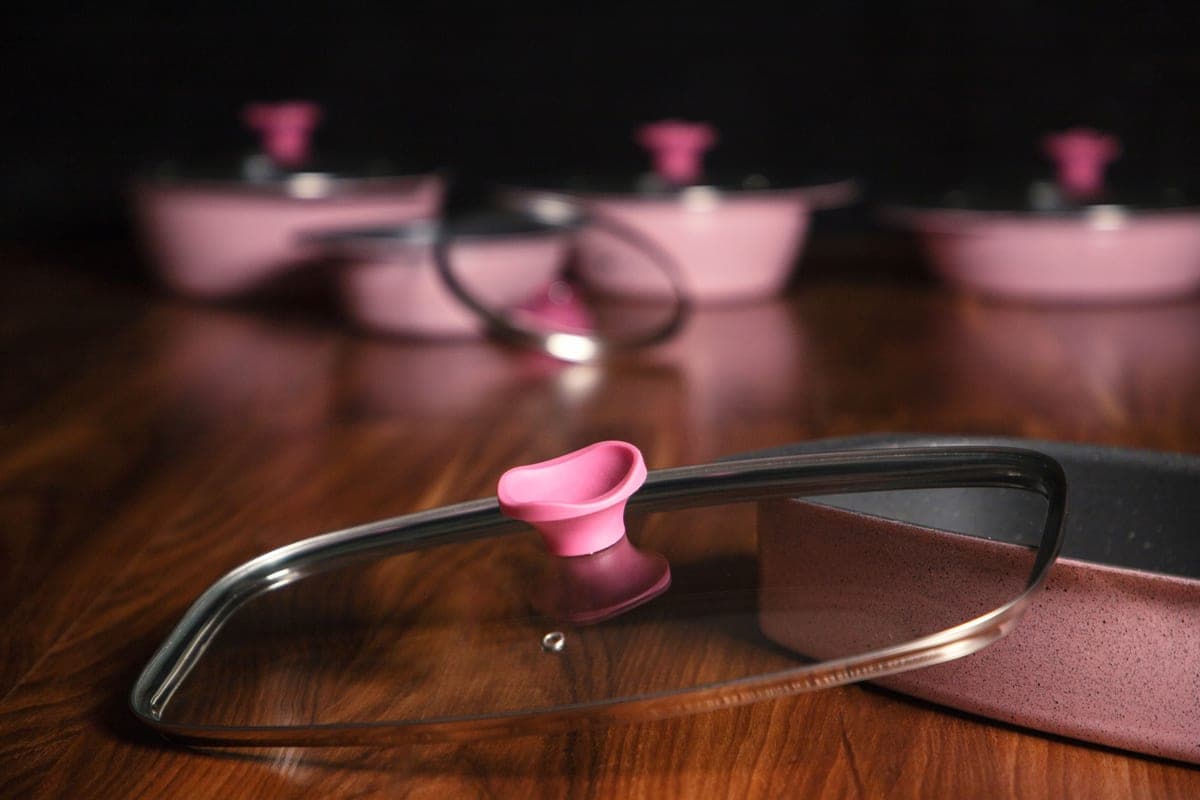 Caraway Cookware SetDiscloses body, coating type, handle material and oven rating. | Passes with a coating | Aluminum body | |
| 3 |  Xtrema Versa SkilletOne material through the whole body. Steps two and three do not apply. | Nothing left to check | 100% ceramic through-body (no metal core |
Tap a row to jump to that write-up. Prices are not shown on this site because they change — the button sends you to the live Amazon listing.
The five steps
- Find a positive statement of what the cooking surface is. Not what it is free of. You are looking for "304 stainless", "18/10 stainless", "sol-gel ceramic coating", "vitreous enamel", "seasoned cast iron", "solid ceramic". If no sentence on the page says what the surface is made of, stop — the most important fact is undisclosed, and that is your answer.
- Separate the body from the surface. Most "ceramic" pans are aluminum pans with a ceramic coating. Both facts matter, and a page that mentions only the nicer one is choosing what to tell you.
- Check the coating story, if there is a coating. PTFE and sol-gel ceramic are different chemistries; "non-stick technology" is neither. Any coating is a consumable, so ask what happens in year three.
- Look for a named third-party standard, and accept its absence. Cookware has few applicable marks, so "manufacturer claim, no third-party certification published" is a common and acceptable answer — when it is stated rather than implied otherwise. A claim of third-party testing without a published report is the brand's own statement.
- Check the physical object. Scratches, flaking, chalkiness, a wobbling base, a loose handle. On a pan you already own this step outranks all the others: condition beats chemistry.
What each answer tells you
| What you found | What it means |
|---|---|
| Named surface material, no coating | The simplest and strongest position. Nothing to degrade |
| Named coating chemistry, named body | Honest disclosure of a consumable product. Price it per year |
| Only free-from claims (no PFOA, no lead) | Mostly a statement of legal compliance. You have learned little |
| "Non-stick technology", "advanced coating" | Marketing language in the place where the specification should be |
| A third-party certification number | The strongest claim available. Check what was certified — fiber, component or finished product |
| "Third-party tested", no report | A claim about testing, not a verification. Treat it as the brand's word |
Four red flags that end the inquiry
- No stated cooking surface material anywhere on the page. The single most informative absence in this market.
- A certification logo with no number. Numbers resolve in public registers; logos are images.
- "Non-toxic" used as if it were a certification. It has no definition in any product category.
- A free-from list longer than the composition list. The ratio of negative to positive claims is a reliable signal.
Running the check on a pan you already own
For cookware already in your kitchen, reverse the order: start at step five. Condition is what actually matters, because a degrading surface is an active transfer and an intact one mostly is not. A scratched or flaking coated pan should be replaced regardless of brand; an intact stainless, cast iron or enamel pan has no reason to be replaced at all.
If you cannot identify what a pan is, the magnet test tells you whether it is ferromagnetic (cast iron, carbon steel, magnetic stainless), and a glance at the interior tells you whether it is coated. That is usually enough to decide.
Products that pass all five steps
Three that make it through cleanly — one with no coating, one with a disclosed coating, and one where the whole object is a single material.
The picks in full
1. Best for Passes on disclosure
All-Clad D3 Stainless
Named construction, named steel grade, no coating to ask about.
- Made of
- 3-ply bonded stainless: 18/10 stainless interior, aluminum core, magnetic exterior
- Certified to
- Manufacturer claimManufacturer claim; no third-party certification published.
- Construction
- 3-ply bonded
- Cooking surface
- 18/10 stainless steel
- Made in
- Manufacturer states USA for the D3 line
Tri-ply bonded with an 18/10 stainless cooking surface, published clearly, with no coating anywhere. It passes steps one through four without needing interpretation, which is exactly what the check is designed to find.
What you give up
Expensive, and the handle shape divides people.
Who it's for
Anyone wanting the most-documented uncoated stainless.
Who should skip it
Budget buyers.
2. Best for Passes with a coating
Caraway Cookware Set
Discloses body, coating type, handle material and oven rating.
- Made of
- Aluminum body, sol-gel mineral ceramic coating, stainless steel handles and base plate
- Certified to
- Manufacturer claimManufacturer claim; no third-party certification published.
- Oven safe
- Manufacturer states 550F
- Coating type
- Ceramic (sol-gel), no PTFE
- Induction
- Yes, stainless base plate
It is a coated pan that tells you it is a coated pan, names the coating as a sol-gel ceramic, names the aluminum body and stainless fittings, and states its oven rating. That is what a passing grade looks like in the coated category.
What you give up
A consumable coating, and a third-party testing claim with no published report.
Who it's for
Coated-cookware buyers who want disclosure.
Who should skip it
Anyone who needs a verifiable certificate.
3. Best for Nothing left to check
Xtrema Versa Skillet
One material through the whole body. Steps two and three do not apply.
- Made of
- 100% ceramic through-body (no metal core, no surface coating)
- Certified to
- Manufacturer claimManufacturer claim; no third-party certification published.
- Construction
- Solid ceramic, not a coated metal pan
- Oven and broiler
- Manufacturer states oven, broiler and grill safe
- Induction
- No
A solid ceramic pan short-circuits the check: there is no coating to disclose and no body-versus-surface distinction to make. Fewer variables is its own kind of transparency.
What you give up
Slow, breakable, not induction compatible, and not really non-stick.
Who it's for
Buyers who want the fewest unknowns.
Who should skip it
Induction cooktops.
How we chose, and what we did not do
Every product on this page was checked against its published material composition and its third-party certifications, with each claim labeled as certified, manufacturer-stated or independently tested by a named party. We do not run a lab and we do not claim to have used these products — the full method is here.
Questions people actually ask
How can I tell if a pan is non-toxic?
Find a positive statement of what the cooking surface is made of, separate the body from any coating, check the coating chemistry if there is one, look for a named third-party standard and accept its absence if stated, then inspect the physical condition. A pan whose surface material is undisclosed has answered the question for you.
Is there a certification for non-toxic cookware?
No. Unlike textiles or cleaning products, cookware has very few applicable third-party marks, which is why material disclosure carries so much weight in this category.
Does a Proposition 65 warning on cookware mean it is unsafe?
It means the seller has not established that exposure falls below California's safe-harbour level for a listed chemical. No warning is required at or below those levels, so the warning is a disclosure threshold rather than a finding of harm. Prop 65 explained.
What is the fastest check on a pan I already own?
Look at the surface. Scratched, flaking or chalky means replace it; intact uncoated metal or enamel means there is nothing to do. Condition outranks brand and chemistry for cookware you already have.
Sources
- US FDA — compliance policy guidance on lead in ceramicware (ASTM C738 leach test)
- California OEHHA — Proposition 65 guidance for businesses — Safe-harbour levels, and when a warning is and is not required
- US EPA — Our Current Understanding of the Human Health and Environmental Risks of PFAS — Regulator overview of PFAS persistence and health endpoints
- All-Clad (manufacturer)
Read next
Kitchen & Cookware
Greenwashing red flags: eight claims that mean nothing
Eight unregulated product claims decoded, with the one question that cuts through all of them.
Kitchen & Cookware
The safest cookware materials, in one table
The flagship comparison table: every cookware material on PFAS status, heat limit, leaching concern and lifespan.

Kitchen & Cookware
What a Proposition 65 warning actually means
Prop 65 decoded: safe-harbour levels, the one-in-100,000 cancer threshold, and how to read a warning label.
Kitchen & Cookware
Non-toxic cookware brands, ranked by what they actually disclose
Cookware brands ranked on disclosure quality: published composition, named standards, and what each declines to say.
Written by Selena H., owner of Glass & Cotton.