Kitchen & Cookware
Non-toxic cookware brands, ranked by what they actually disclose
A brand you can audit is worth more than a brand with better adjectives. This page ranks on published composition and named standards.
Last reviewed October 13, 2026 — Selena H.

Every brand in this market says its cookware is safe. The useful distinction is not who says it loudest but who publishes enough detail to be checked — a specific coating chemistry, a named steel grade, a certification number, a construction ply count. This page ranks on that.
The ranking deliberately rewards boring disclosure over good marketing. A brand that tells you its pan is 5-ply with a 304 stainless cooking surface has handed you something verifiable. A brand with a wall of free-from claims and no composition has handed you a mood.
Quick picks
| # | Product | Best for | Material | Price |
|---|---|---|---|---|
| 1 | Made In Stainless Clad SetPublishes ply count, steel grade and country of manufacture per line. | Clearest construction disclosure | 5-ply stainless clad: 304 stainless cooking surface | |
| 2 | All-Clad D3 StainlessTri-ply bonded stainless, decades of availability, replacement parts still findable. | Longest track record | 3-ply bonded stainless: 18/10 stainless interior | |
| 3 | 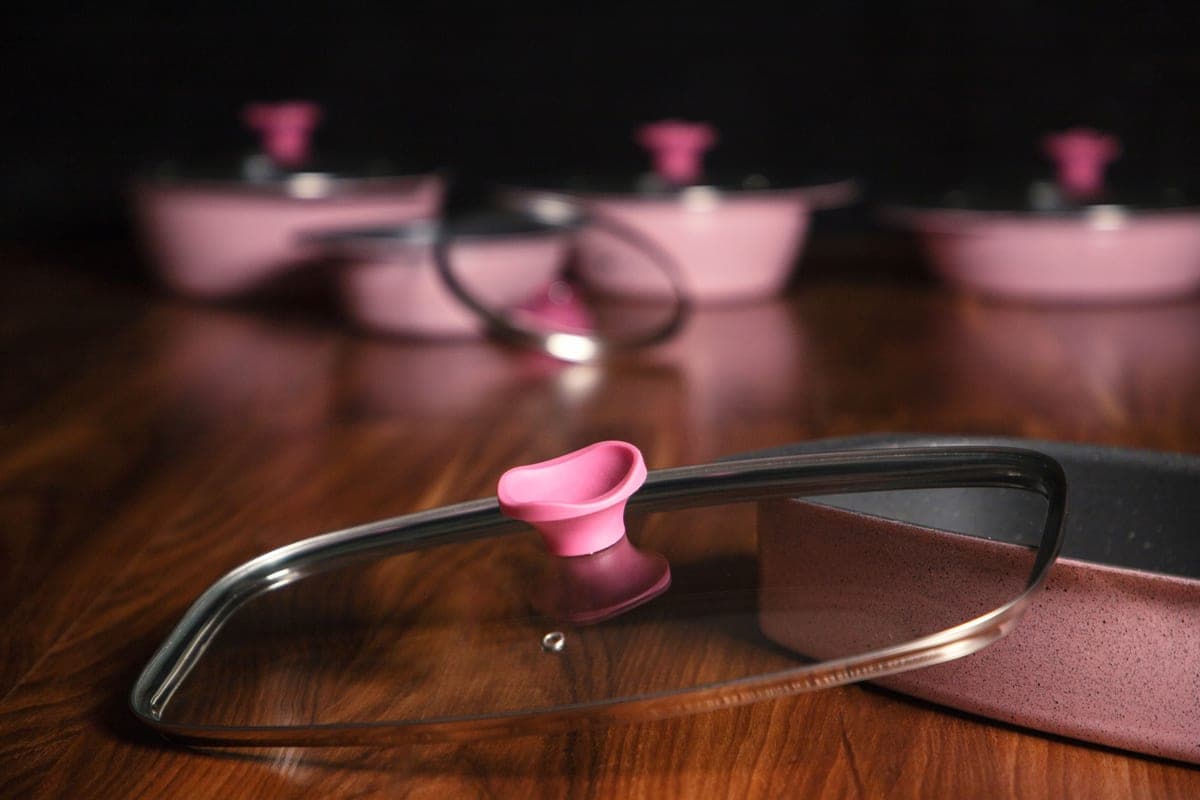 Caraway Cookware SetFull stack published, plus a third-party testing claim we report as the brand's own. | Best-documented coated brand | Aluminum body | |
| 4 |  Xtrema Versa SkilletOne material, through the whole body. There is almost nothing to disclose. | Simplest claim to verify | 100% ceramic through-body (no metal core | |
| 5 |  Lodge Cast Iron Skillet (10.25 in)Iron and vegetable-oil seasoning. The whole specification is two words long. | Nothing to hide | Bare cast iron | |
| 6 |  HexClad Hybrid PanDiscloses the hybrid construction, but the non-stick is still a fluoropolymer. | Where disclosure gets interesting | Tri-ply stainless with a laser-etched hexagon pattern over a PTFE-based non-stick layer |
Tap a row to jump to that write-up. Prices are not shown on this site because they change — the button sends you to the live Amazon listing.
What good disclosure looks like
- The cooking surface, named. "304 stainless", "18/10 stainless", "sol-gel ceramic coating", "vitreous enamel", "seasoned cast iron". If this sentence is missing from the product page, everything else on it is decoration.
- Construction detail. Ply count for clad cookware; body material for coated cookware. A disc base and a full clad body perform differently and cost differently to make.
- A certification number or an honest absence. Cookware has fewer applicable third-party marks than textiles do, so "no third-party certification published" is a common and acceptable answer — when it is stated rather than obscured.
- Oven rating for the pan and the handle separately.
- Country of manufacture. Not a safety claim, but a brand willing to state it is usually willing to state other things.
The free-from trap
The standard marketing device in this category is the free-from list: no PFOA, no PFOS, no lead, no cadmium. Most of these are true of almost everything legally sold in the US — FDA has confirmed the phase-out of PFAS grease-proofing agents in food packaging and PFOA has been out of American non-stick manufacture for well over a decade. Advertising their absence is close to advertising compliance.
A positive claim is harder to make and much more useful. When you read a product page, count the sentences that say what the thing is made of. If that count is zero, you have learned the most important fact available about the brand.
Brands we left off
Several of the most heavily advertised "non-toxic" cookware brands publish no material composition at all — not the body alloy, not the coating type, not the handle material — and we could not write an honest entry about a product whose construction is unstated. That is not an accusation about their pans. It is the only conclusion available from the information provided, and it is the same standard we hold the brands above to.
The picks in full
1. Best for Clearest construction disclosure
Made In Stainless Clad Set
Publishes ply count, steel grade and country of manufacture per line.
- Made of
- 5-ply stainless clad: 304 stainless cooking surface, aluminum core layers
- Certified to
- Manufacturer claimManufacturer claim; no third-party certification published.
- Construction
- 5-ply clad
- Cooking surface
- 304 stainless steel
- Coating
- None
Made In documents what its cookware is built from in the detail a buyer actually needs: how many layers, which stainless grade on the cooking surface, where each line is manufactured. Nothing in the stainless range has a coating, so there is no coating chemistry to disclose and nothing to go vague about.
What you give up
Premium pricing, and the brand sells coated lines too, so "Made In" alone does not tell you which surface you are buying. Check the specific product.
Who it's for
Buyers who want to verify construction before paying.
Who should skip it
Anyone shopping on price.
2. Best for Longest track record
All-Clad D3 Stainless
Tri-ply bonded stainless, decades of availability, replacement parts still findable.
- Made of
- 3-ply bonded stainless: 18/10 stainless interior, aluminum core, magnetic exterior
- Certified to
- Manufacturer claimManufacturer claim; no third-party certification published.
- Construction
- 3-ply bonded
- Cooking surface
- 18/10 stainless steel
- Made in
- Manufacturer states USA for the D3 line
All-Clad publishes its construction and steel specification, and has sold the same fundamental product long enough that there is a deep secondhand market and real knowledge about how it ages. For an uncoated product, longevity evidence accumulated over thirty years is a stronger signal than any certification.
What you give up
It is expensive, the D3 line's handles are divisive, and the brand's broader catalog includes coated non-stick lines that do not share this story.
Who it's for
Anyone who wants the most-proven uncoated clad stainless available.
Who should skip it
Budget buyers, and anyone expecting non-stick behavior.
3. Best for Best-documented coated brand
Caraway Cookware Set
Full stack published, plus a third-party testing claim we report as the brand's own.
- Made of
- Aluminum body, sol-gel mineral ceramic coating, stainless steel handles and base plate
- Certified to
- Manufacturer claimManufacturer claim; no third-party certification published.
- Oven safe
- Manufacturer states 550F
- Coating type
- Ceramic (sol-gel), no PTFE
- Induction
- Yes, stainless base plate
Among coated-cookware brands Caraway publishes the most: the body material, the coating type, the handle and base-plate materials, the oven rating, and a stated program of third-party testing for over 600 forever chemicals. The testing claim is the brand's own statement rather than a published lab report, so we label it as a manufacturer claim — but the composition disclosure is genuinely above the category average.
What you give up
The coating is a consumable, as all of them are. And a testing claim without a published report is a claim, not a verification.
Who it's for
Shoppers who want a coated pan and the most documentation available in that category.
Who should skip it
Anyone who requires a third-party certificate they can look up.
4. Best for Simplest claim to verify
Xtrema Versa Skillet
One material, through the whole body. There is almost nothing to disclose.
- Made of
- 100% ceramic through-body (no metal core, no surface coating)
- Certified to
- Manufacturer claimManufacturer claim; no third-party certification published.
- Construction
- Solid ceramic, not a coated metal pan
- Oven and broiler
- Manufacturer states oven, broiler and grill safe
- Induction
- No
Xtrema's claim is unusually easy to assess because the product is one material: solid ceramic, no coating and no metal. Most of the questions this site exists to ask simply do not apply, which is a legitimate kind of transparency — you cannot have an undisclosed coating if you have no coating.
What you give up
The cookware itself is slow, fragile and not induction compatible, and the glaze composition is still the brand's own account.
Who it's for
Anyone who prefers a product with fewer variables to audit.
Who should skip it
Induction cooktops and fast cooking.
5. Best for Nothing to hide
Lodge Cast Iron Skillet (10.25 in)
Iron and vegetable-oil seasoning. The whole specification is two words long.
- Made of
- Bare cast iron, factory-seasoned with vegetable oil
- Certified to
- Manufacturer claimManufacturer claim; no third-party certification published.
- Coating
- None. Polymerized oil seasoning only
- Oven safe
- Manufacturer states oven, grill and campfire safe
- Induction
- Yes
Lodge's disclosure is trivially complete because the product is cast iron seasoned with vegetable oil, and that is the entire material story. There is no coating chemistry, no ply construction and no certification needed to establish what the cooking surface is. It is also made in the USA and has been for a very long time.
What you give up
Factory seasoning is thinner than the marketing suggests and most pans benefit from a few rounds of your own. Weight and maintenance are inherent.
Who it's for
Anyone who wants the simplest auditable product in the category, at the lowest price.
Who should skip it
Long acidic cooking, and anyone unwilling to hand-dry a pan.
6. Best for Where disclosure gets interesting
HexClad Hybrid Pan
Discloses the hybrid construction, but the non-stick is still a fluoropolymer.
- Made of
- Tri-ply stainless with a laser-etched hexagon pattern over a PTFE-based non-stick layer
- Certified to
- Manufacturer claimManufacturer claim; no third-party certification published.
- Coating type
- PTFE-based non-stick between raised stainless ridges
- PFOA
- Manufacturer states PFOA-free
- Oven safe
- Manufacturer states 500F
HexClad is included here because it is a good test case rather than a top pick. The brand is clear that its pans are stainless with a laser-etched pattern over a non-stick layer, and it states the product is PFOA-free. What a shopper arriving from a "non-toxic" search needs to know is that the non-stick in the valleys is PTFE-based, which means the product does not answer the question they came with.
What you give up
If avoiding fluoropolymers is the reason you are shopping, this is not the pan — and the marketing does not make that as obvious as it should.
Who it's for
Cooks who want searing and non-stick in one pan and are not avoiding PTFE.
Who should skip it
Anyone specifically avoiding PTFE, and any household with birds.
How we chose, and what we did not do
Every product on this page was checked against its published material composition and its third-party certifications, with each claim labeled as certified, manufacturer-stated or independently tested by a named party. We do not run a lab and we do not claim to have used these products — the full method is here.
Questions people actually ask
Which cookware brand is the most transparent?
Among uncoated brands, Made In and All-Clad publish construction and steel grade clearly; Lodge's product is simple enough that disclosure is trivial. Among coated brands, Caraway publishes the most detail, though its third-party testing program is a company statement rather than a published report.
Is HexClad non-toxic?
HexClad is stainless steel over a PTFE-based non-stick layer, and the brand states it is PFOA-free. If your definition of non-toxic excludes fluoropolymers, HexClad does not meet it. Our HexClad review goes through what is published and what is not.
Does a certification exist specifically for non-toxic cookware?
No single mark covers it. Cookware has fewer applicable third-party certifications than textiles or cleaning products, which is exactly why composition disclosure carries so much weight in this category.
Should I avoid brands that only publish free-from claims?
Not necessarily avoid, but discount. A free-from list is mostly a statement of legal compliance. A brand that also tells you what its cooking surface is made of has given you something you can check.
Sources
- US FDA — PFAS used as grease-proofing agents in food packaging are no longer sold in the US — February 2024 update confirming the completed phase-out
- US FDA — Authorized Uses of PFAS in Food Contact Applications
- Caraway Home (manufacturer)
- Made In Cookware (manufacturer)
- HexClad (manufacturer)
- Lodge Cast Iron (manufacturer)
- Xtrema (manufacturer)
Read next
Kitchen & Cookware
Caraway cookware review: what it is made of, and what it is certified to
Caraway's published composition, its third-party testing claim, and the coating lifespan the box does not mention.
Kitchen & Cookware
HexClad review: good pan, wrong aisle
HexClad's hybrid construction, the PTFE layer under the hexagons, and who it is actually right for.
Kitchen & Cookware
Best non-toxic cookware of 2026 — certification-checked picks
The flagship roundup: six cookware options sorted by material, each with its published composition and certification position.
Kitchen & Cookware
Greenwashing red flags: eight claims that mean nothing
Eight unregulated product claims decoded, with the one question that cuts through all of them.
Written by Selena H., owner of Glass & Cotton.