Bedding & Home
Latex vs memory foam: the materials question
One is a tree product with an organic certification available. The other is polyurethane. That is the whole comparison, and it is not close.
Last reviewed October 13, 2026 — Selena H.
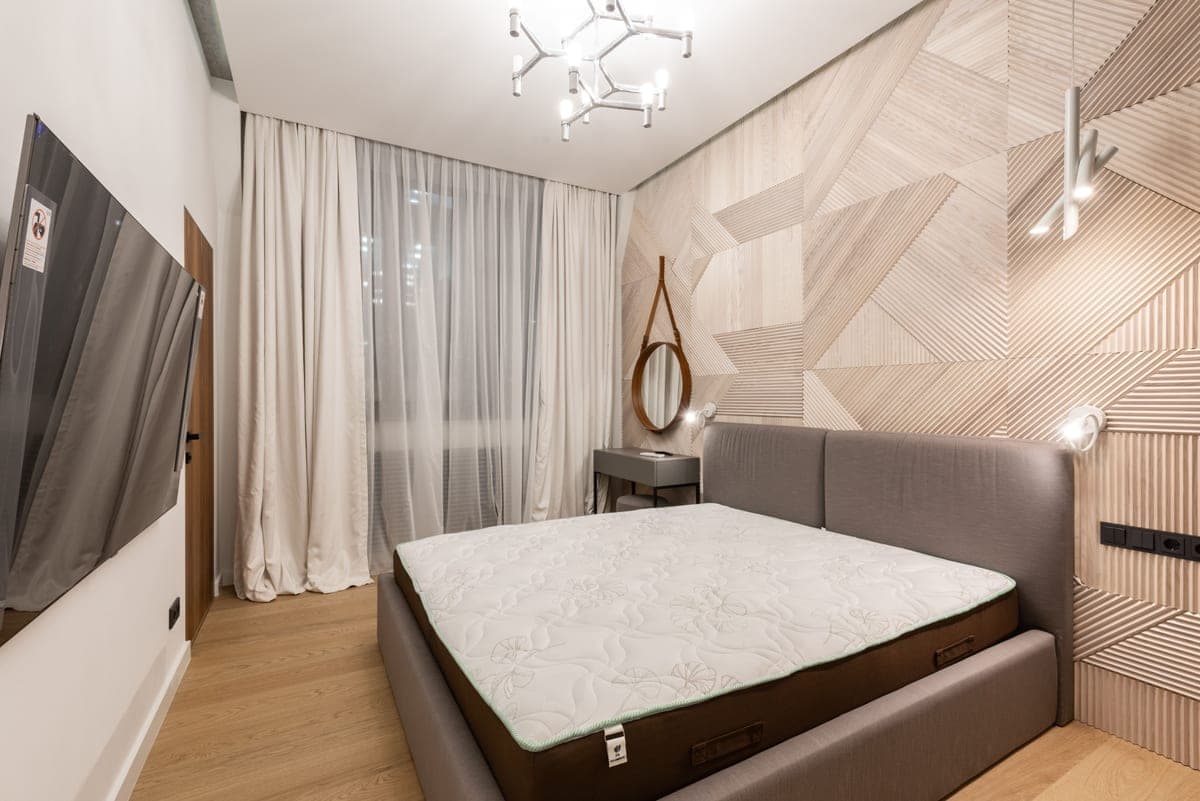
The verdict. If the materials are what you are shopping on, buy natural latex. Latex can be certified organic under GOLS and sits inside mattresses that hold GOTS finished-product certification, MADE SAFE and GREENGUARD Gold. Memory foam is polyurethane, which has no organic certification pathway at all and whose best available credential is a VOC-emissions test.
If you are shopping on feel rather than materials, that is a legitimately different question: memory foam's slow contouring is a sensation latex does not reproduce, and no amount of certification changes that.
Quick picks
| # | Product | Best for | Material | Price |
|---|---|---|---|---|
| 1 | Avocado Green MattressGOLS-certified organic latex with GOTS finished-product certification and more. | Certified latex | GOLS-certified organic Dunlop latex | |
| 2 | Naturepedic Organic MattressOrganic cotton and wool over coils, MADE SAFE and GREENGUARD Gold, latex optional. | Certified without latex | Organic cotton |
Tap a row to jump to that write-up. Prices are not shown on this site because they change — the button sends you to the live Amazon listing.
The specification, side by side
| Natural latex | Memory foam | |
|---|---|---|
| What it is | Tree rubber, Dunlop or Talalay processed | Polyurethane foam with viscoelastic additives |
| Organic certification | GOLS available for the latex | None exists |
| Finished-product marks | GOTS, MADE SAFE, GREENGUARD Gold all achievable | GREENGUARD Gold achievable; emissions only |
| Off-gassing | A rubber smell that fades | A chemical smell that fades; the usual complaint |
| Feel | Responsive, springy | Slow-contouring, sinking |
| Heat | Cooler | Warmer; gel layers mitigate |
| Lifespan | 15-20 years typical | 7-10 years typical |
| Weight | Very heavy | Heavy |
What the certifications actually cover
This is where the gap is real rather than rhetorical. GOLS certifies the organic content of the latex itself. GOTS, applied to a finished mattress, means every company in the processing chain was audited by an approved independent body — and Avocado, for example, states GOTS finished-product certification alongside GOLS latex, MADE SAFE, GREENGUARD Gold and OEKO-TEX STANDARD 100 Class I.
Memory foam cannot hold any of the organic marks because polyurethane is not an agricultural product. Its genuine credential is GREENGUARD Gold, which measures chemical emissions in a chamber test — useful, and narrower than it sounds: a substance that does not off-gas is invisible to an emissions test.
The flame-retardant question applies to both
Mattresses must meet flammability requirements, and the way a maker meets them is the thing worth checking. Under California's SB 1019, covered products carry a TB117-2013 tag stating whether flame retardant chemicals were added — a yes-or-no fact printed on the product.
Many makers now meet the standard without added flame retardants, commonly using wool as a natural barrier. Read the tag before you read the website; it is more informative than any marketing page about either material.
Choose latex if...
- Materials and certification are the basis of your decision.
- You sleep hot.
- You want 15 to 20 years from a mattress.
- You prefer a responsive, springy feel.
Choose memory foam if...
- You specifically want the slow-contouring feel, which latex does not replicate.
- Your budget will not stretch to certified latex, which is genuinely expensive.
- You have a latex allergy — a real and sufficient reason.
A third option worth knowing
A certified hybrid: pocket coils for support with a thin organic latex comfort layer and a wool flame barrier. It costs less than an all-latex mattress, sleeps cooler than foam, and can still carry the full certification stack. The mattress picks go through them.
The picks in full
1. Best for Certified latex
Avocado Green Mattress
GOLS-certified organic latex with GOTS finished-product certification and more.
- Made of
- GOLS-certified organic Dunlop latex, organic wool, organic cotton, steel coils
- Certified to
- Certified: GOTS finished product, GOLS latex, MADE SAFE, GREENGUARD GoldThird-party certified to GOTS finished product, GOLS latex, MADE SAFE, GREENGUARD Gold.
- Certifications
- GOTS, GOLS, MADE SAFE, GREENGUARD Gold, OEKO-TEX 100 Class I
- Flame barrier
- Wool, no added flame retardant chemicals per the brand
- Weight
- Heavy. Two people to move it
The strongest certification position available in this category: GOTS finished-product certification, GOLS latex, MADE SAFE, GREENGUARD Gold and OEKO-TEX STANDARD 100 Class I, with wool as the flame barrier rather than added chemicals.
What you give up
Expensive and extremely heavy. Certification tells you nothing about whether the firmness suits you.
Who it's for
Anyone buying a mattress on verifiable materials.
Who should skip it
Latex allergies, tight budgets, and people who want a sinking feel.
2. Best for Certified without latex
Naturepedic Organic Mattress
Organic cotton and wool over coils, MADE SAFE and GREENGUARD Gold, latex optional.
- Made of
- Organic cotton, organic wool or PLA batting, encased coils
- Certified to
- Certified: MADE SAFE, GREENGUARD GoldThird-party certified to MADE SAFE, GREENGUARD Gold.
- Certifications
- MADE SAFE and GREENGUARD Gold across the bedding line
- Latex
- Optional, not standard
- Note
- Also makes the matching crib mattresses
The answer for a latex allergy that still wants certification: organic cotton and wool or PLA batting over encased coils, with MADE SAFE and GREENGUARD Gold across the line.
What you give up
Expensive, and without latex the feel is firmer and more traditional.
Who it's for
Latex-sensitive buyers who want certification.
Who should skip it
Anyone who wants a contouring foam feel.
How we chose, and what we did not do
Every product on this page was checked against its published material composition and its third-party certifications, with each claim labeled as certified, manufacturer-stated or independently tested by a named party. We do not run a lab and we do not claim to have used these products — the full method is here.
Questions people actually ask
Is latex safer than memory foam?
It has a certification pathway memory foam does not: GOLS for the latex and GOTS for the finished mattress, alongside MADE SAFE and GREENGUARD Gold. Memory foam is polyurethane and its best credential is a VOC-emissions test, which measures what off-gasses rather than what the foam is.
Do organic mattresses still contain flame retardants?
Not necessarily. Many makers meet flammability requirements with wool instead of added chemicals, and California's SB 1019 label states whether flame retardant chemicals were added — read the tag.
Does natural latex off-gas?
It has a rubber smell that fades over days to weeks. It is a different smell from the chemical odor people report with new polyurethane foam, and both diminish with airing.
Which lasts longer?
Latex, typically 15 to 20 years against 7 to 10 for memory foam, which changes the cost comparison considerably over the life of the mattress.
Sources
- Avocado Green Mattress — organic mattress certifications
- MADE SAFE — Naturepedic certified bedding
- California Bureau of Household Goods and Services — SB 1019 flame-retardant labeling advisory — The TB117-2013 label that states whether flame retardants were added
- Global Organic Textile Standard (GOTS) — the standard — Whole-supply-chain certification: fiber, chemical inputs, wastewater, social criteria
- OEKO-TEX — STANDARD 100 — Harmful-substance testing by product class. Not an organic-content claim
Read next
Bedding & Home
Best non-toxic mattresses
Mattresses with stacked finished-product certifications, and how to read the TB117-2013 flame-retardant tag.
Bedding & Home
What GOTS certification actually covers
GOTS explained: whole-chain certification, what it leaves out, and the fiber-versus-finished-product distinction.
Bedding & Home
Flame retardants in furniture: the label answers it
How to read the TB117-2013 tag required by SB 1019, and what the 2013 standard change actually did.
Cleaning & Laundry
What MADE SAFE certification covers
MADE SAFE explained: full-formula hazard screening, the categories it spans, and what it deliberately ignores.
Written by Selena H., owner of Glass & Cotton.