Cleaning & Laundry
How to read a cleaning product label
Six checks, in order. The first one eliminates most of the category and takes five seconds.
Last reviewed October 13, 2026 — Selena H.
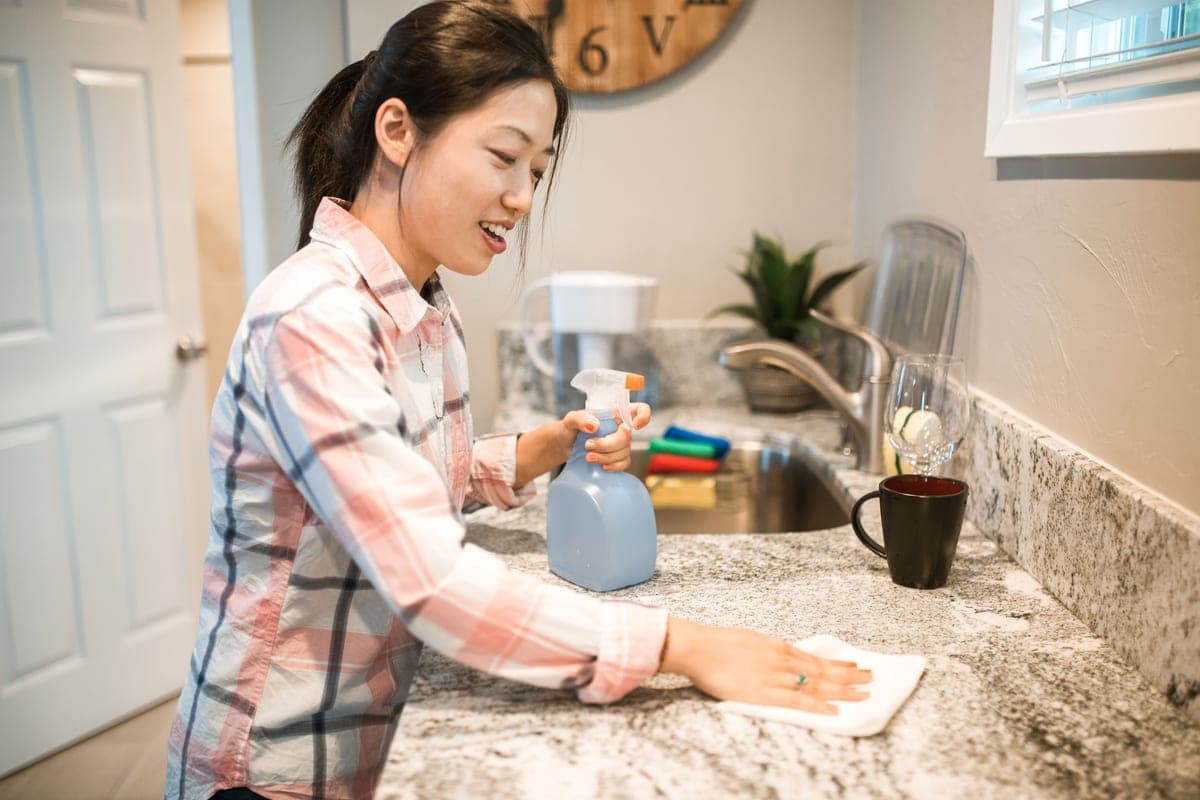
Cleaning products are not required to disclose ingredients the way food is, which means the single most useful thing about a cleaning label is whether it has a full one at all. That check takes five seconds and removes a large share of the category.
After that there are five more checks, each of which tells you something specific. None requires any chemistry knowledge.
Quick picks
| # | Product | Best for | Material | Price |
|---|---|---|---|---|
| 1 | Branch Basics ConcentrateFull disclosure, fragrance-free, MADE SAFE certified, no kill claim made. | Passes every check | Plant- and mineral-derived surfactant concentrate | |
| 2 | Attitude All-Purpose CleanerIngredients listed in full, unscented version available. | Ready-to-use that passes | Plant- and mineral-sourced surfactants | |
| 3 | 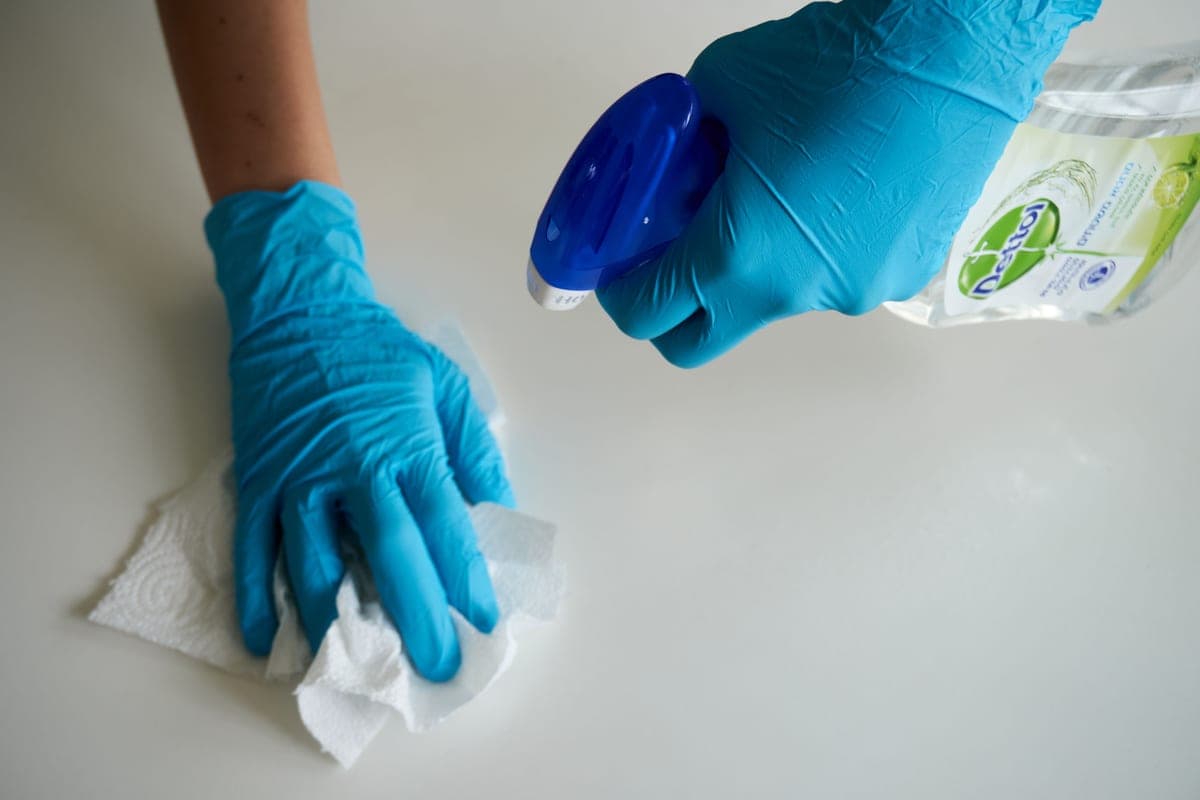 Hydrogen Peroxide Disinfectant CleanerA registered disinfectant with a dwell time, and no quats. | When you do want the EPA number | Hydrogen peroxide in a surfactant base |
Tap a row to jump to that write-up. Prices are not shown on this site because they change — the button sends you to the live Amazon listing.
The six checks
- Is there a full ingredient list? Not "contains surfactants" — an actual list. If a formula is withheld as a trade secret, that is the brand's choice and your answer.
- Does it say "fragrance" as a single word? Under FDA's cosmetic rules a whole fragrance mixture can be declared in one word because formulas are treated as trade secrets, and household products follow the convention. Unscented removes the question.
- Is there an EPA registration number? Present only on registered disinfectants, which are pesticides under FIFRA. Its presence tells you this is a disinfectant; its absence tells you there is no verified kill claim.
- Is there a dwell time? Only disinfectants specify one. If the label says to keep the surface wet for several minutes, that is the actual instruction and most people ignore it.
- Is there a named third-party mark? EPA Safer Choice reviews every ingredient regardless of percentage and requires comparable cleaning performance; MADE SAFE screens the full formula against a health-hazard list. Those two mean something. A green leaf graphic does not.
- What does the signal word say? Danger, Warning or Caution are regulated hazard signal words. They describe acute hazard in use, which is information about handling rather than about long-term exposure.
Words with no definition
| Phrase | What it means legally | What to do |
|---|---|---|
| Non-toxic | Nothing — no definition in any product category | Ignore; read the ingredients |
| Natural | Nothing for cleaning products | Ignore |
| Plant-based | Nothing specific; synthetics may still be present | Read the list |
| Eco-friendly / green | Nothing | Look for Safer Choice instead |
| Chemical-free | Impossible — water is a chemical | Treat as a credibility signal |
| Hospital-grade | Only meaningful alongside an EPA registration | Check for the number |
| Kills 99.9% of germs | A disinfection claim, which requires registration | No EPA number, no claim |
Cleaning is not disinfecting
A cleaner lifts soil. A disinfectant kills a specified list of organisms at a specified concentration after a specified dwell time. Most household cleaning is the former, and using a registered disinfectant as an everyday wipe gives you the exposure without the benefit — because almost nobody waits the required minutes.
Nearly half the products on EPA's List N use a quaternary ammonium compound as the active, and the occupational evidence links quats to rhinitis and asthma. That makes the cleaner-versus-disinfectant distinction a practical exposure decision rather than a semantic one. Quats and disinfectant safety has the detail.
The one-minute version
Full ingredient list, unscented, no EPA registration number if you are buying a cleaner rather than a disinfectant, and Safer Choice or MADE SAFE if available. That is the whole page, and it will sort a supermarket aisle faster than any brand ranking.
What to buy
Three products that pass all six checks, for the three jobs that actually come up.
The picks in full
1. Best for Passes every check
Branch Basics Concentrate
Full disclosure, fragrance-free, MADE SAFE certified, no kill claim made.
- Made of
- Plant- and mineral-derived surfactant concentrate, diluted at home
- Certified to
- Certified: MADE SAFEThird-party certified to MADE SAFE.
- Certification
- MADE SAFE certified concentrate
- Format
- One concentrate, several dilutions
- Fragrance
- None
A clean pass on all six checks: the formula is published, there is no fragrance mixture, there is no EPA registration because it does not pretend to disinfect, and it carries a named third-party certification.
What you give up
Dilution required, and no disinfection claim.
Who it's for
Everyday cleaning.
Who should skip it
Anyone needing a kill claim.
2. Best for Ready-to-use that passes
Attitude All-Purpose Cleaner
Ingredients listed in full, unscented version available.
- Made of
- Plant- and mineral-sourced surfactants, water
- Certified to
- Manufacturer claimManufacturer claim; no third-party certification published.
- Ingredients
- Fully listed on pack
- Fragrance
- Scented and unscented versions
- Note
- Check the specific SKU's certification
For households that will not dilute a concentrate, this passes the checks that matter: a full list on the pack and an unscented option. Check the specific SKU for certification rather than assuming brand-wide.
What you give up
Scented versions carry an unitemized fragrance mixture.
Who it's for
Grab-and-spray cleaning.
Who should skip it
Anyone wanting one certified product for everything.
3. Best for When you do want the EPA number
Hydrogen Peroxide Disinfectant Cleaner
A registered disinfectant with a dwell time, and no quats.
- Made of
- Hydrogen peroxide in a surfactant base
- Certified to
- Manufacturer claimManufacturer claim; no third-party certification published.
- Active
- Hydrogen peroxide
- Dwell time
- Check the label. It matters
- Quats
- None
The example of a product where an EPA registration number is what you are looking for. Hydrogen peroxide rather than quats, with a stated dwell time to actually observe.
What you give up
Dwell time matters and most people do not wait. Can lighten some fabrics.
Who it's for
After illness and after raw meat.
Who should skip it
Everyday wiping.
How we chose, and what we did not do
Every product on this page was checked against its published material composition and its third-party certifications, with each claim labeled as certified, manufacturer-stated or independently tested by a named party. We do not run a lab and we do not claim to have used these products — the full method is here.
Questions people actually ask
Do cleaning products have to list ingredients?
Not the way food does. Disclosure is largely voluntary, which is why the presence of a full ingredient list is itself the most useful signal on a cleaning label.
What does an EPA registration number mean?
That the product is registered as a pesticide under FIFRA and may make disinfection claims. It is information rather than a warning — and its absence means no verified kill claim.
Is Safer Choice better than other eco labels?
It is one of only two marks in this category that review the actual formula. EPA reviews every ingredient regardless of percentage and also requires the product to clean comparably to a conventional one, which most eco labels do not.
What do Danger, Warning and Caution mean?
They are regulated hazard signal words, in descending order of acute hazard severity in use. They tell you about handling precautions rather than about long-term exposure.
Sources
- US EPA — Learn About the Safer Choice Label — Every ingredient reviewed regardless of its percentage, plus a performance standard
- US FDA — Fragrances in Cosmetics — The rule that lets an entire fragrance mixture be listed as one word
- Safer Disinfectants — quaternary ammonium compounds (quats) in disinfectants — Occupational asthma and respiratory evidence for quats
- MADE SAFE — certification
Read next
Cleaning & Laundry
What "fragrance" hides on a label, and why it is allowed
The trade-secret rule that lets fragrance be one word, where it appears, and the unscented workaround.
Cleaning & Laundry
Best non-toxic all-purpose cleaners
All-purpose cleaners with disclosed formulas and real certifications, plus what the marks actually cover.
Cleaning & Laundry
Quats, asthma, and when to disinfect at all
What the occupational evidence on quats shows, and the registered alternatives that avoid them.

Kitchen & Cookware
Greenwashing red flags: eight claims that mean nothing
Eight unregulated product claims decoded, with the one question that cuts through all of them.
Written by Selena H., owner of Glass & Cotton.