Pets & Fitness
Why non-stick cookware kills birds
If you keep birds, this is the most important page on this site. It is also the one where the evidence is least ambiguous.
Last reviewed October 13, 2026 — Selena H.

Overheated PTFE non-stick cookware kills pet birds, often within minutes. This is not a fringe claim or a precautionary guess: the published veterinary literature attributes most cases of PTFE toxicosis in pet birds to overheated frying pans, and reports that at temperatures above 280C (about 536F) PTFE-coated surfaces begin emitting degradation products that cause open-beak breathing, incoordination and death.
The same fumes cause polymer-fume fever in people — fever, tremors and body aches appearing hours after exposure and resolving in a few days. Science News, reviewing four decades of research, reports that at high temperatures the polymer emits airborne poisons, that the fumes can kill birds, and that people breathing them can develop that flu-like illness. A 1975 Veterinary Record report described fume fever in a man alongside the death of five cockatiels after a PTFE-coated frying pan overheated.
Quick picks
| # | Product | Best for | Material | Price |
|---|---|---|---|---|
| 1 | Lodge Cast Iron Skillet (10.25 in)Iron and polymerized oil, under thirty dollars. No coating of any kind. | Cheapest replacement | Bare cast iron | |
| 2 |  Made In Stainless Clad Set5-ply clad stainless with no coating anywhere in the box. | A whole kitchen, permanently | 5-ply stainless clad: 304 stainless cooking surface | |
| 3 |  GreenPan Valencia ProA ceramic coating with no PTFE, rated to 600F. | If you still want non-stick | Hard-anodized aluminum body with the brand's diamond-reinforced ceramic coating |
Tap a row to jump to that write-up. Prices are not shown on this site because they change — the button sends you to the live Amazon listing.
The 50-word answer
PTFE-coated pans emit lethal degradation products when overheated — above roughly 280C, which an empty pan on a high burner reaches in minutes. Birds die within minutes because their respiratory systems extract gases far more efficiently than ours. The only reliable prevention is no PTFE in the home, or no bird anywhere near the kitchen. Ventilation is not sufficient.
Why birds and not us
A bird's respiratory system is built for flight, which demands extraordinary oxygen throughput. Air passes through a unidirectional system of air sacs and parabronchi that extracts gases with far greater efficiency than a mammalian lung — which means a bird in the same room receives a much larger effective dose of anything airborne.
That is why the same exposure that leaves a cook with a headache or a transient flu kills a parrot. It is a dose-and-physiology difference, not a difference in what is being emitted.
Clinical signs, and what to do
We are not a veterinary source and this is not clinical advice. The action item is to get the bird out of the air and to a vet; the rest of this page is about not getting there.
- Open-beak breathing, tail bobbing, or any visible respiratory effort.
- Incoordination, falling from the perch, weakness.
- Sudden death, which in severe exposures can occur with no preceding signs.
- If you suspect exposure: get the bird into fresh air immediately and contact an avian vet or an emergency clinic. This is a genuine emergency.
- Remove the pan from the heat and ventilate the whole house, not just the kitchen — fumes move.
Prevention, in order of reliability
- No PTFE cookware in the house. The only reliable prevention. Uncoated stainless, cast iron, carbon steel, enamel and solid ceramic have no fluoropolymer to degrade.
- Also check the other PTFE in a kitchen: some bakeware liners, some air fryer baskets, some irons and some self-cleaning oven cycles. The oven cycle is a real and frequently missed one.
- If PTFE stays, the bird must be in a different airspace — not a different room with the door open. Fumes do not respect doorways.
- Never leave an empty pan on heat. This is the condition that produces the emissions, and it is how almost every incident starts.
- Ventilation is a mitigation, not a solution. An extractor fan reduces concentration; it does not make a lethal exposure safe.
Other kitchen hazards for birds
While we are here, because bird owners rarely get told these in one place: aerosol sprays of any kind, including cleaning sprays and air fresheners, are dangerous in a bird's airspace. Scented candles and incense are a respiratory irritant. Avocado, chocolate, caffeine, alcohol, onion and garlic are toxic to birds. And a kitchen contains open water, hot surfaces and hard windows — the mechanical hazards that account for a great many pet-bird injuries.
The simplest answer to most of it is that a kitchen is not a good room for a bird to live in, even without PTFE.
What to buy instead
Three pans with no fluoropolymer anywhere in them.
The picks in full
1. Best for Cheapest replacement
Lodge Cast Iron Skillet (10.25 in)
Iron and polymerized oil, under thirty dollars. No coating of any kind.
- Made of
- Bare cast iron, factory-seasoned with vegetable oil
- Certified to
- Manufacturer claimManufacturer claim; no third-party certification published.
- Coating
- None. Polymerized oil seasoning only
- Oven safe
- Manufacturer states oven, grill and campfire safe
- Induction
- Yes
If you keep birds and own PTFE pans, this is the fastest and cheapest way out: a cast iron skillet has no coating to degrade at any temperature a domestic burner reaches.
What you give up
Weight, seasoning maintenance, and no long acidic cooking.
Who it's for
Bird owners replacing non-stick immediately.
Who should skip it
Iron-overload conditions.
2. Best for A whole kitchen, permanently
Made In Stainless Clad Set
5-ply clad stainless with no coating anywhere in the box.
- Made of
- 5-ply stainless clad: 304 stainless cooking surface, aluminum core layers
- Certified to
- Manufacturer claimManufacturer claim; no third-party certification published.
- Construction
- 5-ply clad
- Cooking surface
- 304 stainless steel
- Coating
- None
For replacing a full set rather than one pan: uncoated 304 stainless throughout, nothing that can emit anything at any cooking temperature, and nothing that expires.
What you give up
Price, and real technique for eggs.
Who it's for
Replacing a coated set entirely.
Who should skip it
Budget buyers, where cast iron does the urgent job for a fraction.
3. Best for If you still want non-stick
GreenPan Valencia Pro
A ceramic coating with no PTFE, rated to 600F.
- Made of
- Hard-anodized aluminum body with the brand's diamond-reinforced ceramic coating
- Certified to
- Manufacturer claimManufacturer claim; no third-party certification published.
- Coating type
- Ceramic (Thermolon), no PTFE
- Oven safe
- Manufacturer states 600F
- Dishwasher
- Manufacturer states safe
A sol-gel ceramic coating contains no fluoropolymer, so the specific mechanism that kills birds is absent. The usual caveat applies — it is a consumable with a one-to-three-year life — and the higher heat rating gives more margin.
What you give up
A coating that wears out, and it is still not a searing pan.
Who it's for
Bird owners who need non-stick release.
Who should skip it
Anyone wanting a permanent pan.
How we chose, and what we did not do
Every product on this page was checked against its published material composition and its third-party certifications, with each claim labeled as certified, manufacturer-stated or independently tested by a named party. We do not run a lab and we do not claim to have used these products — the full method is here.
Questions people actually ask
Does non-stick cookware really kill birds?
Yes. The published veterinary literature attributes most PTFE toxicosis cases in pet birds to overheated frying pans, with emissions beginning above about 280C and death often following within minutes.
At what temperature does PTFE become dangerous to birds?
Above roughly 280C (about 536F), which an empty pan on a high burner reaches in a couple of minutes. The commonly cited human-exposure threshold for degradation is around 500F.
Is ventilation enough to protect a bird?
No. An extractor fan reduces concentration but does not make a lethal exposure safe, and fumes move between rooms. The only reliable prevention is no PTFE in the home, or the bird in a genuinely separate airspace.
What are the signs of PTFE poisoning in a bird?
Open-beak breathing, tail bobbing, incoordination, falling from the perch, and in severe cases sudden death. Get the bird into fresh air and to an avian vet immediately — it is an emergency.
What else in a kitchen is dangerous for birds?
Aerosol sprays of any kind, scented candles and incense, self-cleaning oven cycles, and foods including avocado, chocolate, caffeine, onion and garlic. A kitchen is not a good room for a bird to live in.
Does ceramic non-stick pose the same risk?
A sol-gel ceramic coating contains no PTFE, so the specific fluoropolymer degradation mechanism is absent. Never heating any pan empty remains good practice regardless.
Sources
- PTFE toxicosis in pet birds (review, NIH PubMed Central)
- Science News — Sticky situation: nonstick surfaces can turn toxic at high heat
- US EPA — Our Current Understanding of the Human Health and Environmental Risks of PFAS — Regulator overview of PFAS persistence and health endpoints
- GreenPan (manufacturer)
Read next
Kitchen & Cookware
Is Teflon safe to cook with?
What the evidence actually says about PTFE: normal use, overheating, scratched pans, and birds.
Kitchen & Cookware
What PFAS actually means in cookware
PFAS, PFOA and PTFE separated with sources, plus what the labels can and cannot promise.
Kitchen & Cookware
PFAS-free cookware, with the terminology sorted out first
Cookware with no fluoropolymer anywhere, plus a plain explanation of why the PFAS-free label is unregulated.
Pets & Fitness
The non-toxic pet gear checklist
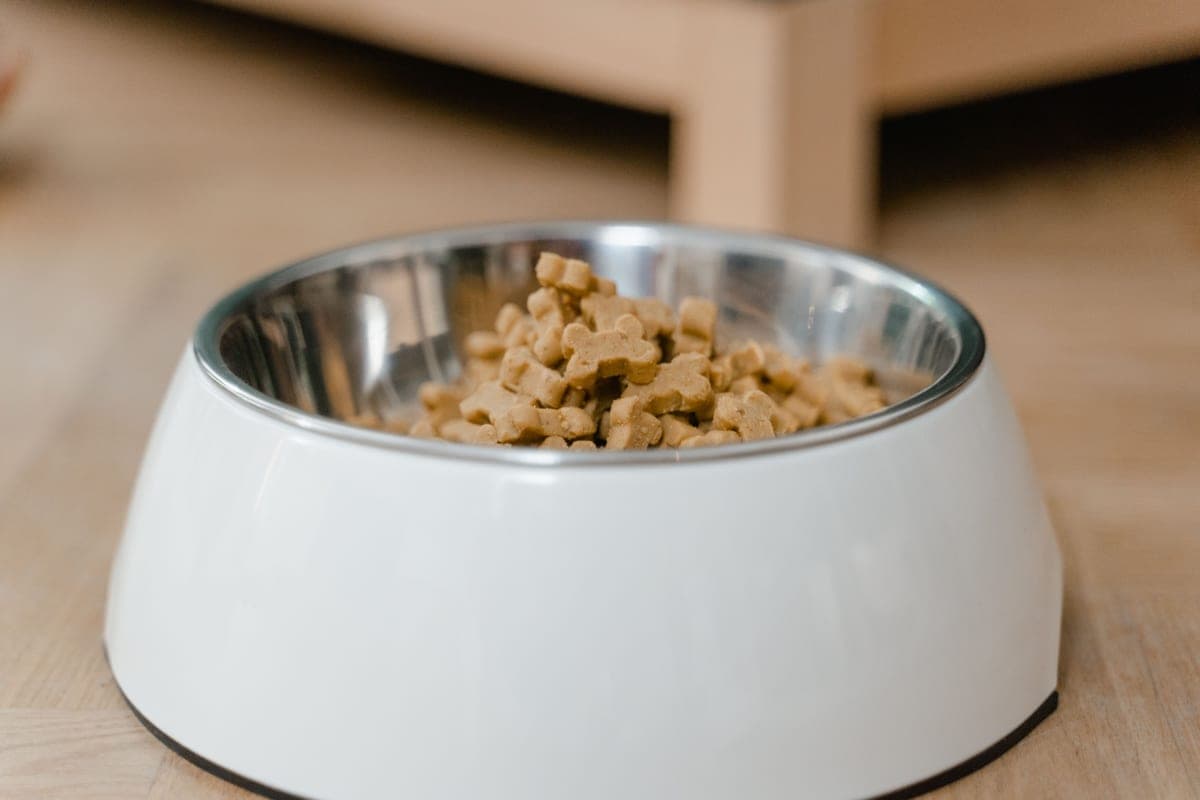
Pet gear in evidence order: the PTFE bird warning, bowls, bedding, toys, and the hazards that outrank materials.
Written by Selena H., owner of Glass & Cotton.