Kitchen & Cookware
Best non-toxic coffee makers
This is the one appliance that runs near-boiling water through its materials every single morning. The brew path is the whole question.
Last reviewed October 13, 2026 — Selena H.
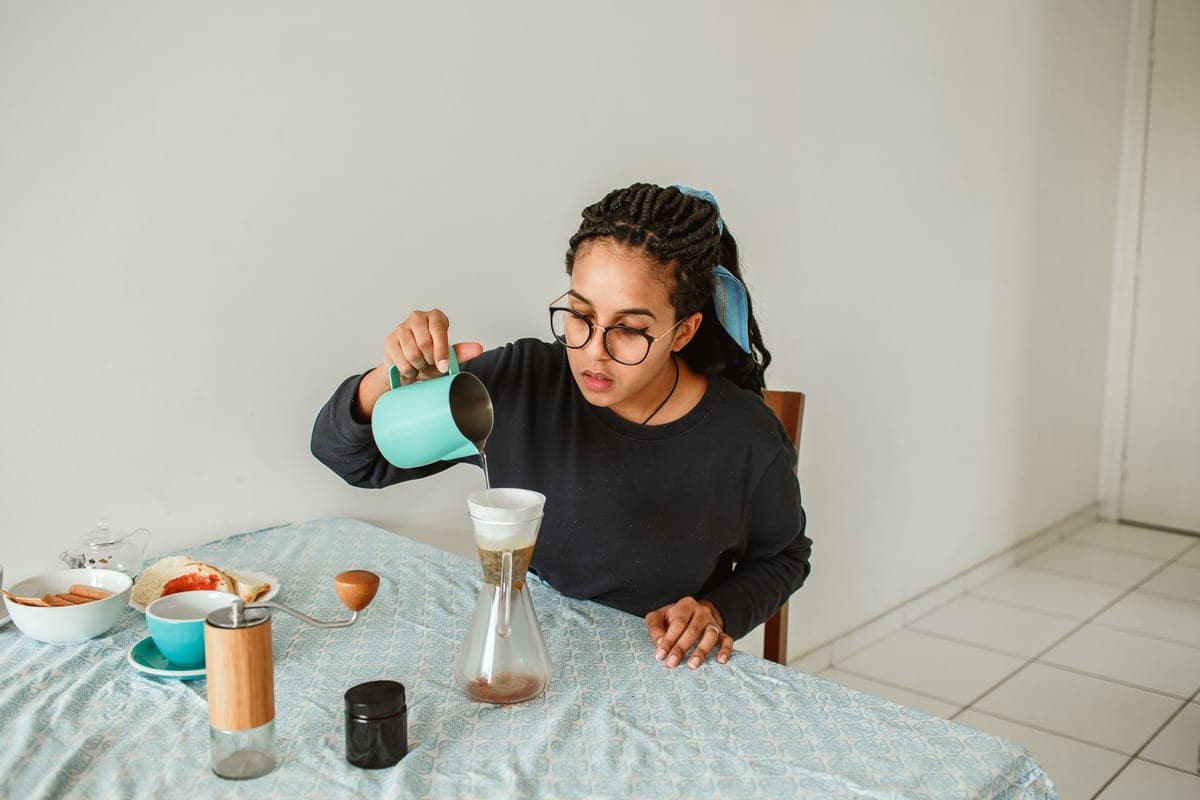
Most kitchen plastic contacts are brief or cold. A drip coffee maker is the exception: it heats water to near boiling and runs it through tubing, a reservoir, a basket and often a carafe, every morning, for years. If you are going to care about hot water contact anywhere, this is the appliance where the contact is most repeated.
The good news is that the zero-plastic answers in this category are also the ones serious coffee people already use, and they are cheap. A pour-over cone and a kettle have a brew path of glass, ceramic and paper, full stop.
Quick picks
| # | Product | Best for | Material | Price |
|---|---|---|---|---|
| 1 | Chemex Pour-Over BrewerBorosilicate glass and a paper filter. Nothing else touches the water. | Zero plastic, best cup | Borosilicate glass carafe | |
| 2 | Hario V60 Ceramic DripperA glazed ceramic cone and a paper filter. Under twenty dollars. | Cheapest zero-plastic option | Glazed ceramic cone with a paper filter | |
| 3 | Bodum Chambord French PressGlass carafe, stainless plunger. No paper, no plastic in the water. | No filters, no electricity | Borosilicate glass carafe | |
| 4 | Technivorm Moccamaster KBGV SelectMetal boiler, glass carafe. The least-plastic automatic drip machine. | Automatic brewing | Aluminum boiler and copper heating element |
Tap a row to jump to that write-up. Prices are not shown on this site because they change — the button sends you to the live Amazon listing.
Ranking the brew paths
| Method | Water path | Plastic in the path |
|---|---|---|
| Glass pour-over | Glass, paper | None |
| Ceramic pour-over | Ceramic, paper | None |
| Glass french press | Glass, stainless | None in the water; knob and feet only |
| Stovetop moka pot | Aluminum or steel | None, though aluminum is the material question |
| Premium automatic drip | Metal boiler, glass carafe, plastic basket | Some |
| Typical automatic drip | Plastic reservoir, tubing, basket and often carafe | Most of it |
| Single-serve pod machines | Plastic reservoir and tubing, plus the pod itself | Most of it, plus a heated pod |
The cheapest meaningful change
If you own a standard drip machine and do not want to replace it, the single highest-value change is to stop leaving water standing in a hot plastic reservoir and to descale it regularly — the scale is what makes an element run hotter than it should. That is free.
The second cheapest is a twenty-dollar ceramic cone, which removes plastic from the brew path entirely. In a category where the premium automatic option costs several hundred dollars, it is worth saying that the cheapest option is also the most complete solution.
What we ruled out
Pod machines, where a plastic or aluminum pod is pierced and flushed with near-boiling water and there is no version of the format that removes it. Drip machines with a plastic reservoir, plastic tubing and a plastic carafe, which is most of the market. And electric kettles with plastic water chambers, which belong in the kettle roundup and are the same question in a smaller appliance.
The picks in full
1. Best for Zero plastic, best cup
Chemex Pour-Over Brewer
Borosilicate glass and a paper filter. Nothing else touches the water.
- Made of
- Borosilicate glass carafe, wood collar, paper filter
- Certified to
- Manufacturer claimManufacturer claim; no third-party certification published.
- Water path
- Glass and paper only
- Plastic parts
- None in the brew path
- Power
- None. Kettle required
The brew path here is glass and paper, and that is the complete material list. It is also the brewer a great many coffee professionals use at home, so this is not a compromise for safety's sake. The thick paper filter removes most of the oils, which is why the cup is clean rather than heavy.
What you give up
It needs a kettle and about four minutes of attention, and there is no timer, no warming plate and no walking away. Glass breaks, and the filters are an ongoing cost.
Who it's for
Anyone who makes one or two cups and will stand there for four minutes.
Who should skip it
People who need coffee waiting for them, or who make a full carafe for a household.
2. Best for Cheapest zero-plastic option
Hario V60 Ceramic Dripper
A glazed ceramic cone and a paper filter. Under twenty dollars.
- Made of
- Glazed ceramic cone with a paper filter
- Certified to
- Manufacturer claimManufacturer claim; no third-party certification published.
- Water contact
- Ceramic and paper
- Plastic
- None
- Note
- Cheapest zero-plastic brew path there is
The cheapest possible way to have a brew path with no plastic in it. Ceramic holds heat better than a plastic dripper, costs very little, and sits on top of any mug or carafe you own. If the goal is removing plastic from the morning with minimum spend, this is it.
What you give up
It is a cone, not an appliance: you need a kettle, a scale ideally, and your attention. Ceramic chips, and the cone needs preheating or it steals heat from the brew.
Who it's for
Single cups, small budgets, and anyone testing whether manual brewing suits them.
Who should skip it
Carafe-sized output and hands-off mornings.
3. Best for No filters, no electricity
Bodum Chambord French Press
Glass carafe, stainless plunger. No paper, no plastic in the water.
- Made of
- Borosilicate glass carafe, stainless filter and frame
- Certified to
- Manufacturer claimManufacturer claim; no third-party certification published.
- Water contact
- Glass and stainless
- Plastic
- Lid knob and base feet only
- Note
- Replacement carafes are sold separately
A glass french press has a water path of borosilicate glass and stainless steel, with plastic only in the lid knob and base feet. It needs no filters, no power and no technique beyond timing, and it makes a fuller cup than paper-filtered methods because the oils stay in.
What you give up
Grit in the cup, more sediment, and a messier clean-up. The glass carafe breaks, though replacements are sold separately. Coffee left in it keeps extracting and turns bitter.
Who it's for
Two to four cups at once with no consumables.
Who should skip it
Anyone who dislikes sediment or wants to leave coffee standing.
4. Best for Automatic brewing
Technivorm Moccamaster KBGV Select
Metal boiler, glass carafe. The least-plastic automatic drip machine.
- Made of
- Aluminum boiler and copper heating element, glass carafe, some plastic housing
- Certified to
- Manufacturer claimManufacturer claim; no third-party certification published.
- Brew path
- Metal and glass; plastic in the housing and basket
- Brew temp
- Manufacturer states 196 to 205F
- Repairability
- Parts sold separately
If you want a machine that brews a full carafe while you do something else, this is the one with the most metal and glass in it: an aluminum boiler and copper element, a glass carafe, and a brew temperature the maker states as 196 to 205F — the range coffee actually wants. Parts are sold separately, so it is repairable rather than disposable.
What you give up
Expensive, and there is still plastic in the housing and the brew basket, so this is the least-plastic automatic option rather than a plastic-free one. No built-in grinder, no timer on the base model.
Who it's for
Households brewing a carafe daily who want automation and repairability.
Who should skip it
Anyone wanting a genuinely plastic-free brew path, or a cheap machine.
How we chose, and what we did not do
Every product on this page was checked against its published material composition and its third-party certifications, with each claim labeled as certified, manufacturer-stated or independently tested by a named party. We do not run a lab and we do not claim to have used these products — the full method is here.
Questions people actually ask
Do coffee makers leach plastic into coffee?
A standard drip machine runs near-boiling water through a plastic reservoir, tubing and basket, and heat is what drives migration from a polymer. The brew path is the part to look at, not the housing, and pour-over methods remove plastic from it entirely.
What is the best plastic-free coffee maker?
A glass or ceramic pour-over cone with a paper filter — the water touches only glass or ceramic and paper. A glass french press is the equivalent for brewing several cups without filters.
Are stainless steel coffee makers better?
Stainless is inert and fine, but most "stainless" machines are stainless-skinned with plastic reservoirs and baskets. Look at what the water touches rather than what the outside is made of.
Is a moka pot a good option?
The water path is metal only, with no plastic and no paper. The trade-off is that traditional moka pots are aluminum, which is its own material question — see anodized and bare aluminum.
Sources
- Pyrex (manufacturer)
- US EPA — Our Current Understanding of the Human Health and Environmental Risks of PFAS — Regulator overview of PFAS persistence and health endpoints
- Li et al. (2020), Microplastic release from the degradation of polypropylene feeding bottles during infant formula preparation, Nature Food — Trinity College Dublin record
Read next
Kitchen & Cookware
Best non-toxic tea kettles
Stovetop and electric kettles compared on what the water actually touches, not what the body is skinned with.
Kitchen & Cookware
Best water filter pitchers, judged on their certified claims
Filter pitchers compared on their actual NSF/ANSI certified claims, with the retired P473 standard explained.
Kitchen & Cookware
Glass and stoneware: the inert options
Glass and glazed stoneware: inertness, thermal shock, and the lead question on handmade and vintage pieces.
Kitchen & Cookware
Is anodized aluminum safe for cooking?
What anodizing actually does, how bare aluminum behaves with acid, and the coating question underneath most anodized pans.
Written by Selena H., owner of Glass & Cotton.