Kitchen & Cookware
Best non-toxic tea kettles
Boiling is the most aggressive thing you do to water in a day, and whatever the kettle is lined with is what you are boiling it in.
Last reviewed October 13, 2026 — Selena H.
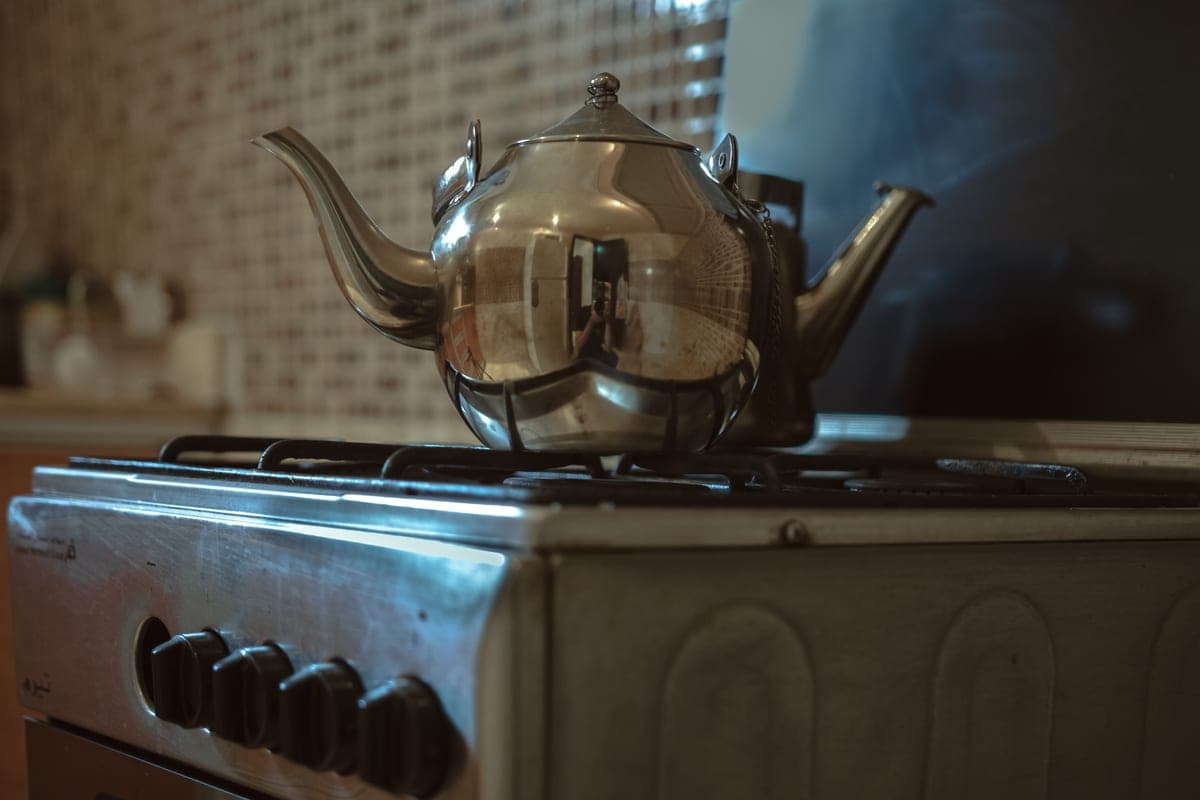
A kettle is the simplest appliance in the kitchen and the easiest one to get right, because there are only three materials worth having inside it: stainless steel, fired enamel, or glass. The reason to check anyway is that a lot of electric kettles have a plastic water window, a plastic lid underside or a plastic spout filter — all of which sit in the steam path or the water itself.
The rule for this whole page: ignore what the outside is made of and look at what the water touches.
Quick picks
| # | Product | Best for | Material | Price |
|---|---|---|---|---|
| 1 | All-Clad Stainless Stovetop Kettle18/10 stainless inside and out, no coating, no plastic in the water. | Stovetop, simplest possible | 18/10 stainless steel body | |
| 2 | Le Creuset Enamel-on-Steel KettleFired enamel over steel. Inert interior, and it looks like an object. | Enamel, if you want color | Carbon steel body with a fired enamel interior and exterior | |
| 3 | Fellow Stagg EKG Electric KettleStainless water chamber and spout, with the plastic kept out of the water. | Electric with temperature control | Stainless steel body and spout | |
| 4 |  Hario V60 Ceramic DripperIf you buy a gooseneck kettle, this is what it is for. | The other half of the setup | Glazed ceramic cone with a paper filter |
Tap a row to jump to that write-up. Prices are not shown on this site because they change — the button sends you to the live Amazon listing.
What to check on an electric kettle
- The water chamber. Stainless or glass, not plastic. This is most of the decision.
- The underside of the lid. Frequently plastic even on stainless kettles, and it sits directly in the steam.
- The water window. A plastic sight strip is in contact with the water. Kettles without one exist.
- The spout filter. Often a plastic mesh. Stainless mesh versions are available.
- The element. A concealed stainless element is easier to descale and does not sit exposed in the water.
Descaling matters more than material
Scale is an insulating layer on the element, which makes the element run hotter to deliver the same boil. On a plastic-chambered kettle that is a slow increase in the temperature the plastic is exposed to; on any kettle it is wasted power and a slower boil.
Citric acid or white vinegar, once a month in a hard-water area, takes five minutes and does more for a kettle than most upgrades. Cleaning vinegar is the cheapest descaler there is.
What we ruled out
Electric kettles with plastic water chambers, which is most of the inexpensive market. Glass kettles with plastic lids and bases where the plastic sits in the steam path — the glass is doing less work than it appears to. And aluminum stovetop kettles, which raise the same material question as aluminum cookware without any of the performance argument.
The picks in full
1. Best for Stovetop, simplest possible
All-Clad Stainless Stovetop Kettle
18/10 stainless inside and out, no coating, no plastic in the water.
- Made of
- 18/10 stainless steel body, no interior coating
- Certified to
- Manufacturer claimManufacturer claim; no third-party certification published.
- Water contact
- Stainless steel
- Plastic
- None in the water path
- Induction
- Yes
A plain stainless stovetop kettle is the most boring and most complete answer in this category: one material, no coating, no electronics, works on every cooktop including induction, and will last decades. There is nothing in it to degrade and nothing to wonder about.
What you give up
No temperature control, so green tea and pour-over coffee need a thermometer or a guess. The handle gets hot and it whistles rather than switching off.
Who it's for
Anyone who wants a kettle that will still work in twenty years.
Who should skip it
Tea and coffee that need specific temperatures, and anyone who wants a kettle to shut itself off.
2. Best for Enamel, if you want color
Le Creuset Enamel-on-Steel Kettle
Fired enamel over steel. Inert interior, and it looks like an object.
- Made of
- Carbon steel body with a fired enamel interior and exterior
- Certified to
- Manufacturer claimManufacturer claim; no third-party certification published.
- Water contact
- Fired enamel
- Plastic
- Handle grip only
- Note
- Chips if knocked, like all enamel
Vitreous enamel is glass fused onto steel, which gives an inert water-contact surface with no coating to wear off, and unlike bare stainless it will not develop the mineral staining that hard water leaves. It is also the one kettle on this list anyone would describe as attractive, which is a legitimate reason to buy something that lives on the hob.
What you give up
Enamel chips if knocked, and a chipped interior means exposed steel. Expensive for a kettle, and there is no temperature control.
Who it's for
Hard-water areas and anyone who wants the kettle to look like part of the kitchen.
Who should skip it
Clumsy households and budget buyers.
3. Best for Electric with temperature control
Fellow Stagg EKG Electric Kettle
Stainless water chamber and spout, with the plastic kept out of the water.
- Made of
- Stainless steel body and spout, plastic handle and base
- Certified to
- Manufacturer claimManufacturer claim; no third-party certification published.
- Water contact
- Stainless steel
- Temperature control
- To the degree
- Note
- Lid gasket is silicone
If you want an electric kettle, the thing to check is whether the water chamber and the lid underside are stainless rather than plastic, and here they are. Temperature control to the degree genuinely matters for green tea and pour-over coffee, and the gooseneck spout is the reason this kettle exists.
What you give up
The handle and base are plastic, and the lid gasket is silicone — so this is a stainless water path rather than a plastic-free appliance. It is also expensive for a kettle and slow to boil a full load.
Who it's for
Pour-over coffee and tea that needs a specific temperature.
Who should skip it
Anyone wanting a fast, cheap electric kettle, or no polymer anywhere in the appliance.
4. Best for The other half of the setup
Hario V60 Ceramic Dripper
If you buy a gooseneck kettle, this is what it is for.
- Made of
- Glazed ceramic cone with a paper filter
- Certified to
- Manufacturer claimManufacturer claim; no third-party certification published.
- Water contact
- Ceramic and paper
- Plastic
- None
- Note
- Cheapest zero-plastic brew path there is
Included here because a temperature-controlled kettle and a ceramic pour-over cone are one purchase in practice. The cone's water path is ceramic and paper, which pairs with a stainless kettle to give a morning coffee routine with no plastic in it anywhere.
What you give up
It is a cone and not a kettle — you still need the kettle. Ceramic chips, and it needs preheating.
Who it's for
Anyone buying a kettle for coffee rather than tea.
Who should skip it
Tea-only households.
How we chose, and what we did not do
Every product on this page was checked against its published material composition and its third-party certifications, with each claim labeled as certified, manufacturer-stated or independently tested by a named party. We do not run a lab and we do not claim to have used these products — the full method is here.
Questions people actually ask
Are plastic electric kettles bad?
They put a polymer in direct contact with boiling water twice a day, which is the kind of repeated hot contact worth avoiding when the alternative is cheap. A stainless or glass water chamber removes it; check the lid underside and water window too.
Is a glass kettle better than stainless?
Both are inert. Glass lets you see scale building, stainless survives being knocked. The thing that actually varies between models is how much plastic surrounds either one.
Do stainless kettles leach nickel?
Plain water is not acidic, so the leaching measured in acidic cooking studies does not translate to boiling water in a kettle. Nickel migration is driven by acid and prolonged contact, neither of which describes a kettle.
How often should I descale a kettle?
Monthly in a hard-water area, every few months elsewhere. Citric acid or white vinegar does it in five minutes, and a descaled element runs cooler and boils faster.
Sources
Read next
Kitchen & Cookware
Best non-toxic coffee makers
Coffee makers ranked by how little plastic the hot water touches, from zero-plastic manual brewers up.
Kitchen & Cookware
Best water filter pitchers, judged on their certified claims
Filter pitchers compared on their actual NSF/ANSI certified claims, with the retired P473 standard explained.

Kitchen & Cookware
Is stainless steel cookware safe?
The nickel and chromium leaching evidence stated with actual numbers, plus who should act on it.
Cleaning & Laundry
Best non-toxic all-purpose cleaners
All-purpose cleaners with disclosed formulas and real certifications, plus what the marks actually cover.
Written by Selena H., owner of Glass & Cotton.