Kitchen & Cookware
Best non-toxic cookware of 2026 — certification-checked picks
Six cookware options, sorted by what they are made of rather than by how they are marketed. Every pick names what it gives up.
Last reviewed October 13, 2026 — Selena H.

"Non-toxic cookware" has no legal definition, so this list is built on the questions that do have answers: what is the cooking surface made of, what happens to it at the temperature you actually cook at, and has anyone other than the seller verified it. The picks below are ordered by how little they transfer and how long they last, not by how heavily they are advertised.
Our method in one sentence: we read the published material composition, look for a named third-party certification, record what the brand does not disclose, and label every claim as certified, manufacturer-stated or independently tested — the full version is on how we choose.
Quick picks
| # | Product | Best for | Material | Price |
|---|---|---|---|---|
| 1 | Made In Stainless Clad SetUncoated 5-ply stainless. Nothing wears off, so nothing needs replacing. | Most kitchens | 5-ply stainless clad: 304 stainless cooking surface | |
| 2 |  Lodge Cast Iron Skillet (10.25 in)Bare iron and polymerized oil. The cheapest pan here and the longest-lived. | Searing and value | Bare cast iron | |
| 3 | 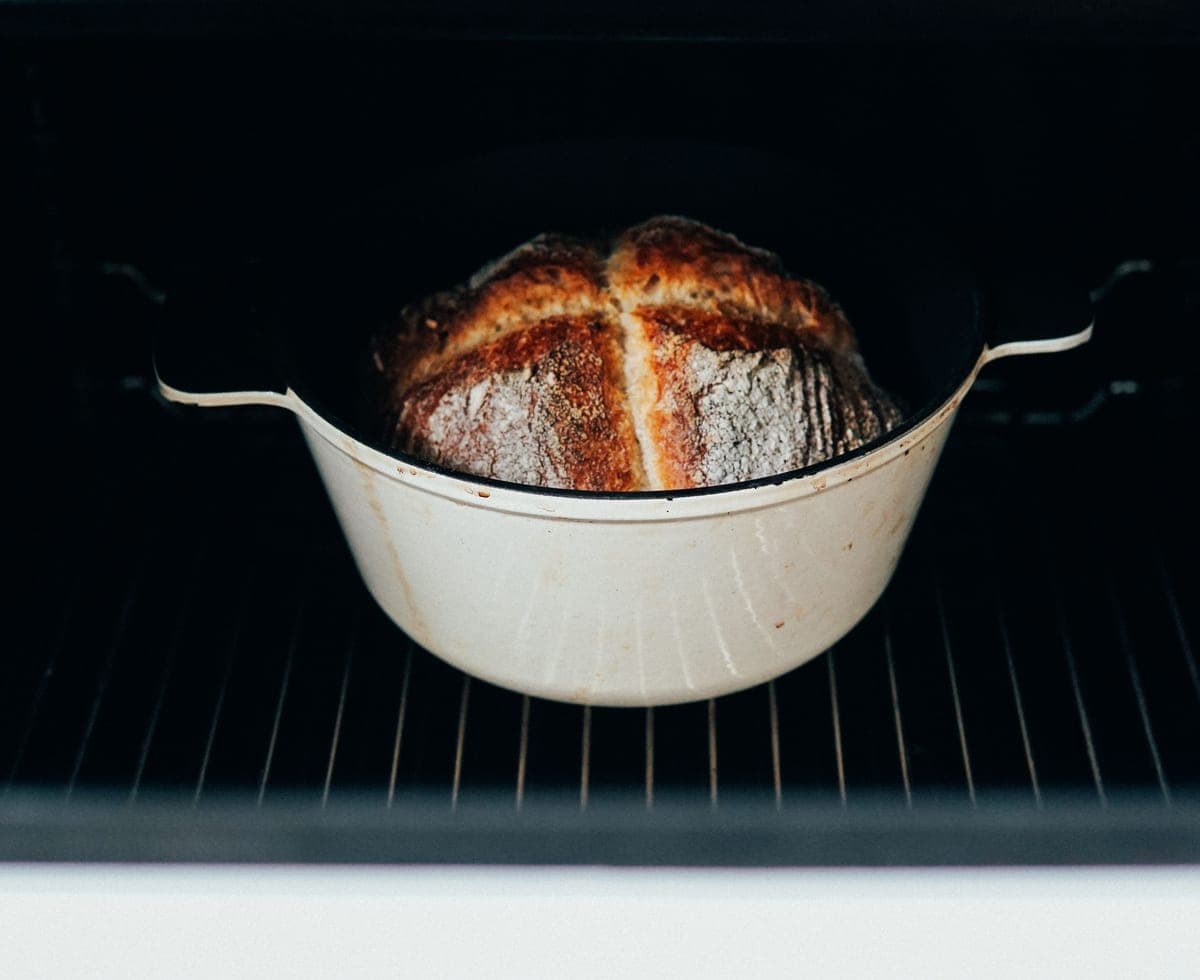 Le Creuset Enameled Dutch OvenFired glass over iron. No seasoning, no metal contact, no coating to wear out. | Acidic braises | Cast iron core with a fired vitreous enamel interior and exterior | |
| 4 |  Xtrema Versa SkilletSolid ceramic all the way through. The only pick with no metal in it at all. | No metal, no coating | 100% ceramic through-body (no metal core | |
| 5 |  Caraway Cookware SetCeramic-coated aluminum. Genuinely non-stick, and a consumable. | Non-stick without PTFE | Aluminum body | |
| 6 |  Lodge Carbon Steel SkilletSeasoned steel with cast iron's chemistry and about two-thirds of its weight. | A lighter cast iron | Pressed carbon steel |
Tap a row to jump to that write-up. Prices are not shown on this site because they change — the button sends you to the live Amazon listing.
How we chose these
Six criteria, applied in this order. The product has to be currently sold. Its material composition has to be published by the manufacturer in enough detail to say what the cooking surface is. Any safety claim has to be traceable to either a named standard or the brand's own statement — and we label which. The pan has to have a plausible lifespan we can state as a range. It has to be the best answer to a specific job rather than a generically good product. And the trade-off has to be stateable in one sentence, because a product whose downside we cannot name is a product we have not understood.
We did not test these. There is no lab and no test kitchen here, and inventing a months-of-use verdict would be the easiest thing on this page to fake. How we choose sets out exactly what we do instead.
What to look for yourself
- A positive composition claim, not a free-from list. "304 stainless cooking surface" and "sol-gel ceramic coating" tell you something. "No PFOA, no lead, no cadmium" mostly tells you the product is legal — PFOA has been out of US non-stick manufacture for over a decade.
- The maximum oven temperature, and whether it is for the pan or the handle. Brands quote the higher of the two.
- Whether the base is magnetic, if you have induction. Solid ceramic and plain aluminum are not.
- Rivets versus a welded handle. Rivets are the more durable joint and the harder thing to clean around. Either is fine; a glued handle is not.
- A stated coating lifespan, or its absence. Nobody publishes one, which is itself the answer: assume one to three years for ceramic coatings and budget accordingly.
- Whether you actually need a set. Most households cook in two or three vessels. Sets versus pieces goes through the arithmetic.
What we ruled out, and why
Anodized aluminum with a non-stick coating. Fine products, but the interesting surface is the coating, not the anodizing, which puts them in the same bucket as any other coated pan with less disclosure. See anodized aluminum.
Hybrid stainless-and-PTFE pans, including HexClad. The non-stick in the valleys is a fluoropolymer, so a shopper who came here to avoid PTFE has not avoided it. We review HexClad rather than rank it here, because the product is reasonable and the marketing is the problem.
Copper-lined cookware. Unlined copper leaches into acidic food at levels that matter, and lined copper is a stainless pan with a copper exterior and a much higher price.
Anything whose composition we could not find. Several heavily advertised sets publish nothing beyond a free-from list. That is a disclosure decision by the brand and it decides the matter for us.
What Reddit actually recommends
Community consensus in cooking forums leans harder toward carbon steel and bare cast iron than this list does, and treats the ceramic-coated category with open suspicion — mostly on the grounds that a pan with a 2-year useful life is a bad purchase regardless of its chemistry. On the durability argument, they are right, and we have said so in the Caraway entry.
Where we disagree: the forum answer assumes a cook who will maintain seasoning and who is not cooking around a toddler at 6pm. For a household that will otherwise keep using a scratched non-stick pan for another four years, a ceramic-coated pan that gets replaced on schedule is the better real-world outcome. We have kept it on the list for that reason and labeled the trade-off instead of hiding it.
The picks in full
1. Best for Most kitchens
Made In Stainless Clad Set
Uncoated 5-ply stainless. Nothing wears off, so nothing needs replacing.
- Made of
- 5-ply stainless clad: 304 stainless cooking surface, aluminum core layers
- Certified to
- Manufacturer claimManufacturer claim; no third-party certification published.
- Construction
- 5-ply clad
- Cooking surface
- 304 stainless steel
- Coating
- None
Stainless is the only mainstream cookware material with no consumable surface: there is no coating to scratch, no seasoning to maintain and no replacement cycle to budget for. A 5-ply clad body puts aluminum layers between stainless skins so heat spreads instead of pooling over the burner, which is the single thing cheap stainless gets wrong. The measured transfer concern is nickel and chromium into long acidic cooks, and the published figures are small enough that a tomato sauce simmered for six hours is the edge case rather than the norm.
What you give up
Eggs and fish will stick until you learn to preheat properly and use enough fat, and that learning curve is real. It is also heavier than a coated pan and needs scrubbing rather than wiping.
Who it's for
Anyone who wants to buy cookware once. Also the right answer if you cook acidic food often, since there is no coating for acid to work on.
Who should skip it
Anyone who wants to cook eggs with no fat, or who does not want to learn a technique to get there.
2. Best for Searing and value
Lodge Cast Iron Skillet (10.25 in)
Bare iron and polymerized oil. The cheapest pan here and the longest-lived.
- Made of
- Bare cast iron, factory-seasoned with vegetable oil
- Certified to
- Manufacturer claimManufacturer claim; no third-party certification published.
- Coating
- None. Polymerized oil seasoning only
- Oven safe
- Manufacturer states oven, grill and campfire safe
- Induction
- Yes
A seasoned cast iron skillet has no synthetic coating at all — the non-stick comes from oil polymerized onto the iron, which you can strip and rebuild indefinitely. It holds more heat than any other pan in this list, which is why it sears better, and it transfers iron into food, which is a mild nutritional benefit for most people. It is also the only pick here that costs less than a restaurant dinner and will outlive everything else in the kitchen.
What you give up
Weight, and maintenance. It wants drying and a wipe of oil after washing, it is not for long acidic simmers, and the handle gets as hot as the pan.
Who it's for
Steak, cornbread, roasting, anyone on a tight budget, and anyone who wants cookware that gets better rather than worse.
Who should skip it
People with hemochromatosis or another iron-overload condition, and anyone who cannot comfortably lift a heavy pan one-handed.
3. Best for Acidic braises
Le Creuset Enameled Dutch Oven
Fired glass over iron. No seasoning, no metal contact, no coating to wear out.
- Made of
- Cast iron core with a fired vitreous enamel interior and exterior
- Certified to
- Manufacturer claimManufacturer claim; no third-party certification published.
- Interior
- Sand-colored vitreous enamel
- Seasoning needed
- No
- Induction
- Yes
Vitreous enamel is glass fused to the iron at high temperature, which gives you cast iron's heat retention with an inert surface that tolerates tomato, wine and vinegar indefinitely. It needs no seasoning and no special care beyond not thermally shocking it. For the long acidic cooks that are stainless steel's one measurable weakness and bare iron's outright prohibition, this is the material answer.
What you give up
Price, and chip risk. Enamel is glass: knock the rim against a tap and it chips, and a chipped interior is the end of its useful life. It is also the heaviest thing in this list.
Who it's for
Braises, stews, beans, bread, and anyone who cooks with a lot of tomato.
Who should skip it
High-heat searing, and anyone who needs to lift the pot in and out of a high oven regularly.
4. Best for No metal, no coating
Xtrema Versa Skillet
Solid ceramic all the way through. The only pick with no metal in it at all.
- Made of
- 100% ceramic through-body (no metal core, no surface coating)
- Certified to
- Manufacturer claimManufacturer claim; no third-party certification published.
- Construction
- Solid ceramic, not a coated metal pan
- Oven and broiler
- Manufacturer states oven, broiler and grill safe
- Induction
- No
Most "ceramic" cookware is a metal pan with a ceramic-style coating on it. This is not: it is ceramic through the body, so there is no coating that can wear off and no metal that can leach. If your concern is specifically metal transfer — nickel sensitivity, for instance — this is the only option in the category that removes it entirely rather than reducing it.
What you give up
It is slow to heat and slow to respond, it will break if you drop it, and it does not work on induction. The surface is also not meaningfully non-stick, whatever the category name suggests.
Who it's for
Low and slow cooking, anyone avoiding metal cookware for a specific medical reason, and oven-to-table use.
Who should skip it
Induction cooktops, fast weeknight cooking, and anyone who drops things.
5. Best for Non-stick without PTFE
Caraway Cookware Set
Ceramic-coated aluminum. Genuinely non-stick, and a consumable.
- Made of
- Aluminum body, sol-gel mineral ceramic coating, stainless steel handles and base plate
- Certified to
- Manufacturer claimManufacturer claim; no third-party certification published.
- Oven safe
- Manufacturer states 550F
- Coating type
- Ceramic (sol-gel), no PTFE
- Induction
- Yes, stainless base plate
A sol-gel ceramic coating is a silicon-based mineral layer with no PTFE in it, which is the reason this category exists at all. Caraway publishes its full stack — aluminum body, ceramic interior, stainless handles and base plate — and states third-party testing for over 600 forever chemicals, which is a claim about testing rather than a published lab report, so we label it as the brand's own. It cooks eggs with almost no fat, and it does that for one to three years.
What you give up
The coating will lose its non-stick, and no ceramic coating on the market avoids this. Price it per year rather than per purchase, and treat replacement as planned rather than as a failure.
Who it's for
Households that want non-stick performance without a fluoropolymer and will accept a replacement cycle.
Who should skip it
Anyone who wants to buy cookware once, or who runs pans hot and dry.
6. Best for A lighter cast iron
Lodge Carbon Steel Skillet
Seasoned steel with cast iron's chemistry and about two-thirds of its weight.
- Made of
- Pressed carbon steel, factory-seasoned with vegetable oil
- Certified to
- Manufacturer claimManufacturer claim; no third-party certification published.
- Coating
- None. Seasoning only
- Weight
- Lighter than cast iron at the same diameter
- Oven safe
- Yes
Carbon steel is iron with less carbon than cast iron, pressed thin instead of cast thick. It seasons the same way, has the same no-synthetic-coating story, and heats up and cools down much faster — which makes it the better pan for anything you need to control. It is the professional kitchen's default for a reason, and it is barely more expensive than cast iron.
What you give up
The same maintenance as cast iron, with less heat retention — a cold steak will drop the pan's temperature more than it would in cast iron. Seasoning a bare carbon steel pan from scratch is also a genuine chore.
Who it's for
Anyone who found cast iron too heavy, and anyone cooking vegetables and proteins that need responsive heat.
Who should skip it
Long acidic cooking, dishwasher households, and people who want zero upkeep.
How we chose, and what we did not do
Every product on this page was checked against its published material composition and its third-party certifications, with each claim labeled as certified, manufacturer-stated or independently tested by a named party. We do not run a lab and we do not claim to have used these products — the full method is here.
Questions people actually ask
What is the safest cookware material?
For general cooking, uncoated stainless steel: there is no coating to degrade, and measured nickel and chromium transfer is small outside long acidic cooks. For acidic braising, enameled cast iron. For searing and longevity, bare cast iron or carbon steel. The full material table compares all of them on heat limit, leaching concern and lifespan.
Is ceramic cookware really non-toxic?
A sol-gel ceramic coating contains no PTFE, which is the main thing shoppers are avoiding. What no brand will tell you is how long the non-stick lasts, and the honest range is one to three years of regular use. Is ceramic cookware safe covers the chemistry and the lifespan.
Do I need to throw out my non-stick pans?
Only the damaged ones. A scratched, flaking or chalky coating is actively leaving the pan and should be retired. An intact fluoropolymer pan used at normal cooking temperatures is a different situation — the documented hazard is overheating an empty pan, which Science News places above roughly 500F.
What does PFAS-free actually mean on cookware?
It should mean no per- or polyfluoroalkyl substances anywhere in the product, but the term is unregulated, and PTFE is itself a PFAS. A pan can be honestly labeled PFOA-free and still be PTFE-coated. What PFAS means separates PFAS, PFOA and PTFE.
Does stainless steel leach nickel?
Yes, in small and measurable amounts. A 2013 study in the Journal of Agricultural and Food Chemistry found nickel in tomato sauce rising up to 26-fold after six hours of cooking depending on the steel grade, with leaching falling across repeated cooking cycles. For nickel-sensitive people that is worth knowing; for most it is a minor contributor against dietary nickel overall.
Is one good pan better than a set?
Usually, yes. Most households cook in two or three vessels and the rest of a set sits in a cupboard. One pan you reach for daily plus a saucepan covers more real cooking than a ten-piece box, and it lets you spend more per item.
Sources
- Kamerud, Hobbie and Anderson (2013), Stainless Steel Leaches Nickel and Chromium into Foods During Cooking, Journal of Agricultural and Food Chemistry
- Oregon State University Superfund Research Program — publication record for Kamerud et al. (2013)
- Science News — Sticky situation: nonstick surfaces can turn toxic at high heat
- US EPA — Our Current Understanding of the Human Health and Environmental Risks of PFAS — Regulator overview of PFAS persistence and health endpoints
- US FDA — Authorized Uses of PFAS in Food Contact Applications
- Caraway Home (manufacturer)
- Made In Cookware (manufacturer)
- Lodge Cast Iron (manufacturer)
Read next
Kitchen & Cookware
The safest cookware materials, in one table
The flagship comparison table: every cookware material on PFAS status, heat limit, leaching concern and lifespan.
Kitchen & Cookware
Best non-toxic cookware sets of 2026
Sets compared on piece-by-piece composition, plus the honest arithmetic on set versus separates.
Kitchen & Cookware
The safest non-toxic frying pans, by what you cook in them
Five frying pans compared on cooking surface, heat limit and lifespan — the highest-value single swap in the kitchen.
Kitchen & Cookware
What PFAS actually means in cookware
PFAS, PFOA and PTFE separated with sources, plus what the labels can and cannot promise.
Kitchen & Cookware
Caraway cookware review: what it is made of, and what it is certified to
Caraway's published composition, its third-party testing claim, and the coating lifespan the box does not mention.
Written by Selena H., owner of Glass & Cotton.