Kitchen & Cookware
Is ceramic cookware safe?
Yes, and it wears out. Both halves of that sentence are the answer, and brands only print the first.
Last reviewed October 13, 2026 — Selena H.

Ceramic cookware is safe in the sense people usually mean: a sol-gel ceramic coating is a silicon-based mineral layer that contains no PTFE and no fluoropolymer. It is also a consumable with a one-to-three-year useful life, and no ceramic coating on the market avoids that.
Confusing matters, the word "ceramic" covers two unrelated products: a coated metal pan, and cookware made of ceramic throughout. This page is mostly about the first, because that is what almost everyone is buying.
Quick picks
| # | Product | Best for | Material | Price |
|---|---|---|---|---|
| 1 | GreenPan Valencia ProCeramic coating rated to 600F on a hard-anodized body. | Most thermal headroom | Hard-anodized aluminum body with the brand's diamond-reinforced ceramic coating | |
| 2 | 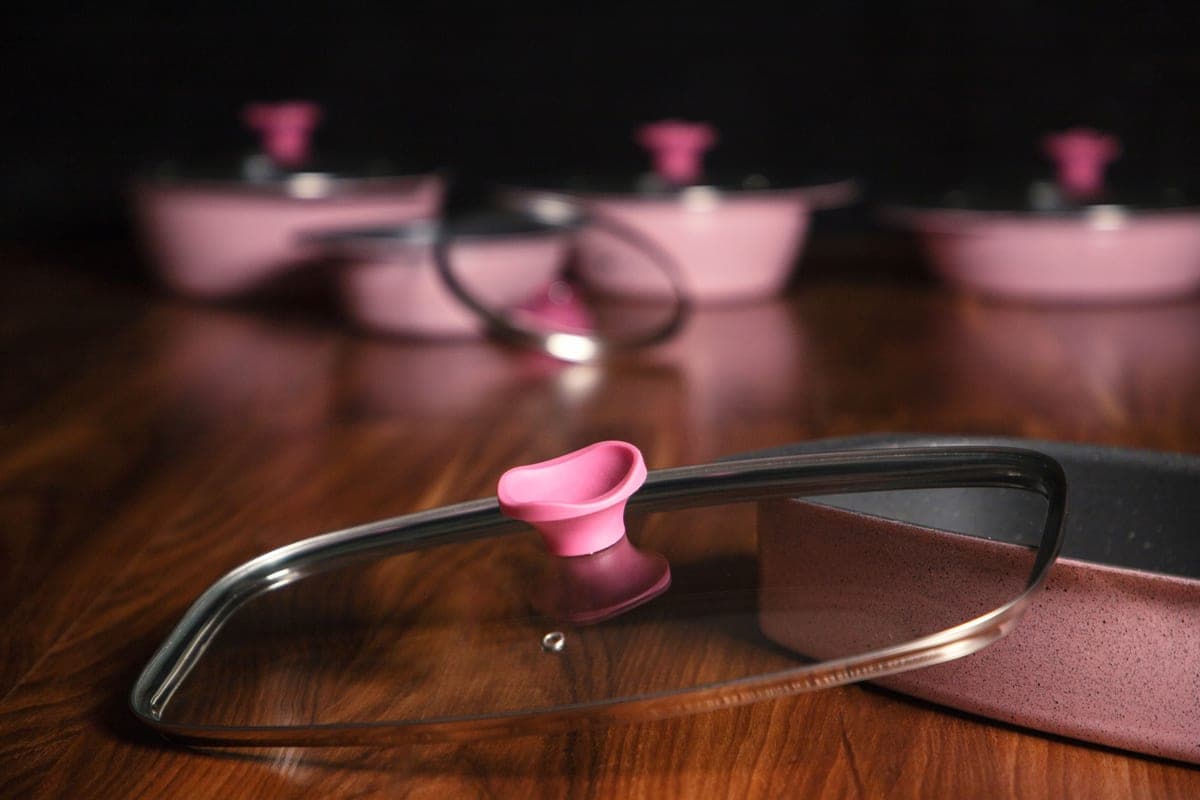 Caraway Cookware SetPublishes the full stack: aluminum body, sol-gel ceramic, stainless fittings. | Best documentation | Aluminum body | |
| 3 | 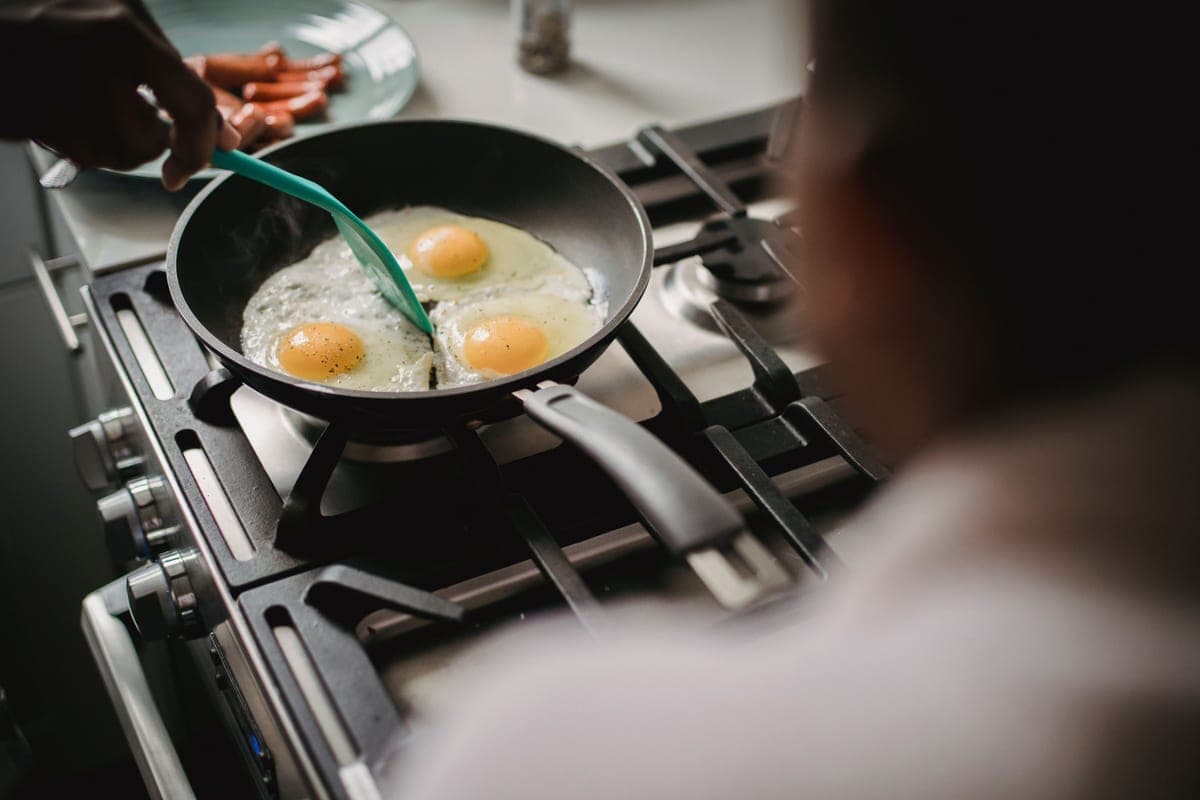 Xtrema Versa SkilletSolid ceramic through the body. Nothing to wear out. | No coating at all | 100% ceramic through-body (no metal core |
Tap a row to jump to that write-up. Prices are not shown on this site because they change — the button sends you to the live Amazon listing.
What it actually is
A sol-gel coating is applied to the pan as a liquid silicon-based solution and cured into a hard, glass-like layer. Chemically it is closer to glass than to plastic, which is why it is described as mineral or ceramic, and it contains no fluoropolymer — the entire reason the category exists.
Underneath it is almost always aluminum, sometimes hard-anodized, with a stainless base plate bonded on if the pan is induction-compatible. So a "ceramic pan" is a two-material object and both materials matter: the coating is what food touches, the aluminum is what conducts the heat.
What the evidence says
There is no PTFE in a sol-gel coating, so the overheating literature about fluoropolymer degradation does not apply to it. That is the clearest thing that can be said, and it is why ceramic coatings exist as a product category at all.
What cannot be said with the same confidence is that a given product is free of all PFAS throughout its construction, because that is a claim about a whole manufacturing process rather than about one material. Several brands state third-party testing for hundreds of substances; where no lab report is published, that is the brand's own statement and we label it as such. EPA's framing of PFAS as a persistence and accumulation problem across many exposure routes is the right context: a coating with no fluoropolymer in it is a genuine improvement on one that has it, not a guarantee about everything else.
Heat limits and how it fails
Published ratings run from about 450F to 600F depending on the product, and those numbers are about the coating rather than the pan. Exceeding them does not produce the acute fume event that overheated PTFE does; it shortens the coating's life, which is the failure mode that actually affects owners.
Ceramic coatings fail gradually and undramatically. The surface goes slightly matte or chalky, food starts catching in patches, and within a few months a pan that used to release eggs does not. There is rarely a visible scratch or flake to point at, which is why people describe the failure as sudden when it has been happening for a year.
How long it lasts, honestly
One to three years of regular use. That is our working range, no brand publishes one, and the absence is informative in a category where every other specification is printed.
What moves you to the top of the range: never preheating the pan empty, keeping it off high heat, wood or silicone utensils only, hand washing, and not stacking pans inside each other. What moves you to the bottom: using it as a searing pan. Nothing restores a worn coating — not oil, not polish, not any of the internet remedies — and we would rather say so than let you waste an afternoon trying.
Where it is right and wrong
- Right for eggs, pancakes, fish, crepes, anything that sticks to metal, and households that will not learn pan technique.
- Right for anyone who wants release without a fluoropolymer and accepts a replacement cycle.
- Wrong for searing, high-heat stir-frying and anything you want to brown aggressively.
- Wrong for oven work above the stated rating, and for anyone who wants to buy cookware once.
- Wrong for metal utensils, dishwashers and stacking, all of which shorten it.
Solid ceramic is a different product
Cookware made of ceramic throughout has no coating to lose and no metal to leach, so none of the lifespan discussion above applies. It is slow to heat, slow to respond, not induction compatible, breakable, and not meaningfully non-stick despite sharing the category name.
The one thing worth checking on solid ceramic and on glazed stoneware is the glaze, since glaze is where lead historically entered ceramics. FDA enforces leach limits on ceramicware through a 24-hour acetic acid test, so new US-market pieces are covered; handmade, imported and vintage pieces are the genuine uncertainty.
What to buy
Two coated options with the best disclosure in the category, and the solid-ceramic alternative for anyone who would rather not own a consumable.
The picks in full
1. Best for Most thermal headroom
GreenPan Valencia Pro
Ceramic coating rated to 600F on a hard-anodized body.
- Made of
- Hard-anodized aluminum body with the brand's diamond-reinforced ceramic coating
- Certified to
- Manufacturer claimManufacturer claim; no third-party certification published.
- Coating type
- Ceramic (Thermolon), no PTFE
- Oven safe
- Manufacturer states 600F
- Dishwasher
- Manufacturer states safe
Overheating is what kills coated pans, so the highest rating in the category is the most useful specification in it. No PTFE, and the longest track record of any brand in ceramic coatings.
What you give up
Still one to three years. Hand wash to protect the anodized finish.
Who it's for
Ceramic non-stick with margin for error.
Who should skip it
Regular searing.
2. Best for Best documentation
Caraway Cookware Set
Publishes the full stack: aluminum body, sol-gel ceramic, stainless fittings.
- Made of
- Aluminum body, sol-gel mineral ceramic coating, stainless steel handles and base plate
- Certified to
- Manufacturer claimManufacturer claim; no third-party certification published.
- Oven safe
- Manufacturer states 550F
- Coating type
- Ceramic (sol-gel), no PTFE
- Induction
- Yes, stainless base plate
If you are buying a consumable, buying the one with the clearest published composition is the rational move. Caraway also states third-party testing for over 600 forever chemicals, which we report as the brand's own claim.
What you give up
Premium price for a product with a two-year horizon.
Who it's for
Matched coated sets with disclosure.
Who should skip it
Anyone needing a verifiable certificate.
3. Best for No coating at all
Xtrema Versa Skillet
Solid ceramic through the body. Nothing to wear out.
- Made of
- 100% ceramic through-body (no metal core, no surface coating)
- Certified to
- Manufacturer claimManufacturer claim; no third-party certification published.
- Construction
- Solid ceramic, not a coated metal pan
- Oven and broiler
- Manufacturer states oven, broiler and grill safe
- Induction
- No
The alternative to the whole consumable question: one material, no coating, no metal, indefinite life unless you break it.
What you give up
Slow, fragile, not induction compatible, and not non-stick.
Who it's for
Anyone who would rather own one pan forever than replace one every two years.
Who should skip it
Induction and fast cooking.
How we chose, and what we did not do
Every product on this page was checked against its published material composition and its third-party certifications, with each claim labeled as certified, manufacturer-stated or independently tested by a named party. We do not run a lab and we do not claim to have used these products — the full method is here.
Questions people actually ask
Is ceramic cookware safe to cook with?
A sol-gel ceramic coating contains no PTFE and no fluoropolymer, and the overheating literature about PTFE does not apply to it. Its real limitation is durability: one to three years of good release before it stops working.
How long does ceramic cookware last?
One to three years of regular non-stick performance. The pan remains usable afterwards, it just stops releasing. No brand publishes a figure, which in a category that publishes every other spec is itself informative.
Is ceramic cookware safer than stainless steel?
Differently rather than more. Ceramic has a coating that wears out; stainless has no coating but transfers small measured amounts of nickel into long acidic cooks. For permanence, stainless. For release without a fluoropolymer, ceramic.
Can a ceramic pan be re-seasoned?
No. A sol-gel coating is not a seasoning layer and cannot be rebuilt. Once release is gone, the coating is finished — unlike cast iron or carbon steel, where the surface is repairable.
Is ceramic nonstick toxic when scratched?
A scratched coating is leaving the pan, which is reason enough to replace it whatever the chemistry. Ceramic coatings tend to go dull rather than flake, so the more common end-of-life signal is lost release rather than visible damage.
Sources
- US EPA — Our Current Understanding of the Human Health and Environmental Risks of PFAS — Regulator overview of PFAS persistence and health endpoints
- US FDA — compliance policy guidance on lead in ceramicware (ASTM C738 leach test)
- GreenPan (manufacturer)
- Caraway Home (manufacturer)
- Xtrema (manufacturer)
Read next
Kitchen & Cookware
Best ceramic cookware sets, and the distinction brands blur
Ceramic sets compared, with the coated-versus-solid distinction made explicit and the real lifespan stated.
Kitchen & Cookware
Xtrema cookware review: the fewest variables in the category
Xtrema's solid-ceramic construction, what it genuinely eliminates, and the four practical limits.

Kitchen & Cookware
Ceramic vs stainless steel cookware: which is actually safer?
The category's central decision: a consumable coating against a measured trace metal transfer.
Kitchen & Cookware
The safest cookware materials, in one table
The flagship comparison table: every cookware material on PFAS status, heat limit, leaching concern and lifespan.
Written by Selena H., owner of Glass & Cotton.