Kitchen & Cookware
GreenPan review: the longest track record in ceramic non-stick
The brand that created this category, with the highest heat rating in it — and the same fundamental consumable.
Last reviewed October 13, 2026 — Selena H.

GreenPan has been selling ceramic-coated cookware longer than any brand currently competing in it, which matters more than it sounds: for a product whose weakness is durability, a company that has been fielding durability complaints for over a decade has had more chances to improve than one founded three years ago.
Its Valencia Pro line is rated to 600F, the highest of the mainstream coated options, and heat tolerance is the specification most directly connected to how long a coated pan survives a real kitchen.
Quick picks
| # | Product | Best for | Material | Price |
|---|---|---|---|---|
| 1 | GreenPan Valencia Pro600F ceramic coating on hard-anodized aluminum, from the category's originator. | The product reviewed | Hard-anodized aluminum body with the brand's diamond-reinforced ceramic coating | |
| 2 | 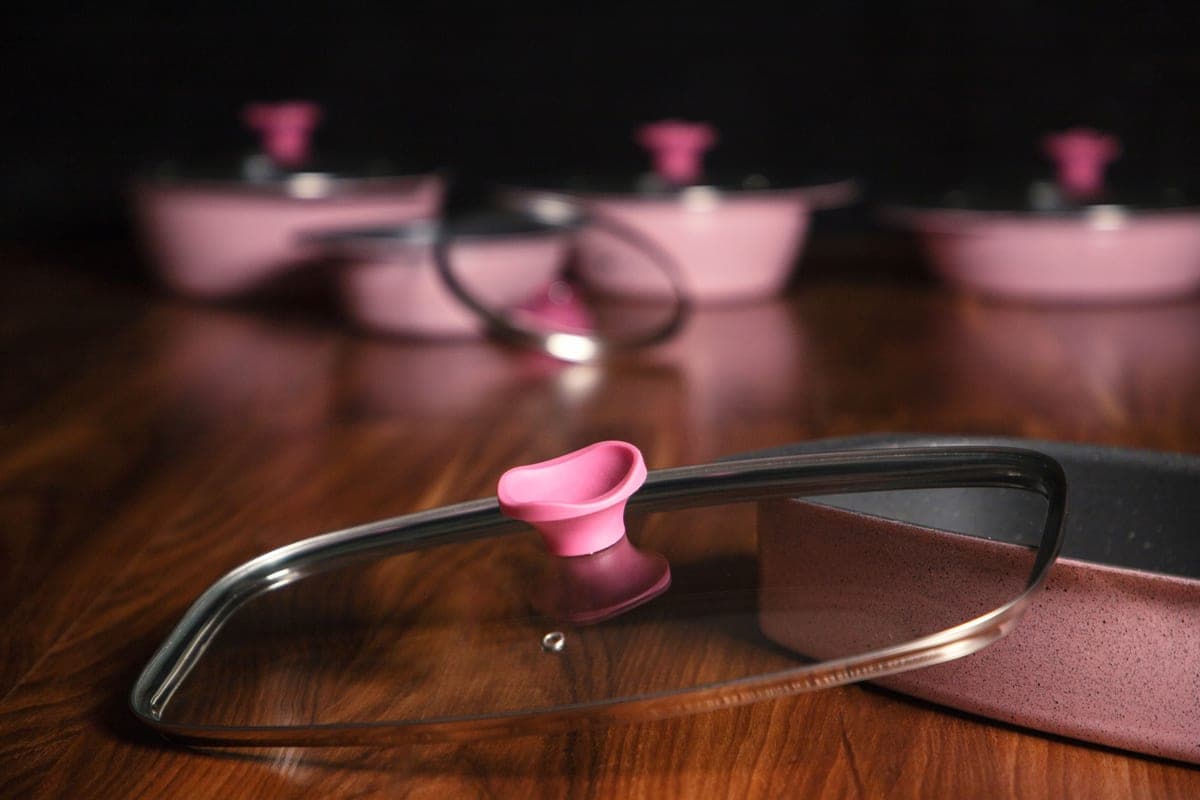 Caraway Cookware SetA fuller published construction and a stated third-party testing program. | Better disclosure | Aluminum body | |
| 3 |  All-Clad D3 StainlessTri-ply bonded stainless with three decades of documented aging. | Uncoated instead | 3-ply bonded stainless: 18/10 stainless interior |
Tap a row to jump to that write-up. Prices are not shown on this site because they change — the button sends you to the live Amazon listing.
What it is actually made of
Hard-anodized aluminum with the brand's Thermolon ceramic coating, which it describes as diamond-reinforced, and a stated oven rating of 600F for the Valencia Pro line. The coating contains no PTFE; the anodized body is harder and less reactive than plain aluminum.
That combination is worth separating. The anodizing is structural — a tougher, flatter pan body — while the Thermolon layer is what food touches. Both are published, which puts this brand in the better half of the category for disclosure.
What it is certified to
No named third-party certification for the cookware. The PTFE-free composition is a manufacturer claim with no third-party certification published, as it is for every brand in this category.
The brand's longevity is a different kind of evidence. It is not certification, and we are not going to present it as such, but a coating formulation that has been in continuous production and public complaint for well over a decade has been tested by the market in a way a new entrant's has not.
What owners complain about
The same category complaint: release declines over one to three years with no way to restore it. GreenPan's higher heat rating does not exempt it, and any claim that a ceramic coating is permanent should be read as marketing.
A second, more specific complaint concerns dishwashing. The lines are often rated dishwasher-safe, and alkaline detergent nonetheless dulls both the coating and the anodized exterior faster than hand washing. Our recommendation on this is to ignore the rating and hand wash.
What you give up
The same thing every coated pan costs you: permanence. You also give up the ability to use the dishwasher without consequence, despite the label, and the pan is not a searing pan however high the rating goes.
What the 600F rating buys is margin for error rather than a different category of product. It is a meaningful advantage over a 450F pan in a household where somebody will occasionally leave a pan on a hot burner — which is most households.
Who it is for, and who should skip it
- For cooks who want ceramic non-stick and know they sometimes run pans hotter than they should.
- For anyone who prefers a formulation with a long production history over a newer one.
- Skip it if you want a permanent purchase.
- Skip it if your main need is searing, where uncoated metal is the right tool.
- Skip it if you will not hand wash, which shortens any coated pan substantially.
Alternatives we would pick instead
The better-documented coated set, or the uncoated route if the replacement cycle is the thing that bothers you.
The picks in full
1. Best for The product reviewed
GreenPan Valencia Pro
600F ceramic coating on hard-anodized aluminum, from the category's originator.
- Made of
- Hard-anodized aluminum body with the brand's diamond-reinforced ceramic coating
- Certified to
- Manufacturer claimManufacturer claim; no third-party certification published.
- Coating type
- Ceramic (Thermolon), no PTFE
- Oven safe
- Manufacturer states 600F
- Dishwasher
- Manufacturer states safe
The highest heat rating among mainstream ceramic-coated pans, on a hard-anodized body, from the brand with the longest continuous production history in PTFE-free non-stick. For this category, those are the two most useful things to have.
What you give up
Still a one-to-three-year coating, and hand washing despite the dishwasher rating.
Who it's for
Ceramic non-stick with margin for error.
Who should skip it
Searing, and anyone wanting permanence.
2. Best for Better disclosure
Caraway Cookware Set
A fuller published construction and a stated third-party testing program.
- Made of
- Aluminum body, sol-gel mineral ceramic coating, stainless steel handles and base plate
- Certified to
- Manufacturer claimManufacturer claim; no third-party certification published.
- Oven safe
- Manufacturer states 550F
- Coating type
- Ceramic (sol-gel), no PTFE
- Induction
- Yes, stainless base plate
If documentation matters more to you than the extra 50F, Caraway publishes more about its stack and states a third-party testing program — which we report as the brand's own claim.
What you give up
Lower heat rating, same consumable coating, premium price.
Who it's for
Buyers who want maximum published detail.
Who should skip it
High-heat cooks.
3. Best for Uncoated instead
All-Clad D3 Stainless
Tri-ply bonded stainless with three decades of documented aging.
- Made of
- 3-ply bonded stainless: 18/10 stainless interior, aluminum core, magnetic exterior
- Certified to
- Manufacturer claimManufacturer claim; no third-party certification published.
- Construction
- 3-ply bonded
- Cooking surface
- 18/10 stainless steel
- Made in
- Manufacturer states USA for the D3 line
The alternative to the entire coated proposition: no coating, no heat ceiling, no replacement cycle, and the longest evidence base of any uncoated pan on the market.
What you give up
Expensive, divisive handle, and real technique for eggs.
Who it's for
Buy-once cooking.
Who should skip it
Non-stick expectations.
How we chose, and what we did not do
Every product on this page was checked against its published material composition and its third-party certifications, with each claim labeled as certified, manufacturer-stated or independently tested by a named party. We do not run a lab and we do not claim to have used these products — the full method is here.
Questions people actually ask
Is GreenPan safe?
Its Thermolon ceramic coating contains no PTFE, which is the main thing buyers in this category are avoiding. That is the manufacturer's claim; cookware has very few applicable third-party certifications, so no independent mark covers it.
What is Thermolon made of?
GreenPan describes it as a diamond-reinforced ceramic coating applied over a hard-anodized aluminum body, with no PTFE. The sol-gel ceramic family it belongs to is silicon-based and closer to glass than to plastic.
Is GreenPan dishwasher safe?
Several lines are rated as such, and we would still hand wash. Alkaline detergent dulls both ceramic coatings and anodized exteriors faster than anything you will do with a sponge.
Does a 600F rating mean the coating lasts longer?
It means more margin before overheating damages it, which in practice does extend life in a household where pans sometimes sit on hot burners. It does not make the coating permanent — one to three years of good release remains the realistic range.
Sources
- GreenPan (manufacturer)
- US EPA — Our Current Understanding of the Human Health and Environmental Risks of PFAS — Regulator overview of PFAS persistence and health endpoints
- Science News — Sticky situation: nonstick surfaces can turn toxic at high heat
- US FDA — Authorized Uses of PFAS in Food Contact Applications
Read next
Kitchen & Cookware
Caraway vs GreenPan: disclosure or heat tolerance?
Caraway versus GreenPan on coating, heat rating and track record — and which difference actually matters.
Kitchen & Cookware
Is ceramic cookware safe?
What a sol-gel ceramic coating is, how it fails, and the one-to-three-year lifespan nobody publishes.
Kitchen & Cookware
Best non-toxic nonstick pans, without a fluoropolymer
PTFE-free nonstick pans compared on heat rating, disclosure and realistic coating life.
Kitchen & Cookware
Is anodized aluminum safe for cooking?
What anodizing actually does, how bare aluminum behaves with acid, and the coating question underneath most anodized pans.
Written by Selena H., owner of Glass & Cotton.