Baby & Kids
Best non-toxic water bottles for kids
The bottle body is the easy part. The lid, the straw and the gasket are where the plastic comes back in.
Last reviewed October 17, 2026 — Selena H.

The best non-toxic water bottle for a kid is the Pura Kiki stainless bottle, because it is the one where the entire drink path is stainless steel and silicone with no plastic at all, and the spout swaps as the child grows. For a toddler who is learning to drink from a cup rather than a bottle, the Elk and Friends glass cups with silicone sleeves are the version that survives a kitchen floor.
A kids bottle lives a harder life than an adult one: dropped on concrete, chewed, left in a hot car, and run through a dishwasher several times a week. That combination is exactly what degrades plastic, which is why the material question matters more here than on an adult bottle — and why the lid, not the body, is where almost every bottle quietly reintroduces it.
Quick picks
| # | Product | Best for | Material | Price |
|---|---|---|---|---|
| 1 | Pura Kiki Stainless Baby Bottle304 stainless body, silicone spout, and genuinely no plastic in contact with the drink. | No plastic anywhere in the drink path | 304 stainless steel bottle with a silicone nipple and sleeve | |
| 2 | 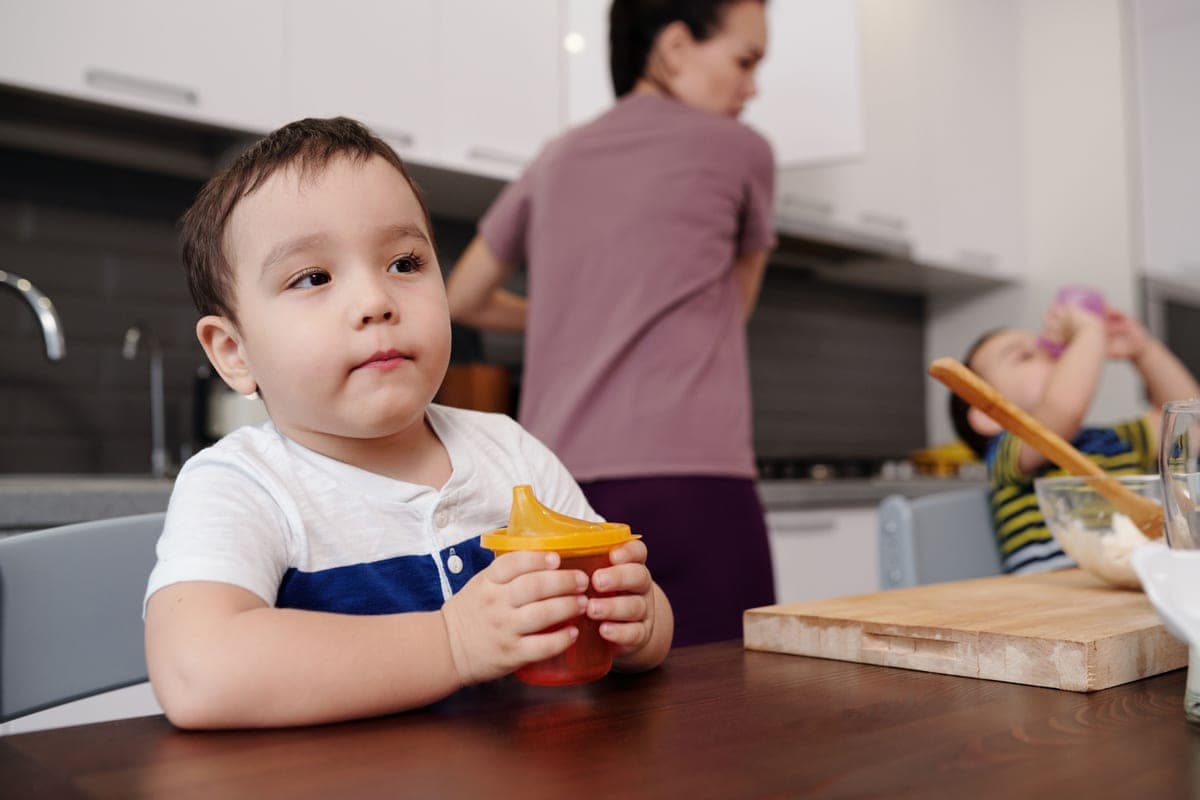 Elk and Friends Glass Toddler CupsGlass with a silicone sleeve and straw lid — drink contact is glass and silicone only. | Toddlers learning a straw cup | Glass cup with a silicone sleeve and straw lid | |
| 3 | 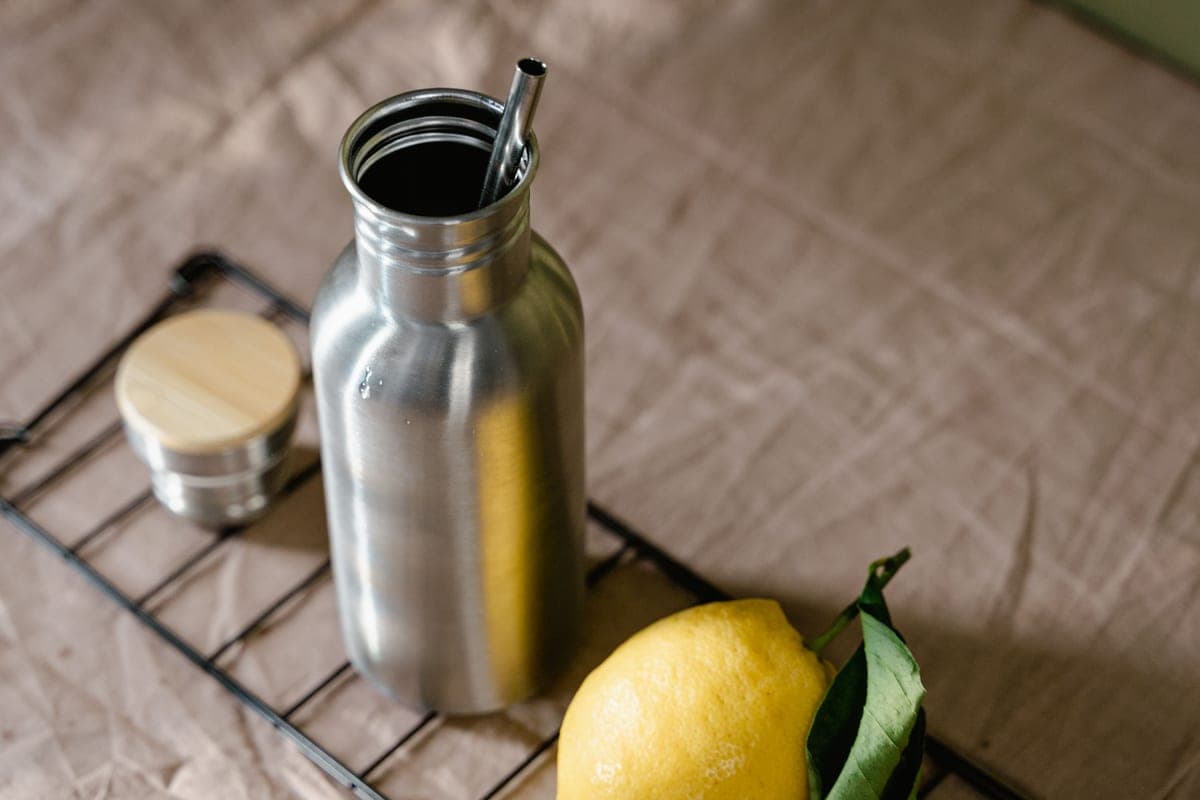 Klean Kanteen Classic Insulated Bottle18/8 stainless with uncoated water contact, and a stainless or bamboo cap option. | Older kids and school | 18/8 stainless steel interior | |
| 4 | Lifefactory Glass Water BottleBorosilicate glass in a removable silicone sleeve — inert, visible, and grippable. | Glass with real drop protection | Borosilicate glass with a removable silicone sleeve |
Tap a row to jump to that write-up. Prices are not shown on this site because they change — the button sends you to the live Amazon listing.
Check the lid, not the bottle
A bottle described as stainless steel can still have a polypropylene straw, a plastic bite valve and a plastic-lined cap — and those are the parts in a child's mouth for an hour a day. If the material claim matters to you, the question to ask is not what the bottle is made of but what the water touches on its way out.
The three honest configurations are stainless body with a stainless or silicone top, glass body with a silicone top, or stainless body with a silicone straw. Everything else has plastic in the drink path somewhere, which may be a perfectly reasonable trade for a leak-proof sport cap — just make it knowingly rather than by accident.
Why heat is the variable that matters
Polypropylene baby bottles release microplastics during formula preparation, and the amount scales with water temperature — research published in Nature Food measured the release across preparation conditions. A kids bottle is not a formula bottle, but the mechanism is the same one, and a plastic bottle left in a car in July reaches temperatures no kitchen tap does.
That makes heat the practical rule rather than the material label: do not put hot liquid in a plastic bottle, do not leave one in a hot car, and do not run a plastic lid through a heated dishwasher cycle repeatedly if you can hand wash it. A stainless or glass body removes the question entirely. See microplastics in baby feeding for the research.
Matching the bottle to the age
| Age | Format | What matters most |
|---|---|---|
| Infant | Stainless or glass bottle, silicone nipple | No plastic at feeding temperature |
| Toddler, 1 to 3 | Glass with silicone sleeve, or stainless straw cup | Visible fill level, survives drops |
| Preschool, 3 to 5 | Stainless with a silicone straw | Leak-proof, light enough to carry |
| School age | Insulated 18/8 stainless | Stays cold all day, survives a backpack |
| Sports and camp | Insulated stainless, wide mouth | Ice fits, and it does not dent out of use |
What we ruled out
Plastic bottles generally, including those labeled BPA-free, because the replacement bisphenols are the open question rather than a settled answer — see BPA, BPS and BPF. Aluminum bottles with an interior liner, since the liner's composition is almost never published. Bottles with painted or printed interiors. Collapsible silicone pouches, which are fine materially but impossible to inspect for mold inside a straw. And insulated stainless bottles with plastic-lined sport caps, which are listed above as a trade rather than ruled out, but which are not a plastic-free drink path.
The picks in full
1. Best for No plastic anywhere in the drink path
Pura Kiki Stainless Baby Bottle
304 stainless body, silicone spout, and genuinely no plastic in contact with the drink.
- Made of
- 304 stainless steel bottle with a silicone nipple and sleeve
- Certified to
- Manufacturer claimManufacturer claim; no third-party certification published.
- Milk contact
- Stainless steel and silicone
- Plastic
- None
- Trade-off
- You cannot see the fill level
Most "stainless" kids bottles have a polypropylene lid, straw or valve, which is the part the child's mouth is actually on. The Pura Kiki is built the other way: stainless body, silicone nipple or spout, and swappable tops so the same bottle goes from infant feeding to a sport cap without ever introducing a plastic drink path.
What you give up
You cannot see the fill level, which is a real inconvenience with a young child. Stainless also dents rather than bounces, and silicone spouts are a chewable consumable that needs replacing.
Who it's for
Parents whose requirement is no plastic in contact with the drink, at any age.
Who should skip it
Anyone who needs to see how much is left, and tight budgets.
2. Best for Toddlers learning a straw cup
Elk and Friends Glass Toddler Cups
Glass with a silicone sleeve and straw lid — drink contact is glass and silicone only.
- Made of
- Glass cup with a silicone sleeve and straw lid
- Certified to
- Manufacturer claimManufacturer claim; no third-party certification published.
- Drink contact
- Glass and silicone
- Sleeve
- Silicone, protects against drops
- Note
- Still breakable on tile
Glass is inert, takes no flavors, and shows the fill level, which with a toddler is genuinely useful. The silicone sleeve is what makes glass viable at this age: it absorbs the drop that would otherwise end the cup, and it gives small hands something to grip. Drink contact is glass and silicone, nothing else.
What you give up
Still breakable on tile despite the sleeve. Heavier than stainless for the same volume, and not insulated, so a drink does not stay cold.
Who it's for
Home and table use, toddlers transitioning off bottles, and anyone who wants to see what is in the cup.
Who should skip it
Backpacks, playgrounds, and daycares that ban glass.
3. Best for Older kids and school
Klean Kanteen Classic Insulated Bottle
18/8 stainless with uncoated water contact, and a stainless or bamboo cap option.
- Made of
- 18/8 stainless steel interior, stainless or bamboo cap
- Certified to
- Manufacturer claimManufacturer claim; no third-party certification published.
- Water contact
- 18/8 stainless, uncoated
- Cap
- Stainless or bamboo options
- Note
- Avoid the plastic-lined sport caps if that matters to you
For a school-age child the requirement changes: it has to survive a backpack, keep water cold through a school day, and not leak onto a textbook. An insulated 18/8 stainless bottle does all three, and the uncoated interior means the water touches nothing but steel. Choosing the stainless or bamboo cap keeps the drink path plastic-free.
What you give up
The convenient sport caps are plastic-lined, so the plastic-free version is the less kid-friendly one. Insulated bottles are heavier and bulkier than single-wall.
Who it's for
School, sports, anything that needs water to stay cold for hours.
Who should skip it
Small toddlers, and anyone who wants a one-handed sport spout with no plastic.
4. Best for Glass with real drop protection
Lifefactory Glass Water Bottle
Borosilicate glass in a removable silicone sleeve — inert, visible, and grippable.
- Made of
- Borosilicate glass with a removable silicone sleeve
- Certified to
- Manufacturer claimManufacturer claim; no third-party certification published.
- Water contact
- Glass
- Sleeve
- Silicone
- Trade-off
- Heavy and breakable
Borosilicate handles temperature change better than soda-lime glass, and the removable silicone sleeve both protects the bottle and makes it easier for a child to hold. Water contact is glass, full stop, which is the simplest possible answer to the material question and the one that needs no caveats about alloys or coatings.
What you give up
Heavy and breakable — the sleeve improves the odds rather than solving the problem. Not insulated.
Who it's for
Home, car and table use where glass is acceptable.
Who should skip it
School bags, scooters, and anywhere the bottle will be dropped on hard floors repeatedly.
How we chose, and what we did not do
Every product on this page was checked against its published material composition and its third-party certifications, with each claim labeled as certified, manufacturer-stated or independently tested by a named party. We do not run a lab and we do not claim to have used these products — the full method is here.
Questions people actually ask
What is the safest water bottle for kids?
Stainless steel or glass with a silicone or stainless top, so the water touches no plastic. Stainless survives being dropped; glass with a silicone sleeve lets you see the fill level and is better suited to home use.
Are stainless steel kids bottles safe?
Yes, for 18/8 or 304 stainless with an uncoated interior. The thing to check is the lid and straw, which are plastic on most otherwise-stainless bottles and are the parts the child's mouth is on.
Is glass or stainless better for a toddler?
Glass with a silicone sleeve for home and table use, because the fill level is visible and glass takes on no flavors. Stainless for anywhere the cup will be dropped on a hard floor or carried in a bag.
Are BPA-free plastic bottles fine?
BPA-free tells you one compound was removed, not what replaced it. The common substitutes, BPS and BPF, are less studied rather than demonstrated safe, which is why this page stays with stainless, glass and silicone.
How do I keep a straw bottle from getting moldy?
Take the lid apart every wash — the gasket and the straw are separate parts and mold grows where they meet. A bottle whose lid cannot be disassembled cannot be properly cleaned, which is a reason to reject it regardless of material.
Sources
- Li et al. (2020), Microplastic release from the degradation of polypropylene feeding bottles during infant formula preparation, Nature Food — Trinity College Dublin record
- Food Packaging Forum — study summary: microplastics release from baby bottles
- Kamerud, Hobbie and Anderson (2013), Stainless Steel Leaches Nickel and Chromium into Foods During Cooking, Journal of Agricultural and Food Chemistry
- Pura (manufacturer)
- Klean Kanteen (manufacturer)
Read next
Baby & Kids
Best non-toxic sippy cups
Glass and stainless toddler cups, plus the straw and valve hygiene problem nobody mentions.
Pets & Fitness
Best non-toxic water bottles
Stainless and glass bottles with cap options that are not plastic — the part most buyers overlook.
Pets & Fitness
Stainless vs glass water bottles
Stainless against glass on inertness, weight, insulation — and the plastic cap that undermines both.
Baby & Kids
BPA, BPS and BPF: the substitution problem
Why BPA-free is a claim about one molecule, what replaced it, and how to avoid the whole question.
Written by Selena H., owner of Glass & Cotton.