Beauty & Grooming
Best PFAS-free dental floss
Glide floss is PTFE — the same fluoropolymer family as non-stick coatings. You put it between your teeth twice a day.
Last reviewed October 13, 2026 — Selena H.
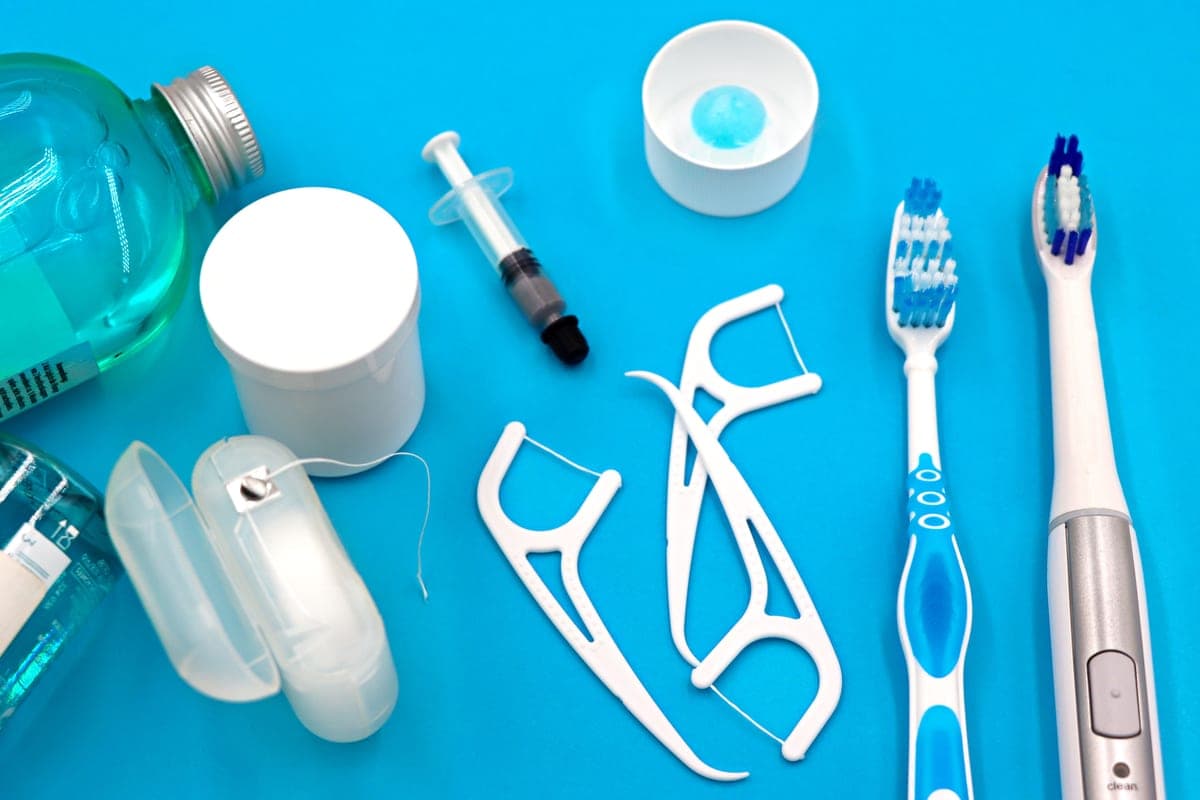
Traditional "glide" or tape-style floss owes its slipperiness to PTFE — polytetrafluoroethylene, the same fluoropolymer used as a non-stick coating and itself a member of the PFAS family that EPA describes as breaking down very slowly and accumulating over time.
This is an unusually easy swap. Silk and woven-polyester flosses exist, they work, they cost about the same, and the fiber is stated on the box. Whether you consider twice-daily contact with a fluoropolymer strand worth changing is your call; the alternatives are right here either way.
Quick picks
| # | Product | Best for | Material | Price |
|---|---|---|---|---|
| 1 | Dental Lace Silk FlossMulberry silk with candelilla wax, in a refillable glass dispenser. | No synthetic fiber at all | Mulberry silk with a candelilla wax coating | |
| 2 | Cocofloss Woven FlossWoven polyester with coconut oil and wax. Not a fluoropolymer. | Tight contacts and plaque | Woven polyester filaments with coconut oil and wax | |
| 3 |  Stasher Silicone Storage BagsIncluded as the reference for platinum-cured silicone, the other polymer question in a bathroom. | The same materials logic elsewhere | Platinum-cured silicone |
Tap a row to jump to that write-up. Prices are not shown on this site because they change — the button sends you to the live Amazon listing.
How we chose these
The fiber has to be stated on the packaging or the brand's site. That single requirement removes most of the floss aisle, where products are described as "glide", "tape" or "smooth" with no material named at all — and where glide, historically, means PTFE.
We then preferred products that work on real teeth: silk for people who can use it, woven polyester for people whose contacts shred silk.
What to look for on the box
- A named fiber. Silk, nylon, polyester. If the box says only "glide" or "tape", assume PTFE and look elsewhere.
- The word PTFE or polytetrafluoroethylene, which is the thing to avoid if that is your goal.
- The coating. Candelilla or beeswax on silk; coconut oil and wax on woven. These are not the issue.
- Refillable packaging, if single-use plastic matters to you — glass dispensers with refill spools exist.
- Not "PFAS-free" on its own, which is unregulated and uncertified. A named fiber is the stronger information.
Flossing matters more than the floss
The honest proportion here: the oral-health benefit of flossing daily is considerably larger than any plausible difference between fibers. If the only floss you will reliably use is the slippery PTFE kind, use it — a fluoropolymer strand you actually use beats a silk one you abandon because it shreds.
This is the same logic as the sunscreen you will actually wear, and it is worth saying on a site like this: the swap is easy and cheap, and it is not worth losing the habit over.
What we ruled out
PTFE-based glide flosses, which are the product this page exists to replace. Any floss whose fiber is not named, which is most of the mainstream aisle. Flavored flosses with undisclosed flavor mixtures, since the FDA labeling rules that allow a fragrance or flavor to be declared in one word apply here too. And floss picks generally, which are single-use plastic by design and clean less effectively than a strand.
The picks in full
1. Best for No synthetic fiber at all
Dental Lace Silk Floss
Mulberry silk with candelilla wax, in a refillable glass dispenser.
- Made of
- Mulberry silk with a candelilla wax coating, refillable glass dispenser
- Certified to
- Manufacturer claimManufacturer claim; no third-party certification published.
- Fiber
- Silk, not PTFE
- Coating
- Candelilla wax
- Strength
- Shreds on tight contacts
The only option here with no synthetic polymer in the floss itself: silk fiber with a plant-wax coating, in a glass dispenser you refill rather than replace. If the goal is removing a fluoropolymer rather than swapping one plastic for another, this is the product that does it.
What you give up
Silk shreds on tight contacts and on rough restorations, which is a genuine annoyance if your teeth are close together. It is also not vegan, and it costs more per meter than conventional floss.
Who it's for
Anyone wanting a non-synthetic fiber, and households reducing single-use packaging.
Who should skip it
Very tight contacts, where a woven or tape floss slides better, and vegan households.
2. Best for Tight contacts and plaque
Cocofloss Woven Floss
Woven polyester with coconut oil and wax. Not a fluoropolymer.
- Made of
- Woven polyester filaments with coconut oil and wax
- Certified to
- Manufacturer claimManufacturer claim; no third-party certification published.
- Fiber
- Polyester, not PTFE
- Texture
- Thick and scrubby
- Note
- Still a plastic fiber, just not a fluoropolymer
A thick, textured, woven floss that cleans more aggressively than a smooth strand and does not shred the way silk can. The important distinction for this page: polyester is a plastic, but it is not a fluoropolymer, so it sidesteps the PFAS question entirely.
What you give up
It is still a synthetic fiber, just a different one — if your objection is to all plastics rather than to fluoropolymers specifically, silk is the answer. It is also thick enough to be awkward on very tight contacts.
Who it's for
People who want serious cleaning and have had silk shred on them.
Who should skip it
Anyone avoiding synthetic fibers altogether.
3. Best for The same materials logic elsewhere
Stasher Silicone Storage Bags
Included as the reference for platinum-cured silicone, the other polymer question in a bathroom.
- Made of
- Platinum-cured silicone, single material
- Certified to
- Manufacturer claimManufacturer claim; no third-party certification published.
- Material
- Platinum-cured silicone
- Dishwasher
- Yes
- Oven and freezer
- Manufacturer states both
Floss is one of two places fluoropolymers turn up in a bathroom. The other polymer worth understanding is silicone, where the question is cure type rather than fiber — platinum-cured leaves fewer residual byproducts than peroxide-cured, and brands that use it say so.
What you give up
This is a storage bag, not an oral-care product. It is here as a materials reference.
Who it's for
Anyone applying the same polymer questions across the house.
Who should skip it
People looking only for floss — the two above are the products.
How we chose, and what we did not do
Every product on this page was checked against its published material composition and its third-party certifications, with each claim labeled as certified, manufacturer-stated or independently tested by a named party. We do not run a lab and we do not claim to have used these products — the full method is here.
Questions people actually ask
Is dental floss made with PFAS?
Traditional glide and tape-style flosses are commonly made from PTFE, a fluoropolymer and a member of the PFAS family. Silk and woven-polyester flosses are not fluoropolymers and are widely available.
Is silk floss better than nylon?
It is the only common option with no synthetic polymer in the fiber. It shreds more easily on tight contacts, which is a real functional trade-off — woven polyester is tougher and still not a fluoropolymer.
How do I tell if floss contains PTFE?
Look for a named fiber on the packaging. If the only descriptors are "glide", "tape" or "smooth" with no material stated, assume PTFE. Brands using silk or polyester say so prominently.
Should I stop flossing if I only have PTFE floss?
No. The oral-health benefit of flossing daily outweighs any plausible difference between fibers. Switch when you next buy, and keep the habit.
Sources
- US EPA — Our Current Understanding of the Human Health and Environmental Risks of PFAS — Regulator overview of PFAS persistence and health endpoints
- US FDA — Fragrances in Cosmetics — The rule that lets an entire fragrance mixture be listed as one word
- Science News — Sticky situation: nonstick surfaces can turn toxic at high heat
- US FDA — Authorized Uses of PFAS in Food Contact Applications
Read next
Beauty & Grooming
PFAS in cosmetics: the names to search for
The fluorinated ingredient names that appear in cosmetics, which products carry them, and how to check.

Kitchen & Cookware
What PFAS actually means in cookware
PFAS, PFOA and PTFE separated with sources, plus what the labels can and cannot promise.
Beauty & Grooming
How to read a cosmetics ingredient list
How INCI ordering works, what one word can conceal, and the five checks worth making.
Beauty & Grooming
Best non-toxic deodorants
Aluminum-free deodorants that work, the two-week adjustment, and the baking-soda irritation problem.
Written by Selena H., owner of Glass & Cotton.