Cleaning & Laundry
Best non-toxic disinfectants
A disinfectant is a registered pesticide with a dwell time. If you are wiping it off after thirty seconds, you are taking the exposure without the benefit.
Last reviewed October 13, 2026 — Selena H.
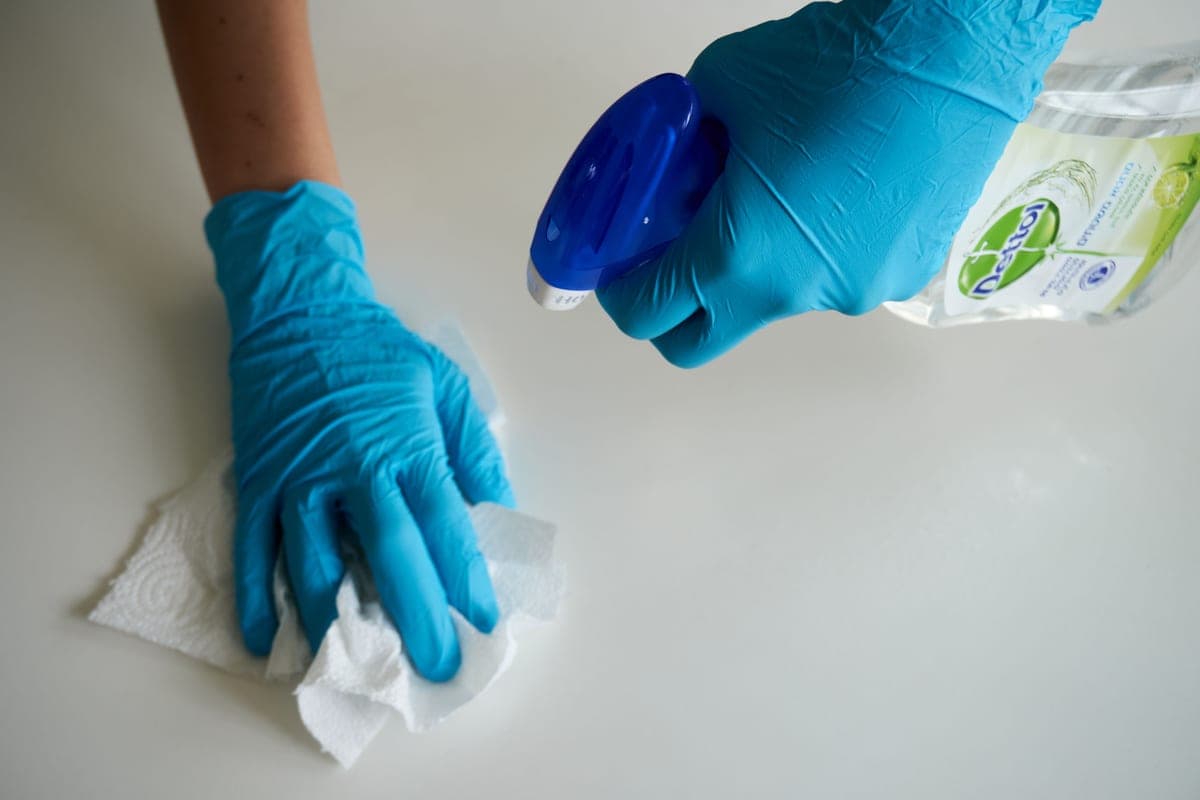
Most household cleaning is soil removal, which soap and water do. Disinfection is a separate, narrower job: killing a specified list of organisms at a specified concentration after sitting wet on the surface for a specified time. In the US a product may only make that claim if it is registered as a pesticide under FIFRA, which is why registered disinfectants carry an EPA registration number.
Nearly half the products on EPA's List N use a quaternary ammonium compound as the active. Quats appear on the Association of Occupational and Environmental Clinics list of asthmagens, and the occupational evidence links exposure to rhinitis and asthma — with some assessments describing them as a more potent asthmagen than bleach. That is not an argument against ever disinfecting. It is an argument for disinfecting when it matters and using soap the rest of the time.
Quick picks
| # | Product | Best for | Material | Price |
|---|---|---|---|---|
| 1 | Force of Nature Electrolyzed CleanerElectrolyzed hypochlorous acid generated at home from salt, water and vinegar. | Made fresh, registered claims | Hypochlorous acid and sodium hydroxide generated from salt | |
| 2 | Hydrogen Peroxide Disinfectant CleanerHydrogen peroxide in a surfactant base. Registered claims, no quats. | A bottle on the shelf | Hydrogen peroxide in a surfactant base | |
| 3 |  Branch Basics ConcentrateMADE SAFE certified concentrate. Cleans; makes no kill claim. | The cleaning the rest of the time | Plant- and mineral-derived surfactant concentrate | |
| 4 |  Distilled White Vinegar (cleaning strength)An effective cleaner and descaler. Not a disinfectant, and not registered as one. | What it is not | Diluted acetic acid |
Tap a row to jump to that write-up. Prices are not shown on this site because they change — the button sends you to the live Amazon listing.
How we chose these
We required either a genuine EPA registration for products making a disinfection claim, or an explicit acknowledgement that the product is a cleaner rather than a disinfectant. We then preferred actives other than quats, given the occupational asthma evidence.
We have not conducted efficacy testing. Registration is the third-party signal here, and it is a meaningful one — a registered claim has been reviewed in a way a marketing claim has not.
When you actually need to disinfect
- After someone in the house has been ill, on bathroom surfaces and high-touch points.
- After raw meat contact on a surface that will touch food eaten raw.
- When caring for someone immunocompromised, where a clinician's guidance should lead.
- Not for crumbs, spills, dust, fingerprints, floors or any ordinary cleaning — soap and water, every time.
Dwell time is the product
Every registered disinfectant specifies how long the surface must stay visibly wet for the claim to hold — commonly several minutes. Spray and immediately wipe and you have achieved cleaning, not disinfection, while taking the full inhalation exposure.
This is the single most common misuse of these products in homes, and correcting it is free: spray, leave, come back. If the surface dries too fast, spray again rather than reducing the time.
The quats question
Quaternary ammonium compounds were first developed in the 1940s and are now the active in nearly half the products on EPA's List N. The occupational literature links quat exposure to rhinitis and asthma, they appear on the AOEC asthmagen list, and the evidence base is strong enough that several US states have reviewed their use in institutional settings.
This matters most for people exposed repeatedly — cleaners, nurses, parents disinfecting daily. For occasional household use the honest framing is that alternatives exist with registered claims, so there is little reason to choose quats. Quats and disinfectant safety covers the evidence in full.
What we ruled out
Quat-based wipes and sprays, given the available alternatives. Products making "kills 99.9% of germs" claims without an EPA registration number, which is a marketing claim rather than a regulated one. Vinegar and other home remedies presented as disinfectants. And antimicrobial-treated surfaces and textiles, which are a different product class and a different argument.
The picks in full
1. Best for Made fresh, registered claims
Force of Nature Electrolyzed Cleaner
Electrolyzed hypochlorous acid generated at home from salt, water and vinegar.
- Made of
- Hypochlorous acid and sodium hydroxide generated from salt, water and vinegar
- Certified to
- Manufacturer claimManufacturer claim; no third-party certification published.
- Active
- Hypochlorous acid
- EPA registration
- Brand states EPA-registered disinfectant claims
- Shelf life
- Short. You make it as needed
An appliance that electrolyzes a salt, water and vinegar capsule into hypochlorous acid and sodium hydroxide, with the brand stating EPA-registered disinfectant claims. The attraction is that the active is generated as you need it rather than stabilized with additional chemistry, and the input materials are ones you can name in a sentence.
What you give up
Short shelf life by design, which means making it when you need it rather than reaching for a bottle. It is an appliance purchase with ongoing capsule costs, and dwell times still apply.
Who it's for
Households that disinfect regularly and want to know exactly what the active is.
Who should skip it
Occasional use, where a bottle is more practical than an appliance.
2. Best for A bottle on the shelf
Hydrogen Peroxide Disinfectant Cleaner
Hydrogen peroxide in a surfactant base. Registered claims, no quats.
- Made of
- Hydrogen peroxide in a surfactant base
- Certified to
- Manufacturer claimManufacturer claim; no third-party certification published.
- Active
- Hydrogen peroxide
- Dwell time
- Check the label. It matters
- Quats
- None
Hydrogen peroxide is the practical quat alternative: it breaks down to water and oxygen, it has a long history of use, and formulated products carry genuine registered claims. For the two jobs that actually warrant disinfection — after illness and after raw meat — this is the straightforward answer.
What you give up
Dwell time matters and almost nobody waits for it. Read the label and leave the surface wet for the stated minutes, or you have taken the exposure and got no kill.
Who it's for
After illness, after raw-meat contact, bathroom surfaces.
Who should skip it
Everyday wiping, where soap is the correct product.
3. Best for The cleaning the rest of the time
Branch Basics Concentrate
MADE SAFE certified concentrate. Cleans; makes no kill claim.
- Made of
- Plant- and mineral-derived surfactant concentrate, diluted at home
- Certified to
- Certified: MADE SAFEThird-party certified to MADE SAFE.
- Certification
- MADE SAFE certified concentrate
- Format
- One concentrate, several dilutions
- Fragrance
- None
Included because the real recommendation on this page is to use a disinfectant less. For the 90% of household cleaning that is removing soil rather than killing organisms, a certified cleaner is the right product and removes the question entirely.
What you give up
It is not a disinfectant and does not claim to be. Mixing is required.
Who it's for
Daily cleaning, so the disinfectant stays in the cupboard.
Who should skip it
Anyone who needs an actual kill claim.
4. Best for What it is not
Distilled White Vinegar (cleaning strength)
An effective cleaner and descaler. Not a disinfectant, and not registered as one.
- Made of
- Diluted acetic acid, typically 5 to 6%
- Certified to
- Manufacturer claimManufacturer claim; no third-party certification published.
- Active
- Acetic acid
- Disinfectant
- No. It is a cleaner, not a registered disinfectant
- Avoid on
- Stone, grout, cast iron
On this page specifically to correct the most common misconception in household cleaning. Vinegar is genuinely useful for scale and glass, and it is not EPA-registered as a disinfectant, so it should not be used where disinfection matters.
What you give up
No kill claim at all. It also etches stone and strips cast iron seasoning.
Who it's for
Descaling and glass.
Who should skip it
Anything you actually need to disinfect.
How we chose, and what we did not do
Every product on this page was checked against its published material composition and its third-party certifications, with each claim labeled as certified, manufacturer-stated or independently tested by a named party. We do not run a lab and we do not claim to have used these products — the full method is here.
Questions people actually ask
What makes a product a real disinfectant?
An EPA registration number. In the US a product may only make a disinfection claim if it is registered as a pesticide under FIFRA, with a specified dwell time on the label. No registration number means no verified kill claim.
Are quat-based disinfectants dangerous?
The occupational evidence links quaternary ammonium compounds to rhinitis and asthma, and they appear on the AOEC list of asthmagens. The risk is highest for people exposed repeatedly. Registered alternatives based on hydrogen peroxide or hypochlorous acid exist.
How long do I need to leave a disinfectant on?
Whatever the label says — commonly several minutes of visible wetness. Wiping it off sooner gives you the exposure without the kill, which is the most common misuse of these products.
Does vinegar disinfect?
No. It is not EPA-registered as a disinfectant. It is an effective cleaner and descaler, which is a different job.
Do I need to disinfect my kitchen every day?
No. Everyday cleaning is soil removal, which soap and water do well. Reserve disinfection for after illness and after raw-meat contact.
Sources
- Safer Disinfectants — quaternary ammonium compounds (quats) in disinfectants — Occupational asthma and respiratory evidence for quats
- US EPA — Learn About the Safer Choice Label — Every ingredient reviewed regardless of its percentage, plus a performance standard
- MADE SAFE — Branch Basics certified products
- US FDA — Fragrances in Cosmetics — The rule that lets an entire fragrance mixture be listed as one word
Read next
Cleaning & Laundry
Quats, asthma, and when to disinfect at all
What the occupational evidence on quats shows, and the registered alternatives that avoid them.
Cleaning & Laundry
Vinegar vs commercial cleaners
What vinegar actually cleans, what it cannot disinfect, and where a formulated product earns its price.
Cleaning & Laundry
Best non-toxic all-purpose cleaners
All-purpose cleaners with disclosed formulas and real certifications, plus what the marks actually cover.
Cleaning & Laundry
Best pet-safe cleaners
Cleaners chosen for animals that groom their paws, including why essential oils are the wrong answer for cats.
Written by Selena H., owner of Glass & Cotton.