Kitchen & Cookware
When to replace a cutting board
Health inspectors have a written rule for this, and it is a better test than anything about age or material.
Last reviewed October 17, 2026 — Selena H.
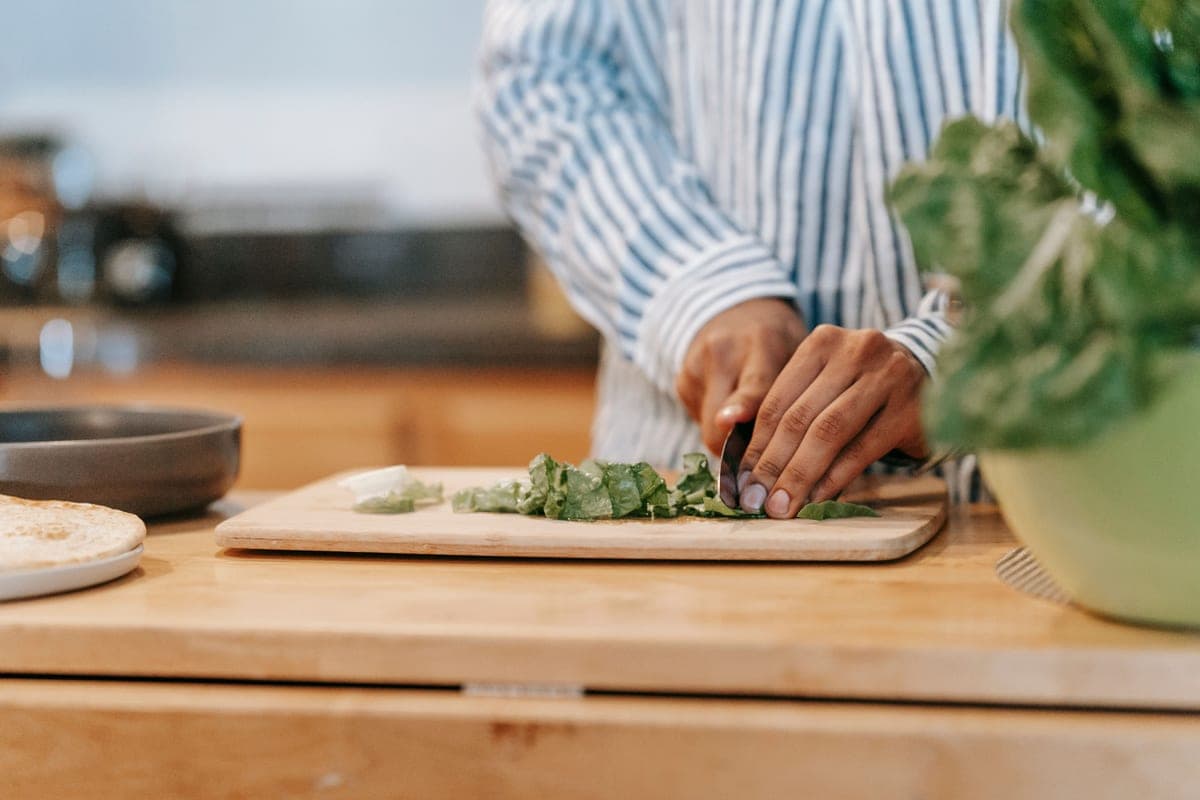
Replace a cutting board when it can no longer be effectively cleaned and cannot be resurfaced. That is not a rule of thumb — it is close to the written standard commercial kitchens are inspected against, which requires surfaces subject to scratching and scoring to be resurfaced if they can no longer be effectively cleaned and sanitized, or discarded if they are not capable of being resurfaced.
That phrasing is useful at home because it puts the test in the right place. The question is not how old the board is or what it is made of, it is whether the grooves have gone past what washing can reach. A wood board that has been sanded flat three times is fine. A plastic board with knife grooves you can feel with a fingernail is finished, and no amount of bleach changes that.
Quick picks
| # | Product | Best for | Material | Price |
|---|---|---|---|---|
| 1 | John Boos Maple Cutting BoardThick edge-grain hard maple — the one that can be resurfaced for a decade or more. | The board to sand and keep | Edge-grain hard maple | |
| 2 | Teakhaus Teak Cutting BoardFSC-certified teak with naturally high oil content, so it needs re-oiling less often. | Less maintenance, same longevity | FSC-certified teak | |
| 3 | Epicurean Kitchen Series Cutting BoardPaper composite that goes in the dishwasher, and is thin enough to store anywhere. | A dishwasher board for raw meat | Compressed paper composite with a food-safe resin binder | |
| 4 | Virginia Boys Kitchens Walnut BoardAmerican black walnut finished with mineral oil — softer than maple, gentler on an edge. | Walnut, kinder to knives | American black walnut |
Tap a row to jump to that write-up. Prices are not shown on this site because they change — the button sends you to the live Amazon listing.
The test, in order
- Run a fingernail across the surface. If it catches in grooves, soil and bacteria can sit below where a sponge reaches.
- Look at it wet. Deep cuts hold water and show as dark lines. Those are the channels that will not drain or dry.
- Smell it dry. A board that smells after washing is holding something in the grain or the grooves.
- Check it on a flat counter. A warped or cupped board rocks under a knife, which is a cutting hazard before it is a hygiene one.
- Look for splits, lifted glue lines and soft spots. A delaminating board cannot be resurfaced; it is done.
- Then decide: resurface, or replace. Wood and bamboo can be sanded. Plastic and composite cannot.
Wood can be resurfaced. Plastic cannot
This is the practical difference the food code language points at. A hardwood board is thick enough that sanding removes the scored layer and leaves a new flat surface — 80 grit to take the grooves out, then 120 and 220, then mineral oil until it stops absorbing. A maple or walnut board can go through that several times over a decade and come out genuinely renewed.
A plastic board cannot. It is thin, it softens under sanding rather than cutting cleanly, and the knife grooves are the whole material rather than a surface layer. The irony is that plastic boards were adopted partly because they are dishwasher safe and therefore easier to sanitize — which is true right up until the surface is scored, at which point the dishwasher is washing over the grooves rather than into them.
Composite boards sit in between and lean toward plastic: dishwasher safe, long-lived, but not resurfaceable. They get replaced rather than renewed, and they last long enough that this is a reasonable trade.
Material, lifespan and what ends it
Glass is on that table only to be dismissed. It cannot be scored, which sounds like the perfect answer until you consider that the knife edge has to give way instead. A board that ruins every knife that touches it is not a hygiene solution.
| Material | Resurfaceable | How it ends | Realistic life |
|---|---|---|---|
| Hard maple, edge grain | Yes, several times | Splits or glue lines lift | Decades, with sanding |
| Walnut | Yes | Softer, so grooves form faster | Many years |
| Teak | Yes | Oily, so it needs less care | Many years |
| Bamboo | Lightly | Delaminates at the glue lines | A few years |
| Paper composite | No | Scoring, then replace | Several years |
| Plastic (HDPE/PP) | No | Knife grooves past cleaning | One to three years of real use |
| Glass | N/A | Never scores. Destroys knives | Indefinite, and do not use it |
The wood versus plastic argument, settled practically
Both work, and the deciding factor is not the material's inherent germ-resistance — it is whether the board in front of you is still cleanable. A well-maintained wood board and a new plastic board are both fine. A scored plastic board and a cracked, never-oiled wood board are both not.
What tilts it in practice is that wood can be brought back and plastic cannot, so a good hardwood board is the cheaper choice over a decade even at four times the purchase price. The one place plastic genuinely wins is raw meat and poultry, where a dedicated board that can go through a dishwasher at temperature is easier to be disciplined about. Two boards — wood for everything, plastic for raw meat — is the answer most kitchens should land on.
Making a board last
If the board you are replacing is plastic, the materials question is worth a second look while you are at it — our best non-toxic cutting boards roundup covers what each material publishes about itself.
- Never put wood in the dishwasher. Heat and prolonged soaking split boards and lift glue lines. This is the single most common way a good board dies.
- Wash and dry immediately, standing on edge. A board left flat on a wet counter cups.
- Oil wood when water stops beading — food-grade mineral oil, until it stops absorbing. Monthly at first, then when it looks thirsty.
- Use the biggest board you will tolerate. Cuts spread over more area, and the board scores more slowly.
- Keep a separate board for raw meat and run it hot. Separation beats sanitizing.
- Sand before it is desperate. Taking out shallow grooves is easy; taking out deep ones removes real thickness.
The picks in full
1. Best for The board to sand and keep
John Boos Maple Cutting Board
Thick edge-grain hard maple — the one that can be resurfaced for a decade or more.
- Made of
- Edge-grain hard maple, finished with mineral oil and beeswax
- Certified to
- Manufacturer claimManufacturer claim; no third-party certification published.
- Material
- Hard maple
- Finish
- Mineral oil and beeswax, reapplied by you
- Dishwasher
- No
Thickness is what makes a board resurfaceable, and this is a genuinely thick maple block. Hard maple is dense enough to resist scoring in the first place and deep enough to lose a millimeter to sandpaper several times. Finished with mineral oil and beeswax, which you reapply — a maintainable surface rather than a sealed one.
What you give up
Heavy, expensive, and no dishwasher ever. It needs oiling, and a neglected maple board will split.
Who it's for
A primary board meant to last decades.
Who should skip it
Raw meat as its main job, and anyone who will not oil it.
2. Best for Less maintenance, same longevity
Teakhaus Teak Cutting Board
FSC-certified teak with naturally high oil content, so it needs re-oiling less often.
- Made of
- FSC-certified teak, edge grain
- Certified to
- Manufacturer claimManufacturer claim; no third-party certification published.
- Material
- Teak
- Oil content
- Naturally high, needs less re-oiling
- Dishwasher
- No
Teak's own oil content is the feature: it absorbs less water and tolerates a missed oiling in a way maple does not, while still being hard enough to resurface. For a household that wants a lifetime wood board without a maintenance calendar, this is the lower-effort version.
What you give up
Silica in teak dulls knives slightly faster than maple. Still no dishwasher, and the price is high.
Who it's for
Wood boards with less upkeep, and humid kitchens.
Who should skip it
Knife obsessives, and anyone wanting a dishwasher-safe board.
3. Best for A dishwasher board for raw meat
Epicurean Kitchen Series Cutting Board
Paper composite that goes in the dishwasher, and is thin enough to store anywhere.
- Made of
- Compressed paper composite with a food-safe resin binder
- Certified to
- Manufacturer claimManufacturer claim; no third-party certification published.
- Material
- Paper composite
- Dishwasher
- Yes, unlike wood
- Note
- Resin binder composition is the brand's own disclosure
The second board most kitchens need is one that can be run hot after raw chicken, and this is the version that is not plastic. It is a compressed paper composite with a resin binder, dishwasher safe unlike wood, and far kinder to knives than glass or bamboo.
What you give up
Not resurfaceable — when it scores, it gets replaced. The resin binder's composition is the brand's own disclosure rather than a certified one, and it is thin enough that it slides unless the counter is dry.
Who it's for
Raw meat and poultry, and anyone who wants one board they can wash hot.
Who should skip it
A primary board you want to keep for twenty years.
4. Best for Walnut, kinder to knives
Virginia Boys Kitchens Walnut Board
American black walnut finished with mineral oil — softer than maple, gentler on an edge.
- Made of
- American black walnut, finished with mineral oil
- Certified to
- Manufacturer claimManufacturer claim; no third-party certification published.
- Material
- Black walnut
- Finish
- Mineral oil
- Dishwasher
- No
Walnut is a little softer than maple, which means it marks more readily and dulls knives more slowly. For a cook who sharpens often and cares about the edge, that trade is worth making, and walnut sands back just as well as maple does.
What you give up
Grooves form faster than on hard maple, so expect to sand sooner. Mineral oil finish needs reapplying, and no dishwasher.
Who it's for
Knife-focused cooks and anyone who prefers a dark board.
Who should skip it
Heavy daily butchery, where maple's hardness pays off.
How we chose, and what we did not do
Every product on this page was checked against its published material composition and its third-party certifications, with each claim labeled as certified, manufacturer-stated or independently tested by a named party. We do not run a lab and we do not claim to have used these products — the full method is here.
Questions people actually ask
When should you replace a cutting board?
When it can no longer be effectively cleaned and cannot be resurfaced. In practice that means deep grooves your fingernail catches in, splits or lifted glue lines, a smell that survives washing, or a warp that makes it rock. Wood can usually be sanded instead; plastic and composite cannot.
How often should you replace a plastic cutting board?
Not on a schedule — on the condition of the surface. With daily use, knife grooves usually pass the point of effective cleaning within one to three years, and a plastic board cannot be resurfaced, so that is when it goes.
Can you sand a cutting board?
Wood and bamboo, yes: 80 grit to remove the grooves, then 120 and 220, then mineral oil until it stops absorbing. Plastic and composite boards cannot be sanded usefully — they soften and smear rather than cutting clean.
Is wood or plastic more hygienic?
Whichever one is still cleanable. A maintained wood board and a new plastic board are both fine; a scored board of either material is not. Wood's advantage is that it can be brought back, which is why it lasts longer in practice.
Should I have separate boards for meat and vegetables?
Yes, and that is the easiest hygiene improvement in a kitchen. Keep a dishwasher-safe board for raw meat and poultry and a wood board for everything else — separation does more than any sanitizing routine.
Are glass cutting boards a good idea?
No. They cannot be scored, which means the knife edge absorbs the damage instead. They also slide and are loud. Choose wood or composite.
Sources
- Minnesota Rules 4626.0740 — Cutting Surfaces (state adoption of Food Code 4-501.12) — Scratched and scored boards must be resurfaced, or discarded if they cannot be
- US FDA — Food Code 2022 — The model code states and counties adopt for retail food equipment and surfaces
- John Boos (manufacturer)
- Epicurean (manufacturer)
Read next
Kitchen & Cookware
Best non-toxic cutting boards
Maple, walnut, teak and composite boards compared on material, care and the plastic-shedding question.
Kitchen & Cookware
The six kitchen swaps worth making first
Six kitchen swaps in evidence-based priority order, from a scratched pan to the water you cook with.

Kitchen & Cookware
Is silicone safe for cooking?
Platinum versus peroxide-cured silicone, what temperature ratings mean, and when to retire a tool.
Kitchen & Cookware
Which plastics are safe for food storage?
What resin codes 1 to 7 mean for food, the three conditions that matter more, and inert alternatives.
Written by Selena H., owner of Glass & Cotton.