Bedding & Home
Best PVC-free shower curtains and liners
That new-shower-curtain smell is the product off-gassing. A washable fabric curtain ends the problem for about the same money.
Last reviewed October 13, 2026 — Selena H.
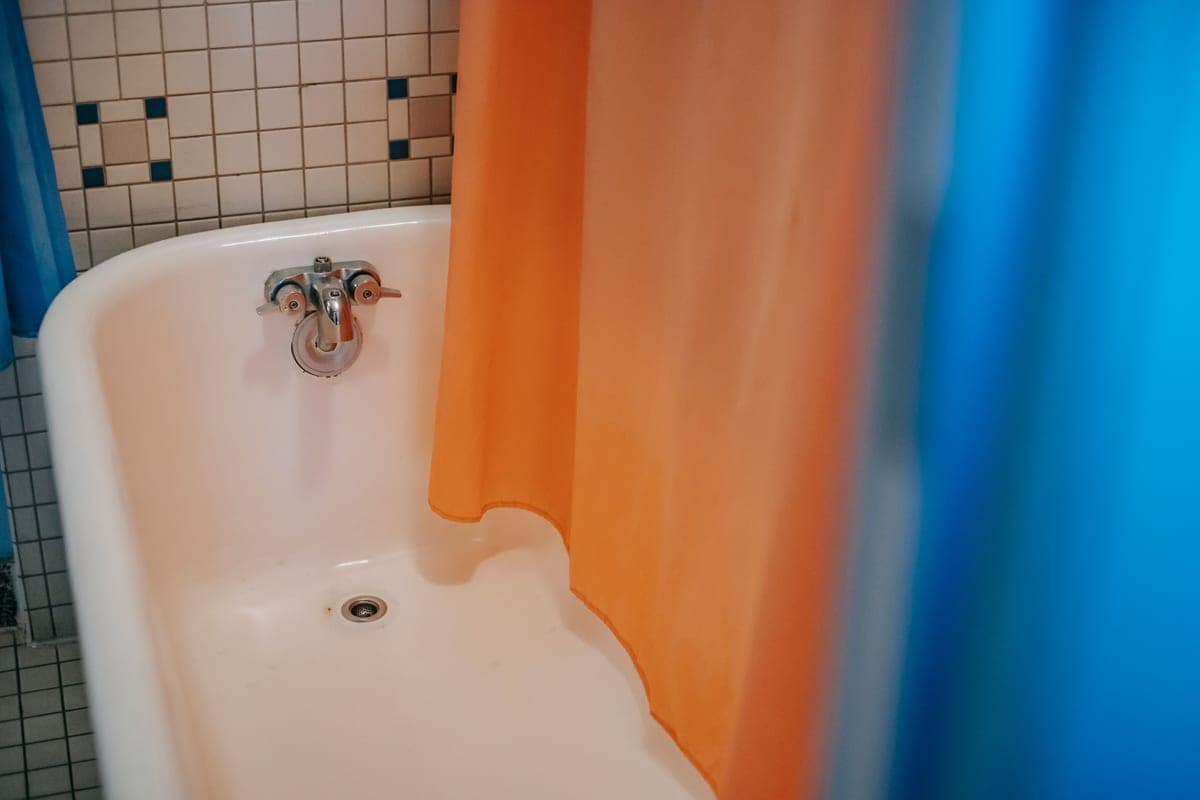
The cheap vinyl liner is the most aggressively smelling plastic product in an average home, and the smell is the point: it is the plasticizers and residual solvents that keep PVC flexible leaving the material in a warm, humid, enclosed room.
It is also one of the easiest things on this site to fix. A washable fabric curtain costs about the same as two or three vinyl liners, lasts years, and goes in the machine when it gets grubby instead of being thrown away.
Quick picks
| # | Product | Best for | Material | Price |
|---|---|---|---|---|
| 1 | PEVA-Free Cotton Shower CurtainCotton canvas, washable, no PVC anywhere. | A permanent replacement | Cotton canvas outer curtain with a washable liner | |
| 2 | Washable Nylon Shower LinerWoven nylon with a water-repellent finish. Machine washable, no PVC. | A washable liner behind a decorative curtain | Woven nylon with a water-repellent finish | |
| 3 |  Coyuchi Organic Cotton Sheet SetIncluded as the certification reference point for household textiles. | The fabric question generally | 100% organic cotton |
Tap a row to jump to that write-up. Prices are not shown on this site because they change — the button sends you to the live Amazon listing.
Is PEVA actually better?
PEVA — polyethylene vinyl acetate — is marketed as the non-toxic alternative to PVC, and it is a genuine improvement in one specific respect: it is chlorine-free and does not need the phthalate plasticizers that PVC requires to stay flexible. That is why the smell is much weaker.
It is still a plastic film, it still ends up in a bin when it gets moldy, and it has not been studied in anything like the depth PVC has. So our position is that PEVA is a step up from vinyl and a step down from fabric, and fabric is the only option here that solves the problem rather than substituting it.
How we chose these
We looked for washable rather than disposable, no PVC, and a stated material. The last criterion rules out most of this category, where products are frequently described only as "eco" or "EVA" with no further detail.
Where a product has a repellent finish we have said so and flagged it as a question to ask the brand, rather than assuming either the best or the worst about it.
Making a fabric curtain work
- Pull it closed after showering. A curtain left bunched stays damp and grows mildew; spread flat it dries in an hour.
- Wash it every few weeks with your towels. This is the whole maintenance routine.
- Use a liner if your shower sprays hard, or buy a curtain wide enough to tuck slightly into the tub.
- Ventilate. An extractor fan or an open window does more for bathroom air than any curtain choice.
- Skip fabric softener, which reduces how well cotton handles water.
What we ruled out
PVC and vinyl liners, which are the product this page exists to replace. Anything labeled only "EVA" or "eco-friendly" with no material statement. Antimicrobial-treated curtains, where the treatment is rarely named. And disposable liners generally, since the whole argument for fabric is that it is washed rather than replaced.
The picks in full
1. Best for A permanent replacement
PEVA-Free Cotton Shower Curtain
Cotton canvas, washable, no PVC anywhere.
- Made of
- Cotton canvas outer curtain with a washable liner
- Certified to
- Manufacturer claimManufacturer claim; no third-party certification published.
- Material
- Cotton
- PVC
- None
- Note
- Needs washing, not replacing
A fabric curtain with a washable liner is the end of this problem rather than a cheaper version of it. Cotton has no plasticizers to off-gas, it handles a humid bathroom better than people expect, and when it looks tired it goes in the washing machine rather than the bin.
What you give up
It needs washing, which is a habit rather than a hardship, and cotton takes longer to dry than vinyl — pull it closed after showering so it does not sit folded and damp.
Who it's for
Anyone replacing a vinyl liner for good.
Who should skip it
Households that will not wash it, where mildew becomes the new problem.
2. Best for A washable liner behind a decorative curtain
Washable Nylon Shower Liner
Woven nylon with a water-repellent finish. Machine washable, no PVC.
- Made of
- Woven nylon with a water-repellent finish
- Certified to
- Manufacturer claimManufacturer claim; no third-party certification published.
- Material
- Nylon
- PVC
- None
- Check
- Ask the brand what the repellent finish is
If you want to keep a decorative outer curtain, this is the liner to put behind it: woven fabric rather than film, washable, and no vinyl. It dries faster than cotton, which matters in a bathroom with poor ventilation.
What you give up
The water-repellent finish is the open question — ask the brand what it is, because a fluorinated finish would reintroduce exactly the chemistry we would rather avoid. Nylon is also a polymer, just not PVC.
Who it's for
Bathrooms with a decorative outer curtain and poor ventilation.
Who should skip it
Anyone who wants no finish and no polymer at all, where plain cotton is the answer.
3. Best for The fabric question generally
Coyuchi Organic Cotton Sheet Set
Included as the certification reference point for household textiles.
- Made of
- 100% organic cotton, undyed or low-impact dyed
- Certified to
- Manufacturer claimManufacturer claim; no third-party certification published.
- Fiber
- Organic cotton
- Finish
- No wrinkle-resist resin per the brand
- Note
- Check the specific SKU's certification number
Shower curtains rarely carry certification, so the useful comparison is with bedding, where [GOTS](/certifications/gots) and [OEKO-TEX](/certifications/oeko-tex) do exist. If you want certified cotton in your bathroom, a cotton curtain from a certified-textile brand is closer to that than anything sold specifically as a shower curtain.
What you give up
These are sheets, not a curtain. This is a pointer to where certification exists rather than a bathroom product.
Who it's for
Anyone wanting certified household cotton.
Who should skip it
People looking only for a curtain — the two above are the products.
How we chose, and what we did not do
Every product on this page was checked against its published material composition and its third-party certifications, with each claim labeled as certified, manufacturer-stated or independently tested by a named party. We do not run a lab and we do not claim to have used these products — the full method is here.
Questions people actually ask
Why does my new shower curtain smell?
A vinyl liner off-gasses the plasticizers and residual solvents that keep PVC flexible, and a warm humid bathroom accelerates it. A fabric curtain has nothing to off-gas and does not have the smell at all.
Is PEVA safer than PVC?
In one specific respect, yes: PEVA is chlorine-free and does not need phthalate plasticizers, which is why it smells far less. It is still a plastic film and less studied than PVC, so fabric remains the option that solves the problem rather than substituting it.
Do fabric shower curtains get moldy?
Only if left bunched and damp. Spread it flat after showering and wash it with the towels every few weeks and mildew is not an issue — which is the advantage over a liner you cannot wash.
Do I need a liner with a fabric curtain?
Often not, if the curtain is wide enough to tuck slightly into the tub. A washable fabric liner is the answer if your shower sprays hard or you want to keep a decorative outer curtain dry.
Sources
- US EPA — Our Current Understanding of the Human Health and Environmental Risks of PFAS — Regulator overview of PFAS persistence and health endpoints
- Global Organic Textile Standard (GOTS) — the standard — Whole-supply-chain certification: fiber, chemical inputs, wastewater, social criteria
- OEKO-TEX — STANDARD 100 — Harmful-substance testing by product class. Not an organic-content claim
- California OEHHA — Proposition 65 guidance for businesses — Safe-harbour levels, and when a warning is and is not required
Read next
Bedding & Home
PFAS in textiles: the finish, not the fiber
Where fluorinated finishes appear in household textiles, the label words to search for, and what regulators have done.
Bedding & Home
Best non-toxic sheets
Certified organic cotton and linen sheets, plus the wrinkle-resist and stain-resist finishes to avoid.
Cleaning & Laundry
Best non-toxic all-purpose cleaners
All-purpose cleaners with disclosed formulas and real certifications, plus what the marks actually cover.

Bedding & Home
What OEKO-TEX certified actually means
OEKO-TEX STANDARD 100 explained: 1,000+ substances, four product classes, and why it says nothing about organic content.
Written by Selena H., owner of Glass & Cotton.