Kitchen & Cookware
Best non-toxic bakeware
Of every category on this site, bakeware is the one where the uncoated option is also the one professionals use.
Last reviewed October 13, 2026 — Selena H.
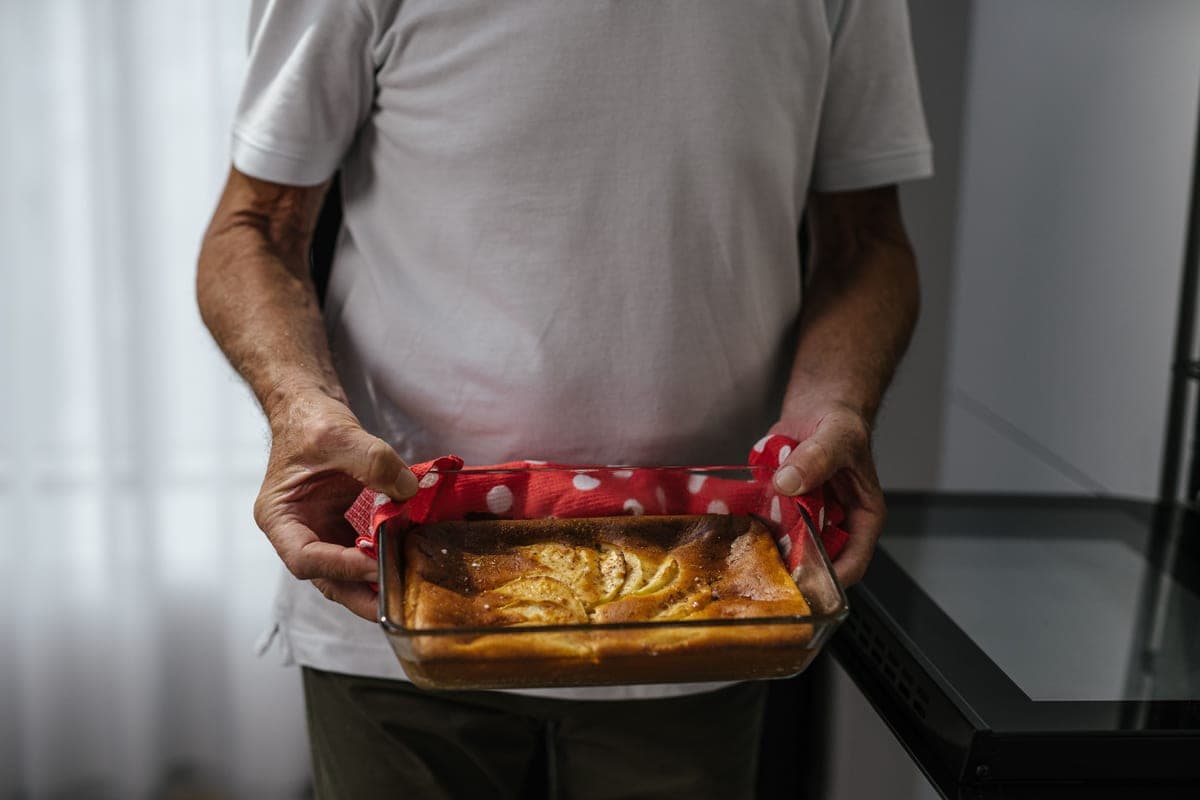
Bakeware is the easy win. Unlike frying pans, where non-stick genuinely solves a problem, baking has worked for a century with glass, stoneware and bare metal plus a sheet of parchment — which is why commercial bakeries use uncoated aluminum sheet pans rather than coated ones.
That means the lower-tox option here is not a compromise, it is the professional option. Everything on this page has no applied non-stick layer, a one-line material specification, and a service life measured in decades.
Quick picks
| # | Product | Best for | Material | Price |
|---|---|---|---|---|
| 1 | Pyrex Glass Baking DishTempered glass, no coating, and you can see what the bottom is doing. | Casseroles and roasting | Tempered soda-lime silicate glass | |
| 2 | Nordic Ware Naturals Baking SheetUncoated aluminum, exactly what commercial bakeries use, nothing to flake. | Cookies and sheet-pan dinners | Uncoated pure aluminum with a reinforced steel rim | |
| 3 | Emile Henry Stoneware BakerGlazed stoneware rated to 520F, with no coating and a fired glass surface. | Oven to table | Burgundy clay stoneware with a fired glaze | |
| 4 | Fat Daddio's Anodized Cake PanHard-anodized aluminum, uncoated, with the straight sides serious baking needs. | Cakes and precise baking | Hard-anodized aluminum | |
| 5 |  Lodge Cast Iron Skillet (10.25 in)The oldest uncoated bakeware there is, and the best crust in the category. | Cornbread and skillet baking | Bare cast iron |
Tap a row to jump to that write-up. Prices are not shown on this site because they change — the button sends you to the live Amazon listing.
Why coated bakeware is the odd one out
Non-stick on a frying pan solves a real problem: eggs. On bakeware it solves a problem parchment already solves for a few cents a sheet, and it introduces a surface that wears out, scratches when you cut a brownie in the pan, and discolors. The professional kitchens that bake all day use uncoated aluminum, and that is not nostalgia — it is because coated sheet pans fail quickly under real use.
The practical consequence: in bakeware, the lower-tox choice and the better-performing choice are the same choice, which is rare on this site and worth saying plainly.
Matching material to what you bake
| What you are baking | Material | Why |
|---|---|---|
| Cookies, sheet-pan dinners | Bare aluminum | Best conduction, no coating, pro standard |
| Casseroles, gratins, anything acidic | Glass or stoneware | Inert, and you can see the base |
| Layer cakes | Hard-anodized aluminum | Straight sides and consistent dimensions |
| Bread | Stoneware or cast iron | Thermal mass makes the crust |
| Cornbread, skillet desserts | Cast iron | Heat retention and oven-to-table |
| Muffins and cupcakes | Paper liners in any metal pan | The liner is the non-stick |
What we ruled out
Coated non-stick bakeware generally, for the reasons above. Silicone bakeware, which works but where cure type and filler content are rarely published — see silicone kitchen tools for what to ask. Dark coated sheet pans, which over-brown bases regardless of their chemistry. And vintage or handmade glazed bakeware with unknown glaze, since glaze is where lead historically entered ceramics and FDA enforces leach limits only on what passes through regulated import channels.
The picks in full
1. Best for Casseroles and roasting
Pyrex Glass Baking Dish
Tempered glass, no coating, and you can see what the bottom is doing.
- Made of
- Tempered soda-lime silicate glass, no coating
- Certified to
- Manufacturer claimManufacturer claim; no third-party certification published.
- Coating
- None. Glass is the cooking surface
- Thermal shock
- Avoid cold liquid into a hot dish
- Dishwasher
- Yes
Glass is inert, takes any acidic food indefinitely, cleans completely, and lets you watch the browning on the underside — which no metal pan does. For lasagne, gratins, roasted vegetables and anything with tomato in it, a glass dish is the correct tool rather than the cautious one.
What you give up
Thermal shock is real: no cold liquid into a hot dish, and no hot dish onto a wet counter. Glass also browns bases less aggressively than metal, so pastry bottoms can be paler.
Who it's for
Everyday baking and roasting, acidic dishes, and anyone who wants one dish that does most oven jobs.
Who should skip it
Anything requiring an aggressively browned base, and households that put hot dishes straight onto cold surfaces.
2. Best for Cookies and sheet-pan dinners
Nordic Ware Naturals Baking Sheet
Uncoated aluminum, exactly what commercial bakeries use, nothing to flake.
- Made of
- Uncoated pure aluminum with a reinforced steel rim
- Certified to
- Manufacturer claimManufacturer claim; no third-party certification published.
- Coating
- None
- Material
- Uncoated aluminum
- Note
- Will react with very acidic foods over long bakes
A bare aluminum half-sheet conducts heat better than any coated pan and has no surface that can degrade. It is also the pan professional bakers choose, which should settle the question of whether uncoated is a downgrade. With parchment, release is a non-issue.
What you give up
Not non-stick at all — plan on parchment. It discolors permanently, and prolonged contact with very acidic food will react with the aluminum.
Who it's for
Cookies, roasted vegetables, sheet-pan meals, and anyone replacing a scratched coated tray.
Who should skip it
People who want to bake without a liner, and long acidic bakes.
3. Best for Oven to table
Emile Henry Stoneware Baker
Glazed stoneware rated to 520F, with no coating and a fired glass surface.
- Made of
- Burgundy clay stoneware with a fired glaze
- Certified to
- Manufacturer claimManufacturer claim; no third-party certification published.
- Material
- Glazed stoneware
- Oven safe
- Manufacturer states to 520F
- Coating
- Fired glaze, not a non-stick layer
Stoneware holds heat like cast iron and has an inert fired glaze rather than an applied coating, which makes it ideal for gratins, bread and anything you want to keep hot at the table. The maker rates it to 520F, above anything domestic baking requires.
What you give up
Heavy, expensive, and thermal shock will crack it. Not for stovetop use.
Who it's for
Baking that goes straight to the table, and bread.
Who should skip it
Thin sheet baking, stovetop work, and tight storage.
4. Best for Cakes and precise baking
Fat Daddio's Anodized Cake Pan
Hard-anodized aluminum, uncoated, with the straight sides serious baking needs.
- Made of
- Hard-anodized aluminum, uncoated
- Certified to
- Manufacturer claimManufacturer claim; no third-party certification published.
- Material
- Hard-anodized aluminum
- Coating
- None
- Note
- Hand wash to preserve the anodized layer
Anodizing hardens the surface of aluminum without adding a coating, so there is nothing applied to wear off. The pans are straight-sided and dimensionally consistent, which matters when a recipe assumes a specific pan depth, and they conduct heat like the bare aluminum sheets above.
What you give up
Hand wash — dishwasher detergent dulls and can etch the anodized layer. Not non-stick, so grease and line it.
Who it's for
Layer cakes, cheesecakes, anything where pan dimensions matter.
Who should skip it
Dishwasher-only kitchens.
5. Best for Cornbread and skillet baking
Lodge Cast Iron Skillet (10.25 in)
The oldest uncoated bakeware there is, and the best crust in the category.
- Made of
- Bare cast iron, factory-seasoned with vegetable oil
- Certified to
- Manufacturer claimManufacturer claim; no third-party certification published.
- Coating
- None. Polymerized oil seasoning only
- Oven safe
- Manufacturer states oven, grill and campfire safe
- Induction
- Yes
A cast iron skillet is a baking pan as much as a frying pan: it goes from stovetop to oven, holds heat better than anything else here, and produces a crust on cornbread, dutch-baby pancakes and skillet cookies that no sheet pan matches. The surface is polymerized oil, repairable forever.
What you give up
Weight, seasoning upkeep, and not for acidic bakes like a lemon tart.
Who it's for
Cornbread, skillet cookies, roasted meat, pizza.
Who should skip it
Acidic baking and anyone who cannot lift it from a hot oven.
How we chose, and what we did not do
Every product on this page was checked against its published material composition and its third-party certifications, with each claim labeled as certified, manufacturer-stated or independently tested by a named party. We do not run a lab and we do not claim to have used these products — the full method is here.
Questions people actually ask
Is glass bakeware safer than metal?
It is inert and has no coating, which makes it the simplest choice, especially for acidic food. Bare aluminum is equally free of coatings and conducts heat better; the real difference is that glass tolerates acid indefinitely and aluminum does not.
Do I need non-stick bakeware?
No. Parchment paper costs a few cents per sheet and does the same job without a surface that degrades. Commercial bakeries use uncoated aluminum with parchment for exactly this reason.
Is aluminum bakeware safe?
For most baking, yes. Bare aluminum does react with strongly acidic foods over long bakes, which discolors the pan and transfers some aluminum, so use glass or stoneware for tomato and citrus-heavy dishes.
Can Pyrex go from fridge to oven?
Not safely. Thermal shock cracks tempered glass, so let a cold dish come toward room temperature first, and never pour cold liquid into a hot dish or set a hot dish on a wet surface.
Sources
Read next
Kitchen & Cookware
Glass and stoneware: the inert options
Glass and glazed stoneware: inertness, thermal shock, and the lead question on handmade and vintage pieces.
Kitchen & Cookware
Best non-toxic food storage
Glass, silicone and stainless storage compared, with the cheapest route out of plastic.
Kitchen & Cookware
Best non-toxic air fryers, and the thing nobody discloses
Air fryers assessed on what the basket is actually coated with, plus the oven-format route that avoids one.
Kitchen & Cookware
Is anodized aluminum safe for cooking?
What anodizing actually does, how bare aluminum behaves with acid, and the coating question underneath most anodized pans.
Written by Selena H., owner of Glass & Cotton.