Kitchen & Cookware
Best non-toxic food storage
Cold storage in plastic is a mild question. Heated storage in plastic is the actual one, and it is the easiest thing in the house to fix.
Last reviewed October 13, 2026 — Selena H.
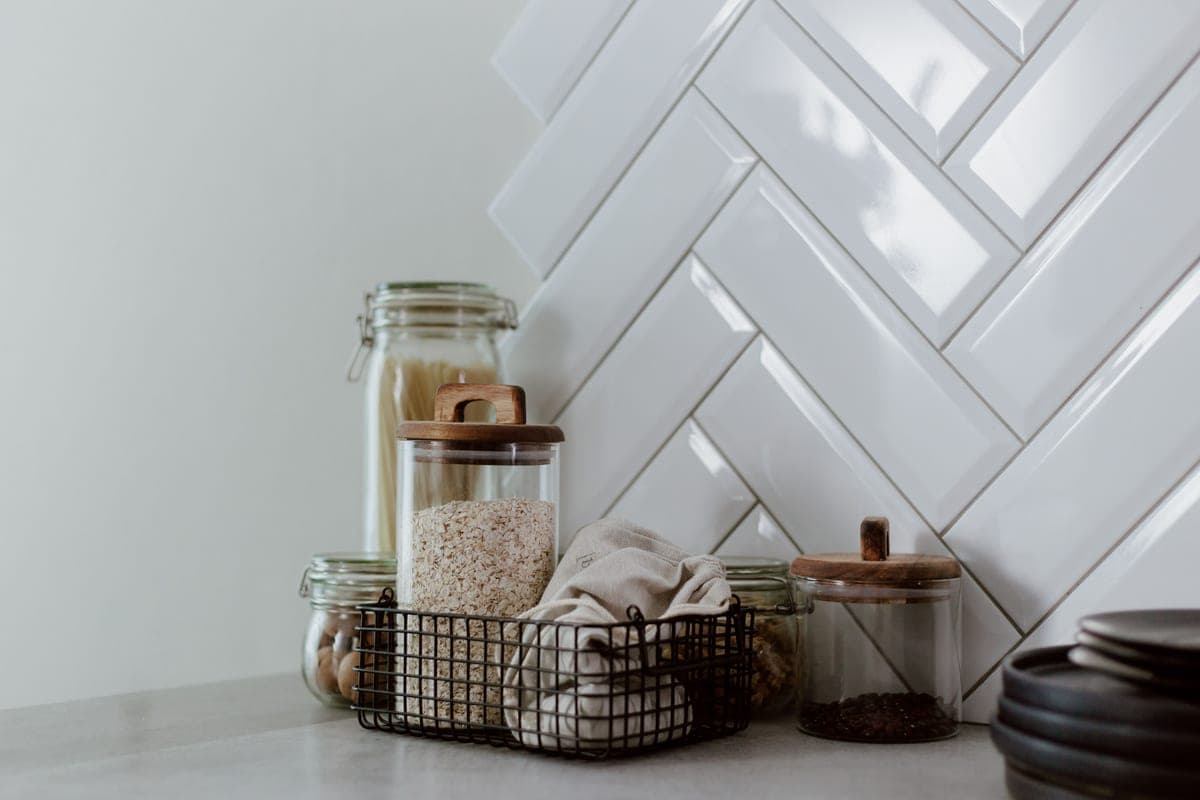
Plastic storage is not one exposure, it is three with different weights. Dry rice in a plastic tub is close to nothing. Cold leftovers for two days is small. Hot food decanted into a plastic container, or a plastic container run through a microwave, is where temperature does the work — and that last case is the one worth fixing first.
The fix is cheap. Glass costs almost nothing in jar form, silicone solves the bag problem, and stainless solves the lunchbox problem. None of this requires a boutique set, though one is on the list because matching lids genuinely make a kitchen easier to use.
Quick picks
| # | Product | Best for | Material | Price |
|---|---|---|---|---|
| 1 | Pyrex Glass Storage SetTempered glass bodies with plastic lids. Rectangular, stackable, oven-capable. | Everyday leftovers | Tempered glass bodies with polypropylene lids | |
| 2 | Ball Wide Mouth Mason JarsA case of jars costs about a dollar each. Nothing else is close. | Cheapest glass | Soda-lime glass with a two-piece steel lid (plastisol-lined) | |
| 3 | Stasher Silicone Storage BagsPlatinum-cured silicone, one material, washable several hundred times. | Replacing zip bags | Platinum-cured silicone | |
| 4 | Weck Glass JarsGlass body, glass lid, rubber gasket. No plastic in the food contact path at all. | Glass lids as well as glass bodies | Glass body | |
| 5 | Anchor Hocking Glass Storage SetTempered glass bodies, plastic lids, made in the USA per the brand. | US-made glass | Tempered glass bodies with plastic lids |
Tap a row to jump to that write-up. Prices are not shown on this site because they change — the button sends you to the live Amazon listing.
Rank your plastic by heat, then replace in that order
- Anything you microwave. Heat plus fat plus plastic is the combination worth removing first, and glass is a direct substitute.
- Anything you decant hot food into. Let food cool in the pan, then store it — that single habit change is free.
- Scratched, cloudy or warped containers. Degradation is what releases particles; a container that has been through 300 dishwasher cycles looks it.
- Cold leftovers in good-condition plastic. A much smaller question. Replace as things wear out.
- Dry goods in plastic tubs. Lowest priority of all. Flour in a plastic bin is not an exposure worth money.
The lid problem nobody solves well
Almost every glass storage set has a plastic lid, because a glass lid needs a gasket and clips and nobody wants to deal with that at 10pm. The honest position is that this is fine for most use: when a container is half full, food never touches the lid. When it is full to the brim, or inverted in a bag, it does.
If that matters to you, the options are glass-lidded jars with gaskets, or stainless containers with stainless lids. Both are more awkward than a plastic lid, and that awkwardness is the actual reason this problem persists.
What we ruled out
Plastic sets of any specification, since the point of the page is to replace them. Bamboo-fiber and "plant-based" containers, which are typically a melamine composite — a plastic with a renewable filler, and not an improvement on polypropylene. And silicone bags with no stated cure type, since peroxide-cured silicone is a different product from platinum-cured and only one of them says so on the box.
The picks in full
1. Best for Everyday leftovers
Pyrex Glass Storage Set
Tempered glass bodies with plastic lids. Rectangular, stackable, oven-capable.
- Made of
- Tempered glass bodies with polypropylene lids
- Certified to
- Manufacturer claimManufacturer claim; no third-party certification published.
- Food contact
- Glass, except the lid rim
- Lids
- Plastic. Food touches them when full
- Oven
- Glass body only, lids off
A matched glass set is the practical default: the food sits on glass, the bodies go in the oven with the lids off, and the rectangular footprint means a full fridge actually holds things. The lid is plastic, which matters only when the container is full enough for food to touch it.
What you give up
The lids are the weak point — plastic, and the part that cracks and warps first. Glass is heavy and will break if dropped on tile.
Who it's for
Most households, as the main storage set.
Who should skip it
Packed lunches carried in a bag, where weight and breakage matter.
2. Best for Cheapest glass
Ball Wide Mouth Mason Jars
A case of jars costs about a dollar each. Nothing else is close.
- Made of
- Soda-lime glass with a two-piece steel lid (plastisol-lined)
- Certified to
- Manufacturer claimManufacturer claim; no third-party certification published.
- Food contact
- Glass, plus the lid liner at the rim
- Cost per liter
- Lowest of any glass option
- Note
- Metal lids rust if left wet
If the goal is getting plastic out of the cupboard for the least money, wide-mouth mason jars are the answer: glass bodies, steel lids, dishwasher-safe, freezer-capable with headspace, and available anywhere. For dry goods, soups, stocks and leftovers they do the whole job.
What you give up
Round jars waste fridge space, the two-piece metal lids rust if stored damp, and they are awkward for anything you need to eat out of at a desk.
Who it's for
Dry goods, batch cooking, and anyone replacing plastic on a budget.
Who should skip it
Rectangular-stacking requirements and packed lunches.
3. Best for Replacing zip bags
Stasher Silicone Storage Bags
Platinum-cured silicone, one material, washable several hundred times.
- Made of
- Platinum-cured silicone, single material
- Certified to
- Manufacturer claimManufacturer claim; no third-party certification published.
- Material
- Platinum-cured silicone
- Dishwasher
- Yes
- Oven and freezer
- Manufacturer states both
The disposable zip bag is the hardest plastic in the kitchen to displace because nothing rigid does its job. Platinum-cured silicone does: it seals, it goes in the freezer, the dishwasher and boiling water, and it is a single declared material with no laminate or plasticizer. Platinum curing uses a platinum catalyst rather than a peroxide one and leaves fewer residual byproducts.
What you give up
Expensive per bag, and they hold onto strong smells like garlic. The seal takes practice and a badly closed one leaks.
Who it's for
Freezer portions, snacks, sous vide, and anyone trying to stop buying zip bags.
Who should skip it
Anyone who wants rigid, stackable containers, or who objects to all polymers.
4. Best for Glass lids as well as glass bodies
Weck Glass Jars
Glass body, glass lid, rubber gasket. No plastic in the food contact path at all.
- Made of
- Glass body, glass lid, rubber gasket and steel clamps
- Certified to
- Manufacturer claimManufacturer claim; no third-party certification published.
- Food contact
- Glass only
- Seal
- Natural rubber gasket
- Freezer
- Leave headspace
This is the only option here with no plastic lid: the lid is glass, sealed with a natural rubber gasket and held by steel clips. For anyone who wants the food-contact path to be entirely glass — including when the container is full — this is the one that delivers it.
What you give up
Fiddly. Clips and gaskets are more to handle and to lose, the shapes stack poorly, and they are not sealed well enough to carry loose in a bag.
Who it's for
Fridge and pantry storage where the whole path should be glass.
Who should skip it
Transport, and anyone who wants to open a container one-handed.
5. Best for US-made glass
Anchor Hocking Glass Storage Set
Tempered glass bodies, plastic lids, made in the USA per the brand.
- Made of
- Tempered glass bodies with plastic lids
- Certified to
- Manufacturer claimManufacturer claim; no third-party certification published.
- Food contact
- Glass, plus the lid when full
- Oven
- Glass body only
- Note
- Made in the USA per the brand
Functionally this sits alongside the Pyrex set — tempered glass bodies, plastic lids, oven-capable with the lid off — with domestic manufacture as the differentiator. For buyers who weight origin, it is the same product category with that box ticked.
What you give up
Same plastic-lid limitation, same weight, and lid availability can be patchier when you need a replacement.
Who it's for
Buyers who prefer US-made glassware.
Who should skip it
Anyone needing a specific lid shape in a hurry.
How we chose, and what we did not do
Every product on this page was checked against its published material composition and its third-party certifications, with each claim labeled as certified, manufacturer-stated or independently tested by a named party. We do not run a lab and we do not claim to have used these products — the full method is here.
Questions people actually ask
Is it safe to microwave food in plastic containers?
It is the specific use worth avoiding, because heat and fat together are what drive migration from a polymer. Microwave in glass or ceramic instead; it costs nothing and removes the one high-temperature plastic contact in most kitchens.
Are silicone food storage bags safe?
Platinum-cured silicone is a single-material product with no laminate or plasticizer and tolerates freezer, dishwasher and boiling temperatures. Look for a stated cure type and temperature rating; "food-grade silicone" alone is marketing.
What is the cheapest way to replace plastic food storage?
A case of wide-mouth mason jars, at roughly a dollar a jar. They are glass, dishwasher-safe and freezer-capable, and they cover dry goods, soups and leftovers.
Do glass containers with plastic lids defeat the purpose?
Mostly not. Food touches the lid only when the container is filled to the brim or inverted. If you want the whole food-contact path to be glass, a glass-lidded jar with a rubber gasket is the option that delivers it.
Sources
Read next
Kitchen & Cookware
Glass and stoneware: the inert options
Glass and glazed stoneware: inertness, thermal shock, and the lead question on handmade and vintage pieces.

Kitchen & Cookware
Is silicone safe for cooking?
Platinum versus peroxide-cured silicone, what temperature ratings mean, and when to retire a tool.
Kitchen & Cookware
Best non-toxic blenders
Glass-jar and stainless-container blenders compared, plus an honest read on Tritan copolyester.
Baby & Kids
BPA, BPS and BPF: the substitution problem
Why BPA-free is a claim about one molecule, what replaced it, and how to avoid the whole question.
Written by Selena H., owner of Glass & Cotton.