Kitchen & Cookware
The safest non-toxic frying pans, by what you cook in them
If you change one thing in the kitchen, change the pan you reach for every morning. It does more cooking than the rest of the set combined.
Last reviewed October 13, 2026 — Selena H.
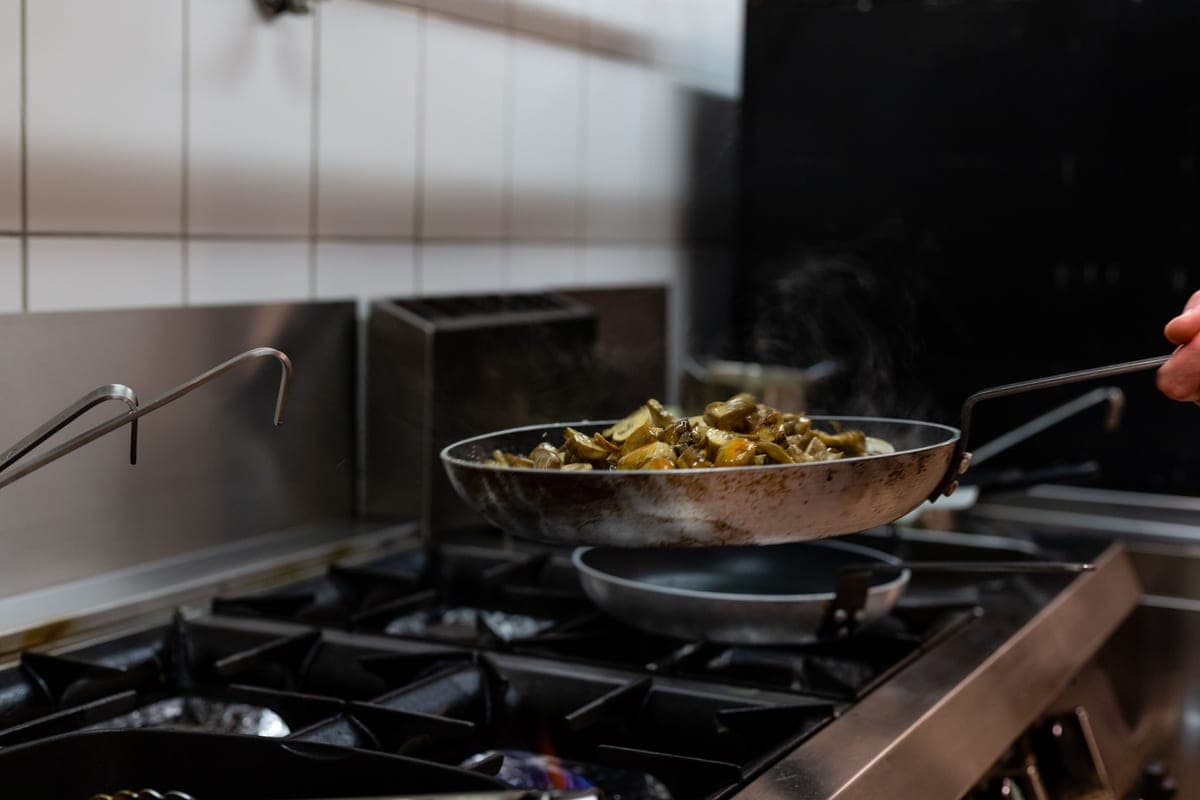
A frying pan does more cooking than any other vessel in the house, gets the most direct heat, and takes the most abrasion. That makes it both the item most likely to have a degrading surface and the highest-value single thing to replace — which is why we tell people to start here rather than with a set.
There is no single best answer, because a pan for eggs and a pan for steak are different objects. This page is organized by what you actually cook, with the material consequence stated for each.
Quick picks
| # | Product | Best for | Material | Price |
|---|---|---|---|---|
| 1 | Lodge Carbon Steel SkilletSeasoned steel: no coating, no expiry, and non-stick enough once it is built up. | One pan for everything | Pressed carbon steel | |
| 2 | 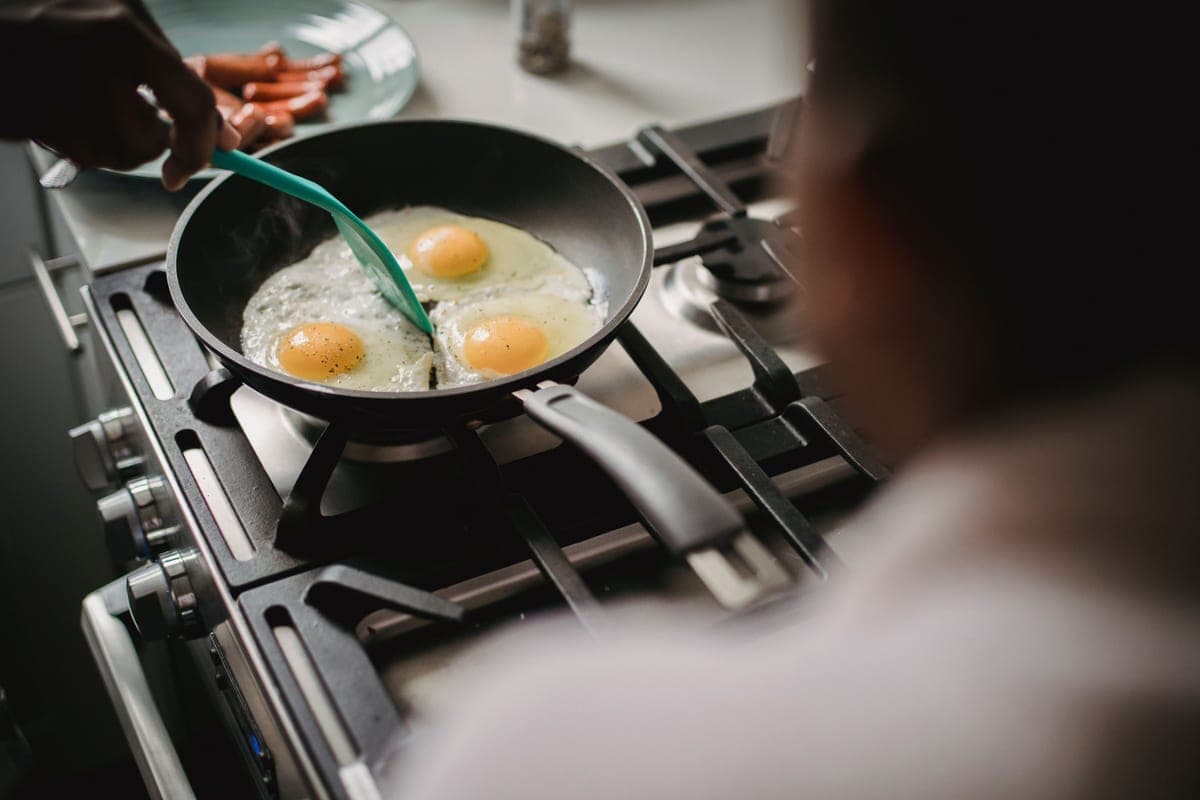 Our Place Always Pan 2.0Ceramic-coated, immediately non-stick, and the easiest pan here to cook in. | Eggs with no technique | Cast aluminum body with a ceramic non-stick coating | |
| 3 |  Made In Stainless Clad SetUncoated clad stainless. The pan that makes a pan sauce. | Searing and sauces | 5-ply stainless clad: 304 stainless cooking surface | |
| 4 |  Lodge Cast Iron Skillet (10.25 in)The most heat-retaining pan here, and the cheapest. | Steak and cornbread | Bare cast iron | |
| 5 | Xtrema Versa SkilletSolid ceramic. Slow, fragile, and the only pan here with neither metal nor coating. | No metal and no coating | 100% ceramic through-body (no metal core |
Tap a row to jump to that write-up. Prices are not shown on this site because they change — the button sends you to the live Amazon listing.
Match the pan to what you actually cook
| What you cook most | The pan | Why |
|---|---|---|
| Eggs, pancakes, fish | Ceramic-coated | Immediate release, no technique, accept replacement every 1-3 years |
| Steak, chops, roasting | Cast iron | Heat retention is what makes a crust |
| Vegetables, stir-fry, general | Carbon steel | Responds to the dial instantly, no coating to lose |
| Meat plus a pan sauce | Clad stainless | Browns and then deglazes. A coating cannot do this |
| Low and slow, no metal | Solid ceramic | No coating and no metal contact at all |
How to tell your current pan is done
On a seasoned pan, none of this applies in the same way: a stripped or patchy seasoning layer is repaired with heat and oil, not replaced. That difference — repairable versus consumable — is the strongest practical argument for iron and steel.
- Visible scratches through to a different color. The coating is leaving; it does not stop.
- A chalky or matte patch where the surface used to be glossy. That is coating breakdown.
- Food sticking where it did not use to. On a coated pan that is terminal. On stainless or iron it is a technique or seasoning issue, which is fixable.
- Flaking. Retire it today rather than at the weekend.
- Warping that rocks on a flat burner. Not a safety issue, but it will cook unevenly forever.
What Reddit actually recommends
Cooking forums overwhelmingly recommend carbon steel or cast iron for a first serious pan, and are blunt that coated pans are a recurring purchase rather than an investment. We agree with the reasoning, and it is why carbon steel is first on this page.
Where we part company: the forum position often treats buying a coated pan as a mistake, and for a household that cooks eggs for children every morning it simply is not. The better comparison is against the scratched non-stick pan that household would otherwise keep using for years, and on that comparison a replaced-on-schedule ceramic pan wins.
What we ruled out
PTFE-coated pans, not because normal use is dangerous but because the shopper searching this phrase is usually trying to leave that category; our position on them is in is Teflon safe. Hybrid stainless-and-PTFE pans, for the same reason. And any pan whose cooking surface the manufacturer does not name.
The picks in full
1. Best for One pan for everything
Lodge Carbon Steel Skillet
Seasoned steel: no coating, no expiry, and non-stick enough once it is built up.
- Made of
- Pressed carbon steel, factory-seasoned with vegetable oil
- Certified to
- Manufacturer claimManufacturer claim; no third-party certification published.
- Coating
- None. Seasoning only
- Weight
- Lighter than cast iron at the same diameter
- Oven safe
- Yes
If you want one pan that does the most jobs for the longest time, carbon steel is it. A built-up seasoning layer releases eggs well enough for daily cooking, it sears better than any coated pan, it goes in a hot oven without a second thought, and it costs less than most ceramic pans. The seasoning is oil you polymerized yourself, which means the surface is repairable rather than consumable — a scratch is fixed with heat and oil, not with a new purchase.
What you give up
You have to maintain it: dry it, oil it, and do not soak it. The first few months are worse than the rest, and it is not the pan for a tomato sauce.
Who it's for
Anyone willing to spend two minutes a week on upkeep to never buy a frying pan again.
Who should skip it
Dishwasher-only households, acidic cooking, and anyone who wants zero technique.
2. Best for Eggs with no technique
Our Place Always Pan 2.0
Ceramic-coated, immediately non-stick, and the easiest pan here to cook in.
- Made of
- Cast aluminum body with a ceramic non-stick coating, stainless steel handle
- Certified to
- Manufacturer claimManufacturer claim; no third-party certification published.
- Pieces replaced
- Marketed as replacing 8 pans
- Coating type
- Ceramic, no PTFE
- Oven safe
- Manufacturer states 450F
For eggs, pancakes, fish and anything that sticks to metal, a sol-gel ceramic coating works from the first use with no learning curve and no seasoning. Our Place publishes its construction — cast aluminum body, ceramic coating, stainless handle — and the pan is designed to replace several vessels, which it genuinely does for people who cook simple food.
What you give up
The coating is a consumable with a one-to-three-year useful life, and the 450F oven rating is lower than metal pans. Metal utensils will end it early.
Who it's for
Egg-heavy households, small kitchens, and anyone who does not want to learn pan technique.
Who should skip it
High-heat searing, oven-finishing above 450F, and anyone who wants a permanent purchase.
3. Best for Searing and sauces
Made In Stainless Clad Set
Uncoated clad stainless. The pan that makes a pan sauce.
- Made of
- 5-ply stainless clad: 304 stainless cooking surface, aluminum core layers
- Certified to
- Manufacturer claimManufacturer claim; no third-party certification published.
- Construction
- 5-ply clad
- Cooking surface
- 304 stainless steel
- Coating
- None
Stainless is the only surface here that browns properly and then lets you deglaze what it browned, which is the entire basis of a pan sauce. No coating means no temperature ceiling, no abrasion limit and no replacement cycle. The 5-ply construction is what keeps it from hot-spotting in the middle.
What you give up
Eggs stick until your preheat-and-fat technique is right, and cleaning is scrubbing rather than wiping. There is a genuine fortnight of learning.
Who it's for
Anyone who cooks meat, makes sauces, or wants to buy once.
Who should skip it
Fat-free egg cooking, and cooks who do not want to think about preheating.
4. Best for Steak and cornbread
Lodge Cast Iron Skillet (10.25 in)
The most heat-retaining pan here, and the cheapest.
- Made of
- Bare cast iron, factory-seasoned with vegetable oil
- Certified to
- Manufacturer claimManufacturer claim; no third-party certification published.
- Coating
- None. Polymerized oil seasoning only
- Oven safe
- Manufacturer states oven, grill and campfire safe
- Induction
- Yes
Nothing else in this list sears like cast iron, because nothing else holds this much heat. Drop a cold steak in and the surface temperature barely moves, which is why the crust forms. It has no coating, costs less than a takeaway meal, works on every cooktop including induction, and will still be in the family in fifty years.
What you give up
Weight and preheat time, plus the same seasoning upkeep as carbon steel and the same prohibition on long acidic cooks.
Who it's for
Searing, roasting, baking, and anyone on a strict budget.
Who should skip it
Anyone who cannot handle the weight, or who has an iron-overload condition.
5. Best for No metal and no coating
Xtrema Versa Skillet
Solid ceramic. Slow, fragile, and the only pan here with neither metal nor coating.
- Made of
- 100% ceramic through-body (no metal core, no surface coating)
- Certified to
- Manufacturer claimManufacturer claim; no third-party certification published.
- Construction
- Solid ceramic, not a coated metal pan
- Oven and broiler
- Manufacturer states oven, broiler and grill safe
- Induction
- No
For the specific shopper who wants to remove metal contact entirely — nickel sensitivity is the usual reason — this is the only frying pan in the category that does it. There is no coating to wear off because the whole body is the material, and it goes under a broiler or into an oven freely.
What you give up
It is slow to heat, slow to respond, not induction compatible, and it will break if dropped. It is also not meaningfully non-stick.
Who it's for
A specific medical or material preference, and low-and-slow cooking.
Who should skip it
Induction, fast weeknight cooking, and butterfingers.
How we chose, and what we did not do
Every product on this page was checked against its published material composition and its third-party certifications, with each claim labeled as certified, manufacturer-stated or independently tested by a named party. We do not run a lab and we do not claim to have used these products — the full method is here.
Questions people actually ask
What is the safest frying pan to cook with every day?
A seasoned carbon steel or cast iron pan, because there is no coating to degrade and the surface is repairable rather than consumable. If you need non-stick behavior without technique, a ceramic-coated pan is the trade-off: immediate performance, one to three years of it.
How long does a ceramic frying pan last?
One to three years of regular use before the non-stick is noticeably worse, and nothing restores it. That is the category's normal behavior rather than a defect, and the right way to price it is per year.
Can I use metal utensils in a ceramic pan?
You can, and it will shorten the coating's life considerably. Wood or platinum-cured silicone costs very little and roughly doubles how long a coated pan stays useful.
Is stainless steel good for eggs?
It can be, with a properly preheated pan and enough fat — the technique is real and learnable. If you do not want to learn it, buy one small ceramic pan for eggs and use stainless for everything else.
Sources
- Science News — Sticky situation: nonstick surfaces can turn toxic at high heat
- Kamerud, Hobbie and Anderson (2013), Stainless Steel Leaches Nickel and Chromium into Foods During Cooking, Journal of Agricultural and Food Chemistry
- Our Place (manufacturer)
- Lodge Cast Iron (manufacturer)
- Xtrema (manufacturer)
Read next

Kitchen & Cookware
Best non-toxic nonstick pans, without a fluoropolymer
PTFE-free nonstick pans compared on heat rating, disclosure and realistic coating life.
Kitchen & Cookware
Carbon steel cookware
Carbon steel explained: seasoning, heat response, weight, and what it is wrong for.
Kitchen & Cookware
Is ceramic cookware safe?
What a sol-gel ceramic coating is, how it fails, and the one-to-three-year lifespan nobody publishes.
Kitchen & Cookware
Best non-toxic cookware of 2026 — certification-checked picks
The flagship roundup: six cookware options sorted by material, each with its published composition and certification position.
Written by Selena H., owner of Glass & Cotton.