Kitchen & Cookware
Best non-toxic blenders
A blender scours its own jar at 20,000 rpm with acidic fruit in it. Abrasion is the mechanism here, not heat.
Last reviewed October 13, 2026 — Selena H.
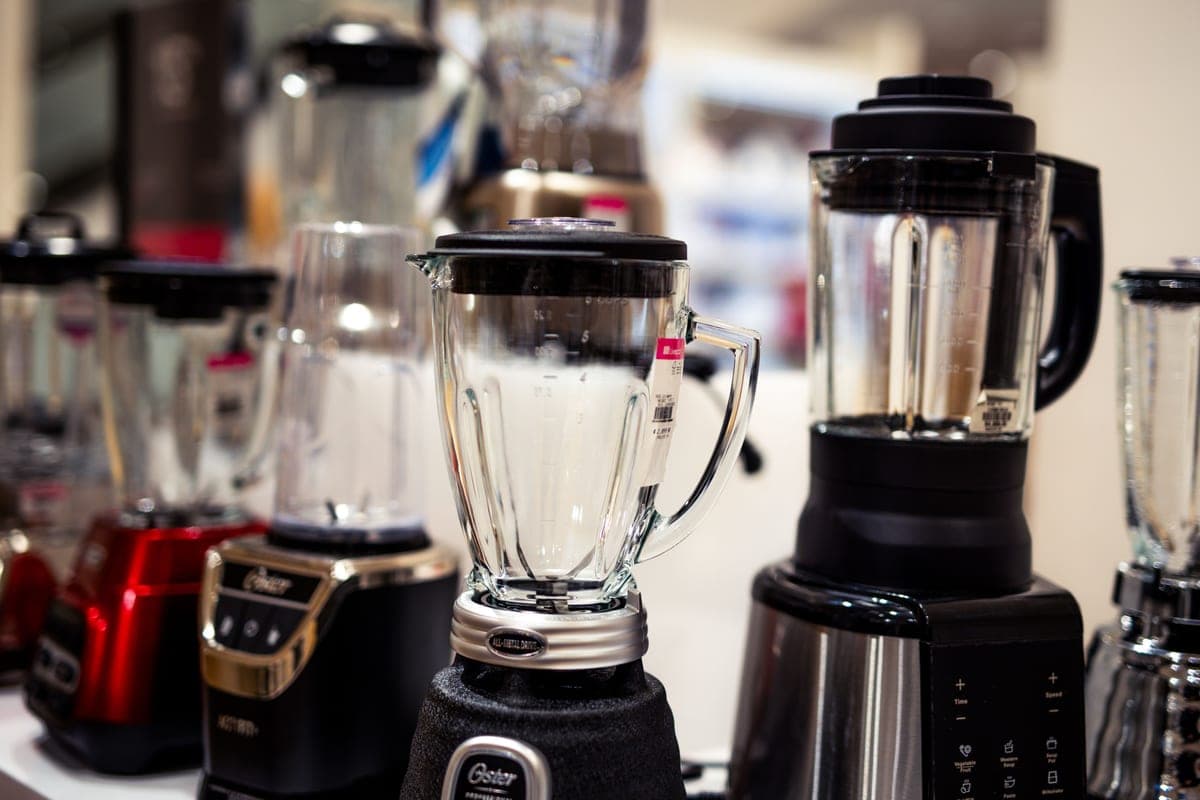
Blending is a different exposure from cooking. There is little heat, but there is violent abrasion — frozen fruit and ice scouring the jar wall at very high speed — plus acidic contents, and in the case of soup-capable machines, genuinely hot liquid. Abrasion of a polymer is the mechanism worth thinking about here.
The category's problem is that the best-performing blenders use Tritan copolyester jars, and the glass-jar machines are mostly mid-market. That is a real trade-off rather than one we can argue away, and the page is organized around it.
Quick picks
| # | Product | Best for | Material | Price |
|---|---|---|---|---|
| 1 | Oster Blender with Glass JarA glass jar on a competent motor. The straightforward answer. | Glass, for most people | Glass blending jar | |
| 2 | Vitamix 5200The best blending in the category, in a Tritan copolyester jar. Stainless jar sold separately. | Performance, with the jar question | Tritan copolyester container | |
| 3 | 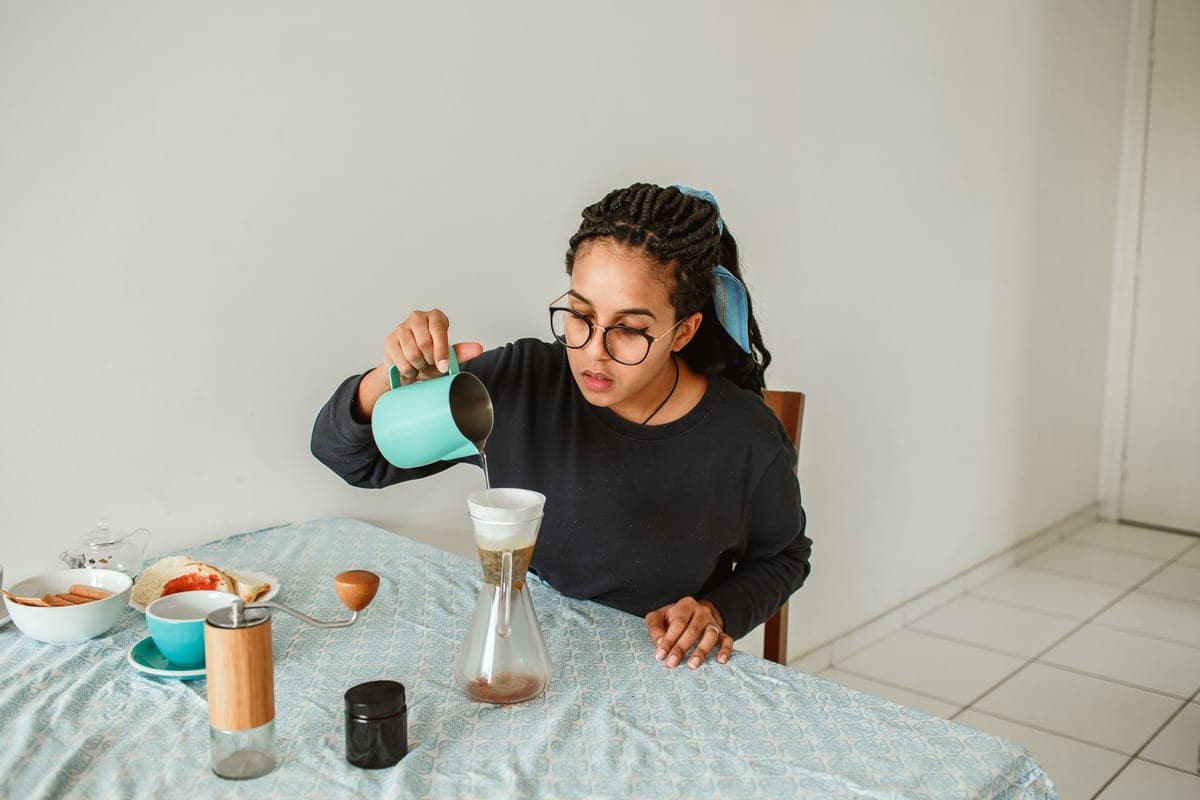 Hario V60 Ceramic DripperMentioned because many blender purchases are really about drinks you could make otherwise. | Not a blender, but relevant | Glazed ceramic cone with a paper filter |
Tap a row to jump to that write-up. Prices are not shown on this site because they change — the button sends you to the live Amazon listing.
Where Tritan actually sits
Tritan is a copolyester developed as a BPA-free replacement for polycarbonate, and it is what nearly every high-performance blender jar is made from because it survives being hit with ice thousands of times without shattering — which glass does not reliably do at that power.
We are not going to tell you Tritan is dangerous, because the evidence to say that is not there. We are also not going to pretend the question is closed: it is a polymer being abraded by frozen food and exposed to acidic contents, and the independent literature on copolyester migration under those conditions is thinner than for better-studied plastics. If you would rather not have that variable, the options are a glass jar or a stainless container, both of which exist.
Jar materials compared
| Material | Abrasion | Hot liquid | Trade-off |
|---|---|---|---|
| Glass | Unaffected | Fine with care | Heavy, breakable, less common on high-power machines |
| Stainless steel | Unaffected | Best | You cannot see inside. Usually an accessory purchase |
| Tritan copolyester | Scratches over years | Rated, but it is a polymer | The performance default. The question this page is about |
| Polycarbonate | Scratches | Poor | Older jars; contains BPA. Replace these |
What we ruled out
Polycarbonate jars, which are the one clear case here — BPA-containing and largely superseded; if you have an old blender with a cloudy, scratched jar it is worth replacing. Single-serve bullet-style blenders, where you blend and then drink from the same abraded plastic cup. And machines whose jar material is not stated, which at the budget end is common.
The picks in full
1. Best for Glass, for most people
Oster Blender with Glass Jar
A glass jar on a competent motor. The straightforward answer.
- Made of
- Glass blending jar, stainless blade assembly, plastic base and collar
- Certified to
- Manufacturer claimManufacturer claim; no third-party certification published.
- Jar
- Glass
- Blade
- Stainless steel
- Note
- Gasket is rubber or silicone
A glass blending jar removes polymer abrasion from the equation entirely: the contents touch glass and a stainless blade assembly, and glass does not scratch, cloud or absorb. Oster's glass-jar machines have been made for decades, the jars are replaceable, and the thread-on blade system is simple to clean.
What you give up
It will not pulverize like a high-end machine — expect texture in a green smoothie. Glass is heavy and breakable, and the gasket is rubber or silicone at the blade joint.
Who it's for
Everyday smoothies, soups and sauces in glass.
Who should skip it
Anyone wanting a perfectly smooth result from fibrous greens.
2. Best for Performance, with the jar question
Vitamix 5200
The best blending in the category, in a Tritan copolyester jar. Stainless jar sold separately.
- Made of
- Tritan copolyester container, stainless blades, metal drive
- Certified to
- Manufacturer claimManufacturer claim; no third-party certification published.
- Container
- Tritan copolyester, a plastic
- Stainless option
- A stainless container is sold separately
- Warranty
- Manufacturer states 7 years
This is on the page with its trade-off stated. The 5200 is the machine that actually does what blenders promise, and the brand sells a stainless steel container separately — which is the route to having both the performance and a non-polymer jar. The standard container is Tritan copolyester, a BPA-free plastic, and the honest position is that this is a plastic jar being abraded by ice.
What you give up
The standard jar is plastic; fixing that is an extra purchase. It is expensive and loud, and a stainless jar means you cannot see what is happening inside.
Who it's for
Serious blending, ideally with the stainless container.
Who should skip it
Anyone unwilling to buy a second container to avoid a plastic jar.
3. Best for Not a blender, but relevant
Hario V60 Ceramic Dripper
Mentioned because many blender purchases are really about drinks you could make otherwise.
- Made of
- Glazed ceramic cone with a paper filter
- Certified to
- Manufacturer claimManufacturer claim; no third-party certification published.
- Water contact
- Ceramic and paper
- Plastic
- None
- Note
- Cheapest zero-plastic brew path there is
Included as the honest footnote: a large share of blender use is single drinks, and for coffee and tea a ceramic cone and a kettle cover it with no appliance, no jar and no gasket. If you are buying a blender for one iced drink a day, this is worth considering first.
What you give up
It does not blend anything. This is a prompt to check what you actually need, not a blender recommendation.
Who it's for
Anyone about to buy a blender for a use it would not serve.
Who should skip it
People who genuinely want smoothies and soups — buy one of the blenders above.
How we chose, and what we did not do
Every product on this page was checked against its published material composition and its third-party certifications, with each claim labeled as certified, manufacturer-stated or independently tested by a named party. We do not run a lab and we do not claim to have used these products — the full method is here.
Questions people actually ask
Is a glass blender jar better than plastic?
For material concerns, yes — glass does not abrade, cloud or absorb, and blending is an abrasive process. The cost is that glass jars are mostly found on mid-power machines, so you give up some blending performance.
Is Tritan safe for blending?
It is a BPA-free copolyester and is what nearly every high-power blender uses, because glass does not survive repeated ice impacts as reliably. It is still a polymer being abraded, and if you would rather avoid that variable, glass jars and stainless containers are available.
Can you blend hot soup in a glass jar?
With care. Let the soup cool somewhat, start slow, and never put boiling liquid into a cold jar — thermal shock, not the blending, is what breaks glass. A stainless container handles hot liquid best of all.
Should I replace an old plastic blender jar?
If it is cloudy, deeply scratched or predates the BPA-free transition, yes. A scratched jar is shedding, and older jars are often polycarbonate.
Sources
- Vitamix (manufacturer)
- Li et al. (2020), Microplastic release from the degradation of polypropylene feeding bottles during infant formula preparation, Nature Food — Trinity College Dublin record
- US EPA — Our Current Understanding of the Human Health and Environmental Risks of PFAS — Regulator overview of PFAS persistence and health endpoints
Read next
Kitchen & Cookware
Best non-toxic food storage
Glass, silicone and stainless storage compared, with the cheapest route out of plastic.
Baby & Kids
BPA, BPS and BPF: the substitution problem
Why BPA-free is a claim about one molecule, what replaced it, and how to avoid the whole question.
Kitchen & Cookware
Glass and stoneware: the inert options
Glass and glazed stoneware: inertness, thermal shock, and the lead question on handmade and vintage pieces.
Kitchen & Cookware
Best non-toxic coffee makers
Coffee makers ranked by how little plastic the hot water touches, from zero-plastic manual brewers up.
Written by Selena H., owner of Glass & Cotton.