Kitchen & Cookware
Carbon steel cookware
The professional kitchen's default, for a reason: cast iron's material story with none of its sluggishness.
Last reviewed October 13, 2026 — Selena H.
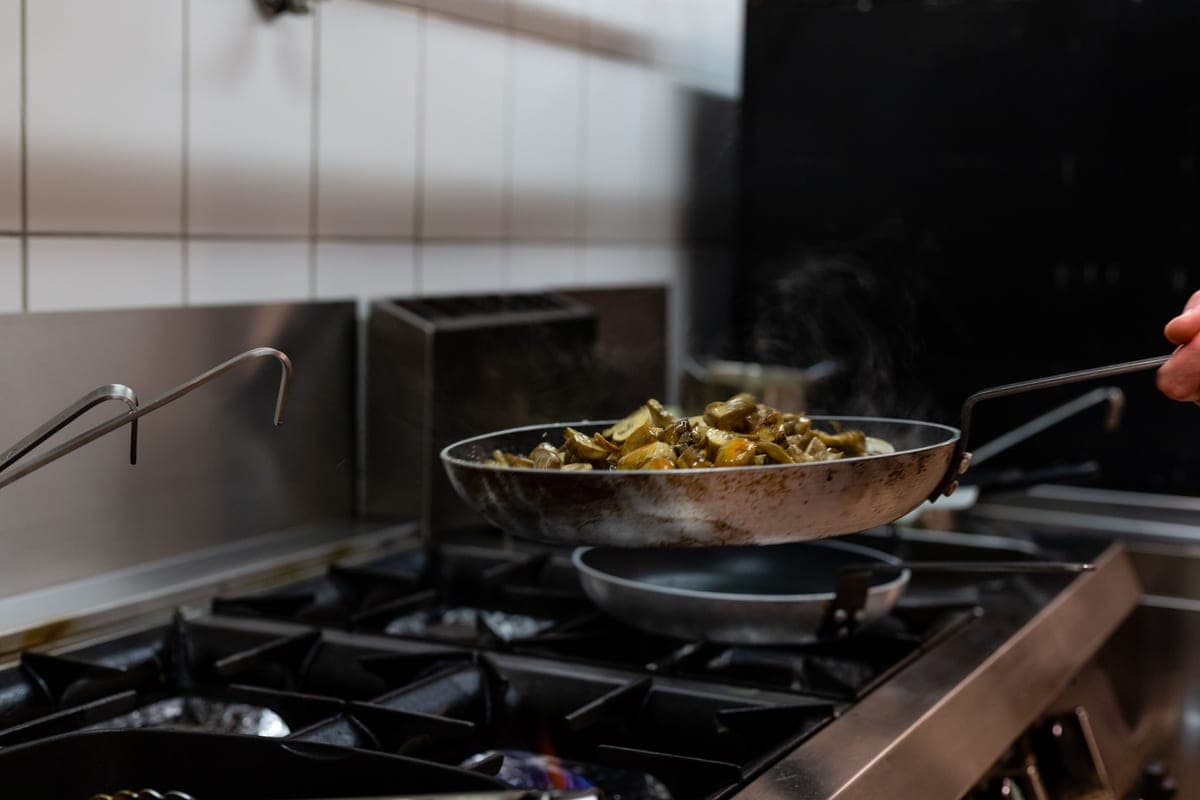
Carbon steel is iron with less carbon than cast iron, pressed thin instead of cast thick. It seasons the same way, has the same complete absence of synthetic coating, and responds to the heat dial in seconds rather than minutes — which is why restaurant kitchens use it for almost everything that goes in a pan.
If you have looked at cast iron and thought it was too heavy or too slow, this is the answer, and it costs about the same.
Quick picks
| # | Product | Best for | Material | Price |
|---|---|---|---|---|
| 1 | Lodge Carbon Steel SkilletFactory-seasoned pressed carbon steel, domestically made, cheap. | Value | Pressed carbon steel | |
| 2 | de Buyer Mineral B Carbon Steel PanFrench carbon steel with a beeswax shipping finish and an iron handle. | The classic | Carbon steel with a beeswax finish applied at the factory | |
| 3 |  Lodge Cast Iron Skillet (10.25 in)Heavier, slower, and better at searing a thick steak. | If retention matters more | Bare cast iron |
Tap a row to jump to that write-up. Prices are not shown on this site because they change — the button sends you to the live Amazon listing.
What it actually is
Carbon steel is around 1% carbon, versus 2 to 4% for cast iron, and it is formed by pressing or spinning sheet steel rather than pouring molten metal into a mold. That makes the walls thin and the pan light, with a flat base and usually a long riveted handle.
The cooking surface is the same as bare cast iron's: polymerized oil bonded to steel. There is no coating in the manufactured product at all — some pans ship with a beeswax or lacquer shipping finish that you scrub off before the first seasoning.
What it does better than cast iron
- Weight. Roughly two-thirds of a comparable cast iron pan, which matters when you are tossing vegetables.
- Response. Thin steel heats and cools in seconds, so turning the burner down actually does something.
- Shape. Sloped sides and a long handle make it a pan you can move food in, not just a vessel.
- Oven and grill. Same tolerance as cast iron — any temperature, any heat source.
What cast iron does better
- Heat retention. A cold steak drops a carbon steel pan's temperature more, which means slightly less crust.
- Robustness. Thin steel can warp if thermally shocked; a cast pan will not.
- Baking. The thermal mass of cast iron is what makes cornbread and skillet bread work.
How to season it, specifically
- Scrub off the factory finish. Hot water, soap and a scouring pad until the pan is bare gray steel. This step is non-optional and most first-time complaints come from skipping it.
- Dry it completely on a warm hob.
- Apply a very thin film of a high-smoke-point oil — grapeseed, canola, or a dedicated seasoning oil — then wipe it back off as if you made a mistake. The layer should be almost invisible.
- Heat past the oil's smoke point and hold it there until the smoking stops: on the hob for 10 minutes, or in a 450F oven for an hour.
- Repeat three or four times. Each pass adds a thin hard layer; thick single coats go sticky and flake.
- Then cook in it. Frying, searing and roasting build seasoning faster than any deliberate session.
Where it is wrong
Long acidic cooking strips the seasoning and makes the food taste metallic — the same limitation as bare cast iron, and the same answer: use enamel, glass or stainless for tomato and wine. Dishwashers strip it too, so this is not a pan for a household that will not hand wash. And it needs to be dried and lightly oiled, which is thirty seconds that some people will not spend.
It also transfers iron into food like cast iron does, which means the same exception applies: not for anyone with an iron-overload condition.
What to buy
Two carbon steel options at different price points, plus the cast iron alternative if heat retention matters more to you than weight.
The picks in full
1. Best for Value
Lodge Carbon Steel Skillet
Factory-seasoned pressed carbon steel, domestically made, cheap.
- Made of
- Pressed carbon steel, factory-seasoned with vegetable oil
- Certified to
- Manufacturer claimManufacturer claim; no third-party certification published.
- Coating
- None. Seasoning only
- Weight
- Lighter than cast iron at the same diameter
- Oven safe
- Yes
The low-cost entry to carbon steel from a maker that has been seasoning iron for over a century. Ships with a vegetable-oil seasoning you can build on immediately rather than stripping.
What you give up
Factory seasoning is thin, and the handle gets hot.
Who it's for
A first carbon steel pan.
Who should skip it
Iron-overload conditions, acidic cooking.
2. Best for The classic
de Buyer Mineral B Carbon Steel Pan
French carbon steel with a beeswax shipping finish and an iron handle.
- Made of
- Carbon steel with a beeswax finish applied at the factory
- Certified to
- Manufacturer claimManufacturer claim; no third-party certification published.
- Coating
- None. Beeswax shipping finish, then user seasoning
- Handle
- Riveted iron, not oven-limited
- Induction
- Yes
The pan most professional kitchens actually use. Thicker than the budget options, with a riveted iron handle that has no temperature limit at all, and it develops a genuinely slick surface with use.
What you give up
You must strip the beeswax finish and season from bare metal, which is a real chore. Expensive, and the handle is uncomfortable until you are used to it.
Who it's for
Anyone who wants the professional version and will do the work.
Who should skip it
People who want to cook on it the day it arrives.
3. Best for If retention matters more
Lodge Cast Iron Skillet (10.25 in)
Heavier, slower, and better at searing a thick steak.
- Made of
- Bare cast iron, factory-seasoned with vegetable oil
- Certified to
- Manufacturer claimManufacturer claim; no third-party certification published.
- Coating
- None. Polymerized oil seasoning only
- Oven safe
- Manufacturer states oven, grill and campfire safe
- Induction
- Yes
If your main use is searing thick proteins or baking, the thermal mass of cast iron beats carbon steel's responsiveness. Same material story, same price.
What you give up
Weight and slow preheating.
Who it's for
Steak, bread, roasting.
Who should skip it
Anyone who found cast iron too heavy.
How we chose, and what we did not do
Every product on this page was checked against its published material composition and its third-party certifications, with each claim labeled as certified, manufacturer-stated or independently tested by a named party. We do not run a lab and we do not claim to have used these products — the full method is here.
Questions people actually ask
Is carbon steel cookware non-toxic?
There is no synthetic coating on it at all — the release surface is cooking oil polymerized onto steel, exactly as with bare cast iron. The only material consideration is iron transfer into food, which matters for iron-overload conditions.
How do you season a carbon steel pan?
Scrub off the factory shipping finish completely, dry the pan, wipe on a very thin film of high-smoke-point oil and then wipe it back off, heat past the smoke point until smoking stops, and repeat three or four times. Thin layers, repeated, not one thick coat.
Is carbon steel better than cast iron?
Lighter and far more responsive, with the same material story. Cast iron retains more heat, which makes it better for searing thick cuts and for baking. Most kitchens benefit from one of each.
Can you cook acidic food in carbon steel?
Briefly. A long tomato or wine braise strips the seasoning and tastes metallic, so use enameled cast iron, glass or stainless for those.
Why is my carbon steel pan sticky?
Too much oil in the seasoning layer. Thick coats polymerize unevenly and stay tacky. Scrub it back, apply a near-invisible film, and heat past the smoke point.
Sources
Read next
Kitchen & Cookware
Cast iron cookware, bare and enameled
Bare versus enameled cast iron: iron transfer, acidic cooking limits, seasoning chemistry and who should avoid it.
Kitchen & Cookware
The safest non-toxic frying pans, by what you cook in them
Five frying pans compared on cooking surface, heat limit and lifespan — the highest-value single swap in the kitchen.

Kitchen & Cookware
The safest cookware materials, in one table
The flagship comparison table: every cookware material on PFAS status, heat limit, leaching concern and lifespan.
Kitchen & Cookware
Best budget non-toxic cookware
Uncoated cookware under $50, and the cost-per-year arithmetic that makes it cheaper than coated sets.
Written by Selena H., owner of Glass & Cotton.