Cleaning & Laundry
Best non-toxic bathroom cleaners
A bathroom asks for three different jobs. One bottle labeled bathroom cleaner does maybe one of them.
Last reviewed October 17, 2026 — Selena H.
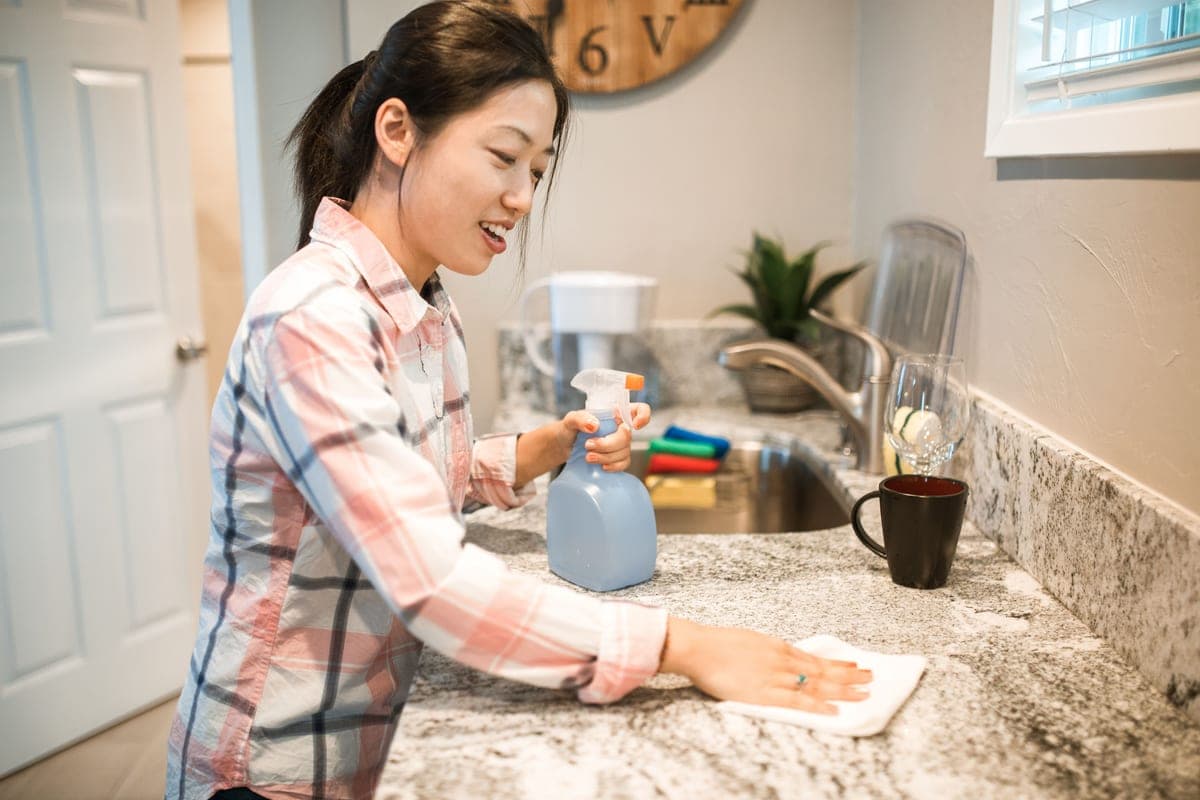
For general bathroom cleaning the pick is Branch Basics Concentrate, which is MADE SAFE certified and dilutes to a bathroom strength from the same bottle you use elsewhere. Where you need an actual disinfectant — the toilet, or a surface after illness — the pick is Force of Nature, whose electrolyzed hypochlorous acid carries EPA-registered disinfectant claims per the brand.
Those are two different products because they are two different jobs, and conflating them is why so many "natural bathroom cleaner" purchases disappoint. Soap scum is a surfactant problem. Hard water scale is an acid problem. Mold and bacteria are a disinfection problem with a dwell time. No single gentle bottle solves all three, and a bottle that claims to usually is not a registered disinfectant at all.
Quick picks
| # | Product | Best for | Material | Price |
|---|---|---|---|---|
| 1 | Branch Basics ConcentrateMADE SAFE certified concentrate, diluted strong for the bathroom and weak for glass. | Everyday bathroom cleaning | Plant- and mineral-derived surfactant concentrate | |
| 2 |  Force of Nature Electrolyzed CleanerHypochlorous acid made at home from salt, water and vinegar, with EPA-registered claims per the brand. | When you need an actual disinfectant | Hypochlorous acid and sodium hydroxide generated from salt | |
| 3 | Hydrogen Peroxide Disinfectant CleanerHydrogen peroxide in a surfactant base — no quats, and it bleaches mildew stains. | Mold and mildew on grout | Hydrogen peroxide in a surfactant base | |
| 4 |  Distilled White Vinegar (cleaning strength)Cleaning-strength acetic acid: the cheapest answer to limescale, and useless against mold. | Hard water scale | Diluted acetic acid | |
| 5 | Attitude All-Purpose CleanerPlant- and mineral-sourced surfactants, fully listed on the pack, no dilution step. | A ready-to-use bottle with a full ingredient list | Plant- and mineral-sourced surfactants |
Tap a row to jump to that write-up. Prices are not shown on this site because they change — the button sends you to the live Amazon listing.
Cleaner, sanitizer, disinfectant — the words are regulated
A cleaner removes soil. A sanitizer reduces bacteria by a defined amount. A disinfectant kills specified organisms and must be registered with EPA as a pesticide to say so, with a label that states the organisms and the dwell time. Those are legal categories, not marketing adjectives, and most plant-based bathroom sprays are in the first one.
That is not a criticism — routine bathroom cleaning does not need a disinfectant, and physically removing soil removes most of what is living in it. It matters only in the specific cases where disinfection is the point: a toilet after a stomach bug, a surface after raw meat, a bathroom shared during illness. For those, you need a registered product and you need to leave it wet for the time the label says. Our guide to quats and disinfectant safety covers what conventional sprays use to get there.
Three jobs, three chemistries
| Problem | What it is | What works | What does not |
|---|---|---|---|
| Soap scum | Fatty film from soap and skin | Surfactant cleaner | Vinegar alone |
| Hard water scale | Mineral deposit | Acid, 5 to 6% vinegar or citric | Surfactants, bleach |
| Black grout stains | Mold pigment in porous grout | Hydrogen peroxide, with dwell time | Scrubbing harder |
| Bacteria after illness | Pathogens on a surface | EPA-registered disinfectant, label dwell time | Any "natural" cleaner |
| Musty smell | Biofilm in a drain or seal | Peroxide, then dry the space | Fragrance |
| Toilet ring | Scale plus staining | Acid, then a brush | Disinfectant alone |
Ventilation does more than any bottle
Mold in a bathroom is a moisture problem that cleaning treats symptomatically. A fan that runs for twenty minutes after a shower, a squeegee on the glass, and a towel that actually dries between uses remove more mold from a bathroom over a year than any product on this page.
The reason that belongs on a non-toxic cleaning page: the alternative to drying the room is using a stronger product more often, and the strongest bathroom products are where the fragrance and quaternary ammonium exposures concentrate. Fixing the moisture is also the cheapest way to stop needing them. For what the word "fragrance" conceals on those labels, see fragrance and phthalates.
What we ruled out
Quat-based disinfectant sprays and wipes, which work but carry the occupational respiratory evidence covered in our quats guide. Chlorine bleach for routine bathroom use, which is effective and cheap but produces irritant gas when mixed with acid or ammonia, something a bathroom cupboard full of other products makes likely. Fragranced "natural" sprays that disclose only a hero ingredient. Mold bombs and foggers, which deposit product on every surface in the room. And baking soda plus vinegar mixed together, which neutralize into salty water and a lot of fizz — use them separately or not at all.
The picks in full
1. Best for Everyday bathroom cleaning
Branch Basics Concentrate
MADE SAFE certified concentrate, diluted strong for the bathroom and weak for glass.
- Made of
- Plant- and mineral-derived surfactant concentrate, diluted at home
- Certified to
- Certified: MADE SAFEThird-party certified to MADE SAFE.
- Certification
- MADE SAFE certified concentrate
- Format
- One concentrate, several dilutions
- Fragrance
- None
Soap scum is a greasy film, and a surfactant is the right tool — which is what this is. The useful part is the concentrate format: one bottle makes a strong bathroom dilution, a weaker all-purpose and a glass dilution, so there is one certified product in the cupboard instead of four bottles with four ingredient lists. MADE SAFE certification screens the full formula rather than a hero ingredient.
What you give up
It is a cleaner, not a disinfectant, and it carries no EPA registration — it will not kill anything on a label-compliant basis. No fragrance, so it will not leave the bathroom smelling of anything.
Who it's for
Tile, tubs, sinks, counters and routine weekly cleaning.
Who should skip it
Toilets after illness, visible mold, and hard-water scale.
2. Best for When you need an actual disinfectant
Force of Nature Electrolyzed Cleaner
Hypochlorous acid made at home from salt, water and vinegar, with EPA-registered claims per the brand.
- Made of
- Hypochlorous acid and sodium hydroxide generated from salt, water and vinegar
- Certified to
- Manufacturer claimManufacturer claim; no third-party certification published.
- Active
- Hypochlorous acid
- EPA registration
- Brand states EPA-registered disinfectant claims
- Shelf life
- Short. You make it as needed
This is the one pick here that is a disinfectant rather than a cleaner. The appliance electrolyzes salt, water and vinegar into hypochlorous acid, which the brand states carries EPA-registered disinfectant claims — a regulatory status almost nothing in the plant-based aisle has. It also avoids quats, which are the respiratory concern in conventional disinfectant sprays.
What you give up
Short shelf life: you make it as you need it, and old solution loses potency. The appliance is an upfront cost, and the dwell time on the label is not optional — a quick wipe disinfects nothing.
Who it's for
Toilets, after illness, diaper areas, and anyone replacing a quat-based spray.
Who should skip it
People who want a bottle that sits under the sink for a year.
3. Best for Mold and mildew on grout
Hydrogen Peroxide Disinfectant Cleaner
Hydrogen peroxide in a surfactant base — no quats, and it bleaches mildew stains.
- Made of
- Hydrogen peroxide in a surfactant base
- Certified to
- Manufacturer claimManufacturer claim; no third-party certification published.
- Active
- Hydrogen peroxide
- Dwell time
- Check the label. It matters
- Quats
- None
Peroxide is the right chemistry for bathroom mildew: it breaks down the pigment that leaves a black stain in grout after the mold is dead, which is why a cleaned-but-still-gray grout line usually needs peroxide rather than more scrubbing. In a surfactant base it cleans and lightens in one pass, with no quaternary ammonium compounds.
What you give up
Dwell time matters and the label number is the number — spraying and immediately wiping does very little. It will also lighten colored grout and fabrics, so test first.
Who it's for
Grout lines, shower corners, silicone seals, mildew smells.
Who should skip it
Colored grout you care about, and anyone in a hurry.
4. Best for Hard water scale
Distilled White Vinegar (cleaning strength)
Cleaning-strength acetic acid: the cheapest answer to limescale, and useless against mold.
- Made of
- Diluted acetic acid, typically 5 to 6%
- Certified to
- Manufacturer claimManufacturer claim; no third-party certification published.
- Active
- Acetic acid
- Disinfectant
- No. It is a cleaner, not a registered disinfectant
- Avoid on
- Stone, grout, cast iron
Scale is a mineral deposit and acid dissolves it, which makes 6% cleaning vinegar the correct and almost free tool for a showerhead, a glass door or a kettle. Nothing gentler works on scale, and nothing stronger is needed. A bag of vinegar tied over a showerhead overnight does what no spray-and-wipe product will.
What you give up
It is not a registered disinfectant and should not be treated as one. It etches natural stone and damages grout over time, it will strip cast iron seasoning, and the smell is the smell.
Who it's for
Limescale, showerheads, glass doors, faucet aerators, toilet rings.
Who should skip it
Marble, travertine, stone counters, and anything needing disinfection.
5. Best for A ready-to-use bottle with a full ingredient list
Attitude All-Purpose Cleaner
Plant- and mineral-sourced surfactants, fully listed on the pack, no dilution step.
- Made of
- Plant- and mineral-sourced surfactants, water
- Certified to
- Manufacturer claimManufacturer claim; no third-party certification published.
- Ingredients
- Fully listed on pack
- Fragrance
- Scented and unscented versions
- Note
- Check the specific SKU's certification
Not everyone will mix a concentrate, and a ready-to-use spray that prints its whole ingredient list on the bottle is a fair second-best. It handles the same soap-scum and surface-grime jobs as the concentrate above, and the unscented version avoids the fragrance question entirely.
What you give up
Also a cleaner, not a disinfectant. Certification varies by SKU, so the specific bottle you buy has to be checked rather than the brand taken as a whole.
Who it's for
Households that want to buy a bottle and use it.
Who should skip it
Disinfection, scale, and anyone comparing cost per use against a concentrate.
How we chose, and what we did not do
Every product on this page was checked against its published material composition and its third-party certifications, with each claim labeled as certified, manufacturer-stated or independently tested by a named party. We do not run a lab and we do not claim to have used these products — the full method is here.
Questions people actually ask
What non-toxic bathroom cleaner actually disinfects?
Hypochlorous acid products such as Force of Nature carry EPA-registered disinfectant claims per the brand, and hydrogen peroxide formulations are effective against mildew. Plant-based surfactant cleaners, including the certified ones, are cleaners and are not registered to make kill claims.
Does vinegar kill mold in a bathroom?
It is not a registered disinfectant and should not be relied on for mold. Vinegar is the right tool for hard water scale; hydrogen peroxide is the right tool for mildew, because it also breaks down the pigment that leaves grout gray after the mold is gone.
Can I use one cleaner for the whole bathroom?
For routine cleaning, yes — a surfactant cleaner handles tile, tub, sink and counters. You will still want an acid for scale and a peroxide or registered disinfectant for mildew and after illness. That is three products, and the honest answer is that it cannot sensibly be one.
Why does my grout stay gray after cleaning?
Because the mold is dead but its pigment is still in the porous grout. That is a bleaching job, not a scrubbing job, which is why hydrogen peroxide left to dwell lightens it and more scrubbing does not.
Is it safe to mix bathroom cleaners?
No. Bleach with acid releases chlorine gas, bleach with ammonia releases chloramines, and peroxide with vinegar makes peracetic acid. Use one product, rinse, then use another if you need to.
Sources
- US EPA — Learn About the Safer Choice Label — Every ingredient reviewed regardless of its percentage, plus a performance standard
- Safer Disinfectants — quaternary ammonium compounds (quats) in disinfectants — Occupational asthma and respiratory evidence for quats
- MADE SAFE — Branch Basics certified products
- Force of Nature (manufacturer)
- US FDA — Fragrances in Cosmetics — The rule that lets an entire fragrance mixture be listed as one word
Read next
Cleaning & Laundry
Best non-toxic all-purpose cleaners
All-purpose cleaners with disclosed formulas and real certifications, plus what the marks actually cover.
Cleaning & Laundry
Best non-toxic disinfectants
EPA-registered disinfectants that avoid quats, plus why dwell time is the whole product.
Cleaning & Laundry
Quats, asthma, and when to disinfect at all
What the occupational evidence on quats shows, and the registered alternatives that avoid them.
Cleaning & Laundry
Vinegar vs commercial cleaners
What vinegar actually cleans, what it cannot disinfect, and where a formulated product earns its price.
Written by Selena H., owner of Glass & Cotton.