Kitchen & Cookware
Safest cookware for high heat
Coatings have a temperature ceiling. Metal and iron do not, which makes high heat the easiest category on this site.
Last reviewed October 17, 2026 — Selena H.
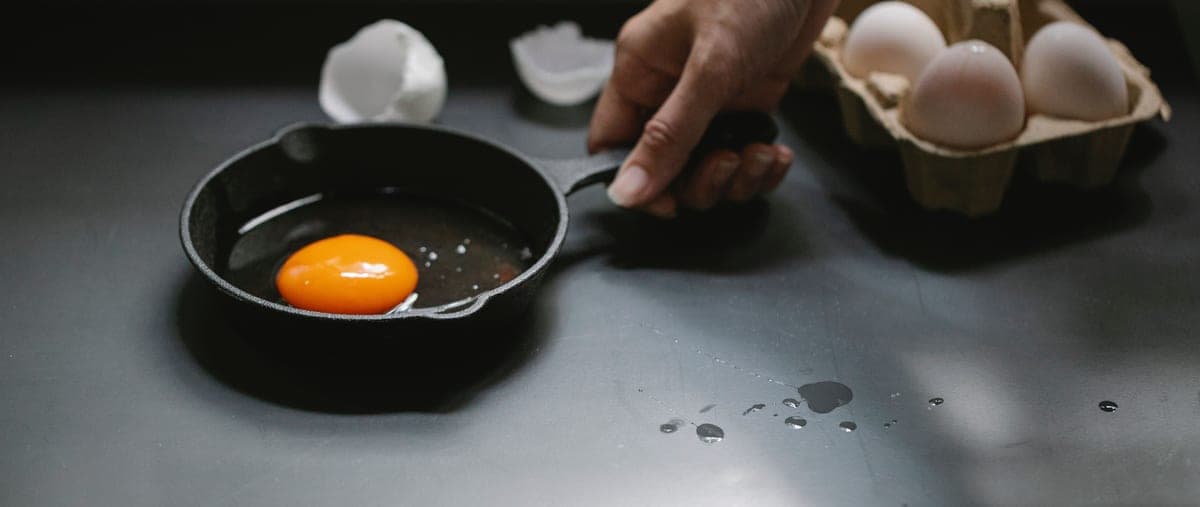
The safest cookware for high heat is uncoated: a bare cast iron skillet, a carbon steel pan, or fully clad stainless. The Lodge cast iron skillet is the cheapest correct answer and All-Clad D3 is the most versatile one. What they share is that none of them has an applied layer with a temperature ceiling, so there is nothing to degrade when the pan goes past 500F.
That is the entire argument. Coated pans carry a published maximum temperature because the coating has one — a ceramic pan might be rated to 550F or 600F, and PTFE-based coatings begin breaking down above roughly 500F, which is exactly the range a hard sear or a preheated empty pan reaches. Take the coating out of the equation and the temperature question disappears with it.
Quick picks
| # | Product | Best for | Material | Price |
|---|---|---|---|---|
| 1 | Lodge Cast Iron Skillet (10.25 in)No coating, no ceiling, and more heat retention per dollar than anything else here. | Searing, and the price | Bare cast iron | |
| 2 | 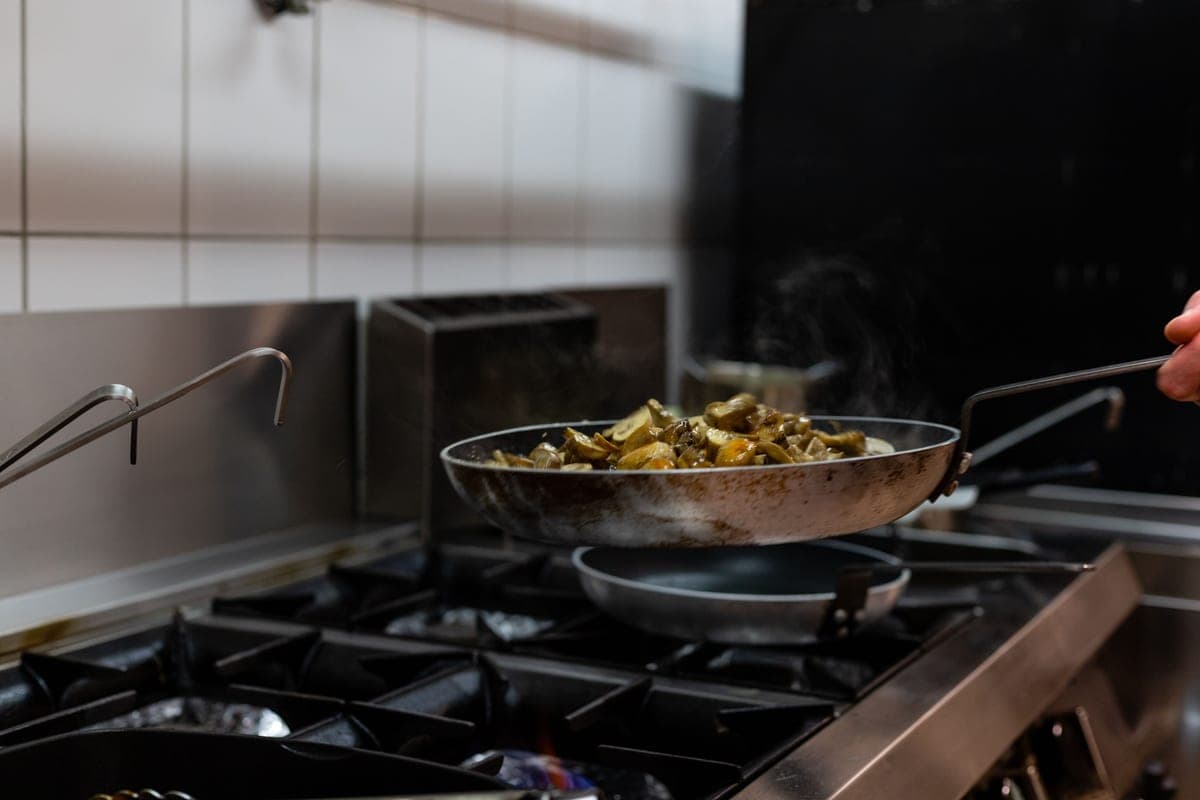 de Buyer Mineral B Carbon Steel PanCarbon steel: cast iron's temperature tolerance in a pan you can actually move. | High heat with faster response | Carbon steel with a beeswax finish applied at the factory | |
| 3 | 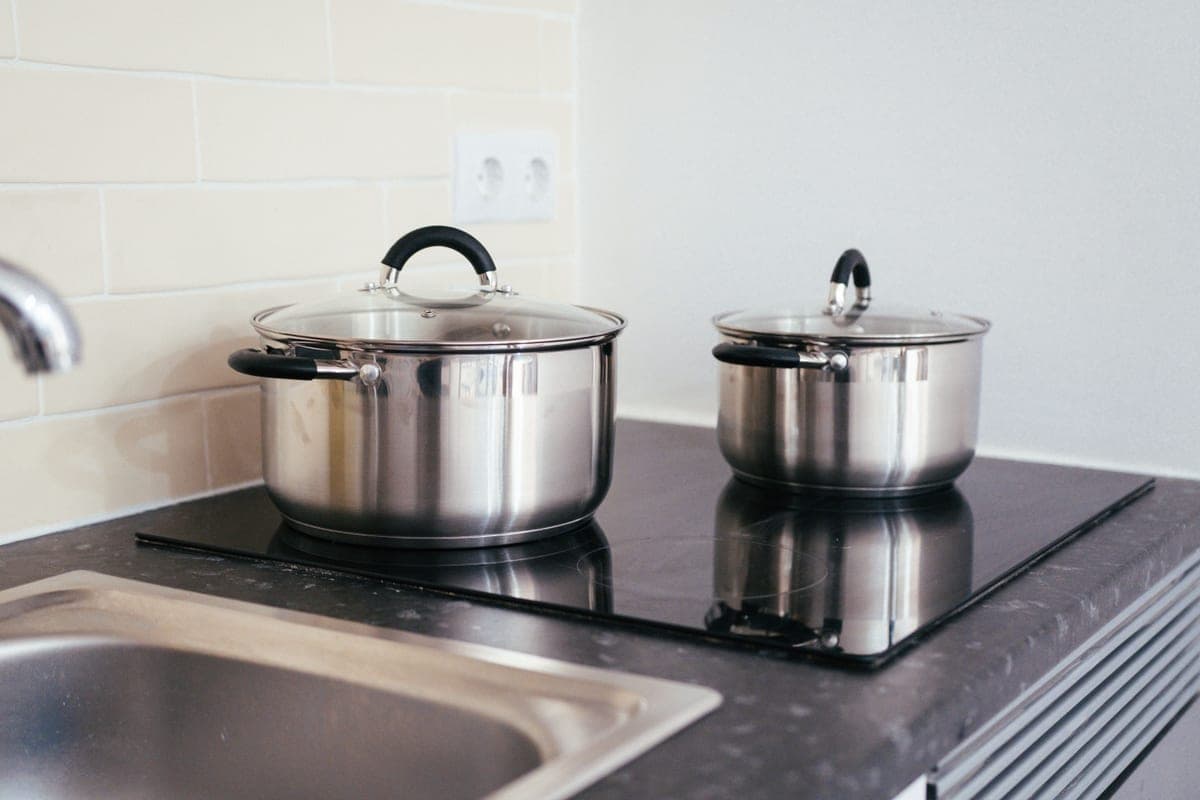 All-Clad D3 Stainless3-ply bonded stainless. Oven, broiler and sear, with nothing applied and no maintenance. | High heat without a seasoning habit | 3-ply bonded stainless: 18/10 stainless interior | |
| 4 | Made In Stainless Clad Set5-ply clad with a 304 stainless surface — the same argument, across every piece. | A whole high-heat set | 5-ply stainless clad: 304 stainless cooking surface | |
| 5 | 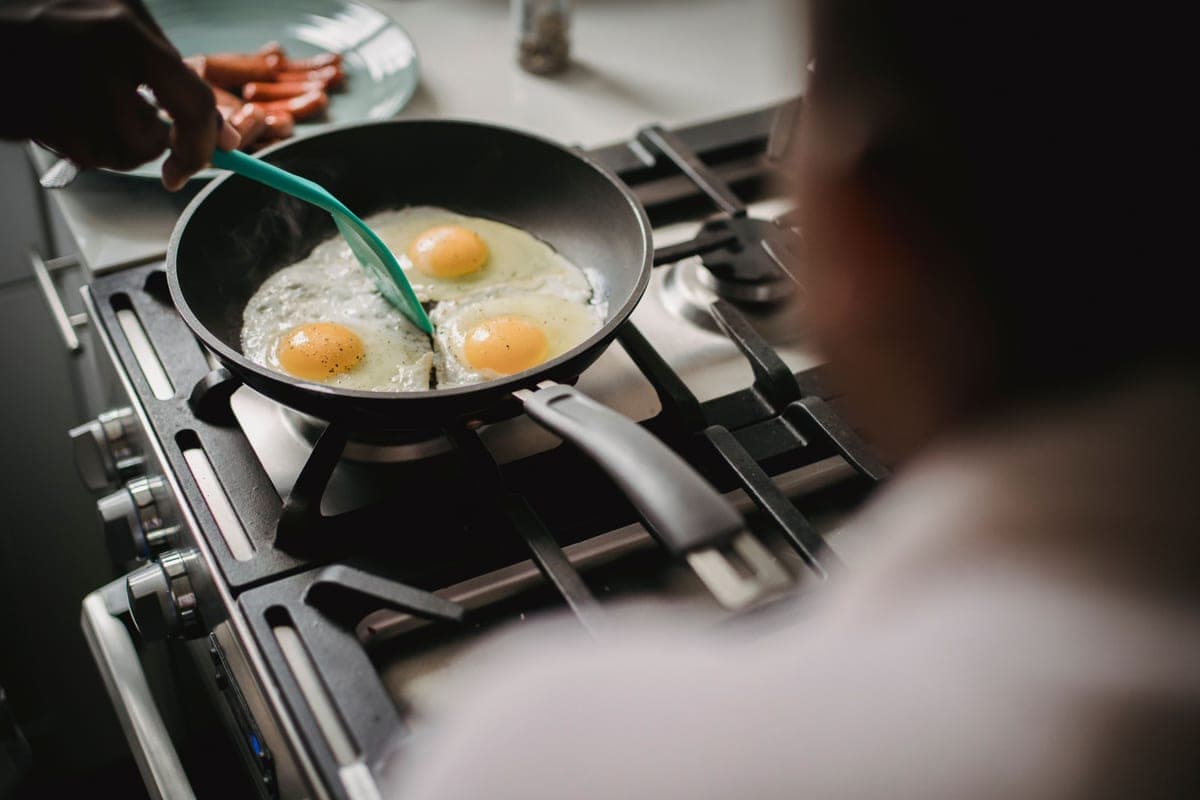 Xtrema Versa SkilletSolid ceramic rated by the maker for oven, broiler and grill, with no coating and no alloy. | Oven and broiler, no metal | 100% ceramic through-body (no metal core |
Tap a row to jump to that write-up. Prices are not shown on this site because they change — the button sends you to the live Amazon listing.
What actually happens to a coating at searing heat
PTFE-based non-stick begins to degrade as pans pass roughly 500F, and reporting on the laboratory work behind that has been around for two decades. An empty pan on a high burner reaches that in two or three minutes; a cast iron pan preheated for a steak goes well past it. This is the specific scenario behind the bird-death stories — see why PTFE is dangerous for birds and pets — and it is why a coated pan is the wrong tool rather than merely a shorter-lived one.
Ceramic coatings do not share that chemistry, but they do share the problem of being an applied layer: heat cycling past the published rating cracks and dulls them, and the loss of release is permanent. Either way, the pan with no coating is the pan with no ceiling.
Matching the pan to the heat
| Job | Material | Why |
|---|---|---|
| Steak, chops, hard sear | Cast iron | Thermal mass holds temperature when cold food lands |
| Stir-fry, fast vegetables | Carbon steel | Same tolerance, far faster response |
| Sear then pan sauce | Clad stainless | Fond releases into liquid, and acid does not matter |
| Broiler finishing | Cast iron, clad stainless, solid ceramic | No handle or coating to fail under an element |
| Blackening, smoking hot | Cast iron | Nothing else tolerates it repeatedly |
| Deep frying | Clad stainless or cast iron | Stable oil temperature, no coating in hot oil |
Handles are the other temperature ceiling
A pan is only as oven-safe as its handle, and this is where published ratings get quietly conservative. All-metal riveted handles — the cast iron, the carbon steel, the clad stainless on this page — have no separate limit. Silicone sleeves, phenolic handles and glued-on grips do, and that limit is usually a long way below the pan's own.
The practical rule: if you plan to finish food under a broiler or in a 500F oven, buy a pan with no non-metal part, and check the maker's published number rather than assuming. Glass lids have their own lower rating and should come off before the pan goes under an element.
What we ruled out
All coated pans, ceramic included, because the page is specifically about heat that exceeds what a coating tolerates. Hybrid stainless-and-PTFE pans, which carry a fluoropolymer regardless of the stainless ridges above it. Anodized aluminum without a clad stainless surface, which is fine for everyday cooking but reacts with acid and is softer than it looks — see anodized aluminum cookware. And enameled cast iron for searing, where the enamel is inert and excellent but will craze under repeated empty-pan preheating.
The picks in full
1. Best for Searing, and the price
Lodge Cast Iron Skillet (10.25 in)
No coating, no ceiling, and more heat retention per dollar than anything else here.
- Made of
- Bare cast iron, factory-seasoned with vegetable oil
- Certified to
- Manufacturer claimManufacturer claim; no third-party certification published.
- Coating
- None. Polymerized oil seasoning only
- Oven safe
- Manufacturer states oven, grill and campfire safe
- Induction
- Yes
Cast iron is the correct tool for a hard sear because thermal mass is what keeps the pan hot when cold food lands in it — a thin pan drops 150 degrees and steams the steak instead. Lodge's seasoning is polymerized vegetable oil rather than an applied coating, and the brand rates the pan for oven, grill and campfire use, which is a fair summary of its ceiling.
What you give up
Weight, seasoning upkeep, and no long acidic cooking. On a glass cooktop it must be lifted rather than slid.
Who it's for
Steak, chops, cornbread, blackening, anything that wants 500F and holds it.
Who should skip it
Tomato-based cooking, delicate fish, and anyone who cannot lift it from a hot oven.
2. Best for High heat with faster response
de Buyer Mineral B Carbon Steel Pan
Carbon steel: cast iron's temperature tolerance in a pan you can actually move.
- Made of
- Carbon steel with a beeswax finish applied at the factory
- Certified to
- Manufacturer claimManufacturer claim; no third-party certification published.
- Coating
- None. Beeswax shipping finish, then user seasoning
- Handle
- Riveted iron, not oven-limited
- Induction
- Yes
Carbon steel takes the same punishment as cast iron — no coating, no published ceiling worth worrying about, and a riveted iron handle with no plastic to fail — but it is thinner, so it responds to the burner in seconds rather than minutes. That makes it the better pan for stir-frying and for a sear you need to stop quickly.
What you give up
Less thermal mass than cast iron, so it drops more temperature when food lands. Seasoning maintenance, and it will discolor and patina unevenly, which is cosmetic rather than a fault.
Who it's for
Stir-frying, fast searing, high-heat vegetables.
Who should skip it
Acidic cooking, dishwashers, and anyone who wants a pan that looks new in year three.
3. Best for High heat without a seasoning habit
All-Clad D3 Stainless
3-ply bonded stainless. Oven, broiler and sear, with nothing applied and no maintenance.
- Made of
- 3-ply bonded stainless: 18/10 stainless interior, aluminum core, magnetic exterior
- Certified to
- Manufacturer claimManufacturer claim; no third-party certification published.
- Construction
- 3-ply bonded
- Cooking surface
- 18/10 stainless steel
- Made in
- Manufacturer states USA for the D3 line
Fully bonded stainless is the high-heat option that asks nothing of you: no seasoning, no acid restriction, dishwasher tolerant, and an 18/10 cooking surface with no coating to degrade. The aluminum core runs up the sides rather than sitting as a disc under the base, which is why it browns evenly instead of only in the middle.
What you give up
Price, and food sticks until you learn the preheat. Stainless also browns less aggressively than iron at the same dial setting, so a sear takes a hotter pan than you expect.
Who it's for
Pan sauces, oven-to-broiler finishing, and acidic cooking at heat.
Who should skip it
Budget buyers, and anyone who wants release without technique.
4. Best for A whole high-heat set
Made In Stainless Clad Set
5-ply clad with a 304 stainless surface — the same argument, across every piece.
- Made of
- 5-ply stainless clad: 304 stainless cooking surface, aluminum core layers
- Certified to
- Manufacturer claimManufacturer claim; no third-party certification published.
- Construction
- 5-ply clad
- Cooking surface
- 304 stainless steel
- Coating
- None
If the goal is a kitchen where no pan has a temperature ceiling, a 5-ply clad set gets you there in one purchase. The extra plies add thermal mass over 3-ply, which narrows the gap to cast iron on searing while keeping stainless's indifference to acid and dishwashers.
What you give up
Heavier and pricier than 3-ply for a difference most home cooks will not notice. Same technique curve as any uncoated stainless.
Who it's for
Replacing a whole set of coated pans at once.
Who should skip it
Anyone who only needs one searing pan — buy the cast iron instead.
5. Best for Oven and broiler, no metal
Xtrema Versa Skillet
Solid ceramic rated by the maker for oven, broiler and grill, with no coating and no alloy.
- Made of
- 100% ceramic through-body (no metal core, no surface coating)
- Certified to
- Manufacturer claimManufacturer claim; no third-party certification published.
- Construction
- Solid ceramic, not a coated metal pan
- Oven and broiler
- Manufacturer states oven, broiler and grill safe
- Induction
- No
For high-heat oven and broiler work specifically, solid ceramic is a real option: the manufacturer states oven, broiler and grill use, there is no applied layer anywhere, and no metal touches the food. It holds heat well once it gets there, which suits a long roast more than a fast sear.
What you give up
Slow to heat and slow to cool, breakable, and vulnerable to thermal shock — which a 500F pan plus cold liquid delivers. Not for induction.
Who it's for
Broiling, roasting, baked dishes, and strict metal avoidance.
Who should skip it
Stovetop searing, induction, and anyone who deglazes with cold wine.
How we chose, and what we did not do
Every product on this page was checked against its published material composition and its third-party certifications, with each claim labeled as certified, manufacturer-stated or independently tested by a named party. We do not run a lab and we do not claim to have used these products — the full method is here.
Questions people actually ask
What is the safest cookware for high heat?
Uncoated: bare cast iron, carbon steel or fully clad stainless steel. None has an applied layer with a temperature ceiling, so there is nothing that can degrade when the pan goes past 500F.
At what temperature does non-stick coating break down?
PTFE-based coatings start degrading as pans go above roughly 500F, which an empty pan on a high burner reaches within a few minutes. Ceramic coatings do not break down the same way chemically but lose release permanently when heat-cycled past their published rating.
Is ceramic cookware safe at high heat?
Solid ceramic cookware is, and the makers rate it for oven and broiler use. Ceramic-coated metal pans are a different product: the coating has a published ceiling, and exceeding it repeatedly ends the pan's useful life.
Can I preheat an empty pan?
Safely only if the pan has no coating. Preheating empty is standard practice for cast iron, carbon steel and clad stainless, and it is the single fastest way to ruin any coated pan.
Sources
Read next
Kitchen & Cookware
The safest cookware materials, in one table
The flagship comparison table: every cookware material on PFAS status, heat limit, leaching concern and lifespan.
Kitchen & Cookware
Cast iron cookware, bare and enameled
Bare versus enameled cast iron: iron transfer, acidic cooking limits, seasoning chemistry and who should avoid it.
Kitchen & Cookware
Stainless steel vs nonstick cookware
Release, heat limits, leaching and cost per year compared — and the two-pan answer most kitchens land on.
Kitchen & Cookware
The safest non-toxic frying pans, by what you cook in them
Five frying pans compared on cooking surface, heat limit and lifespan — the highest-value single swap in the kitchen.
Written by Selena H., owner of Glass & Cotton.