Kitchen & Cookware
Best non-toxic cookware for a gas stove
Gas heats hotter, less evenly, and up the sides of the pan. That rules out some materials and strongly favors others.
Last reviewed October 13, 2026 — Selena H.

Gas is the harshest common cooktop for cookware. A ring of flame puts concentrated heat on a small part of the base, often licks up the sides, and can take an empty pan past 500F in a couple of minutes — which is precisely the condition under which fluoropolymer coatings begin to degrade, according to the four decades of work Science News reviewed.
So the material question changes on gas. Heat tolerance and heat distribution matter more than non-stick convenience, and a coating that is fine on an electric coil can be cooked off by a burner left on high. The picks below are chosen for how they behave under a flame.
Quick picks
| # | Product | Best for | Material | Price |
|---|---|---|---|---|
| 1 | Lodge Cast Iron Skillet (10.25 in)Nothing to degrade, and thermal mass that evens out a flame's hot spot. | Gas, flat out | Bare cast iron | |
| 2 |  All-Clad D3 StainlessA full aluminum core turns a ring of flame into an evenly hot base. | Even heat on a flame | 3-ply bonded stainless: 18/10 stainless interior | |
| 3 | 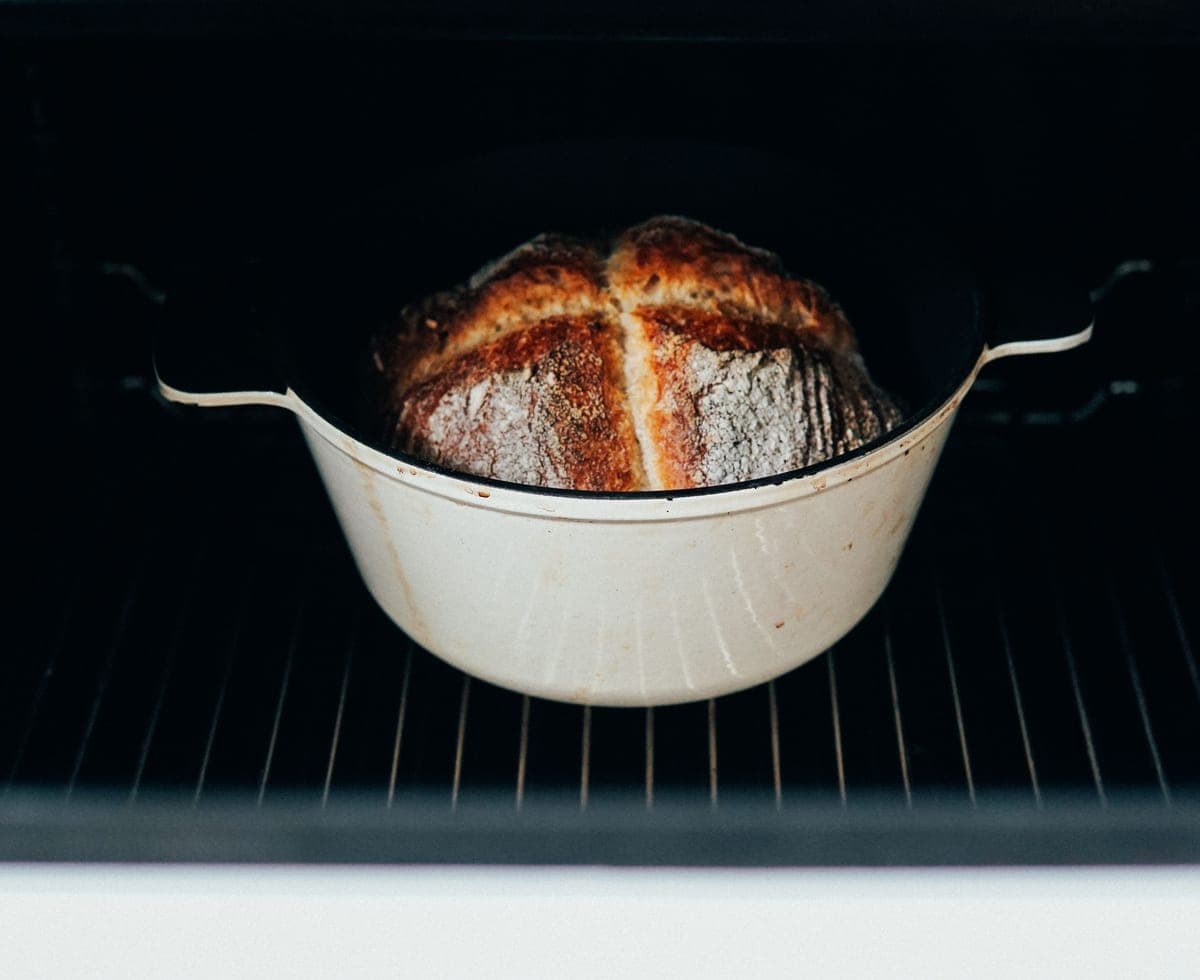 Le Creuset Enameled Dutch OvenEnamel over iron. High-heat tolerant, inert, and ideal for low flame over hours. | Braising on gas | Cast iron core with a fired vitreous enamel interior and exterior | |
| 4 | 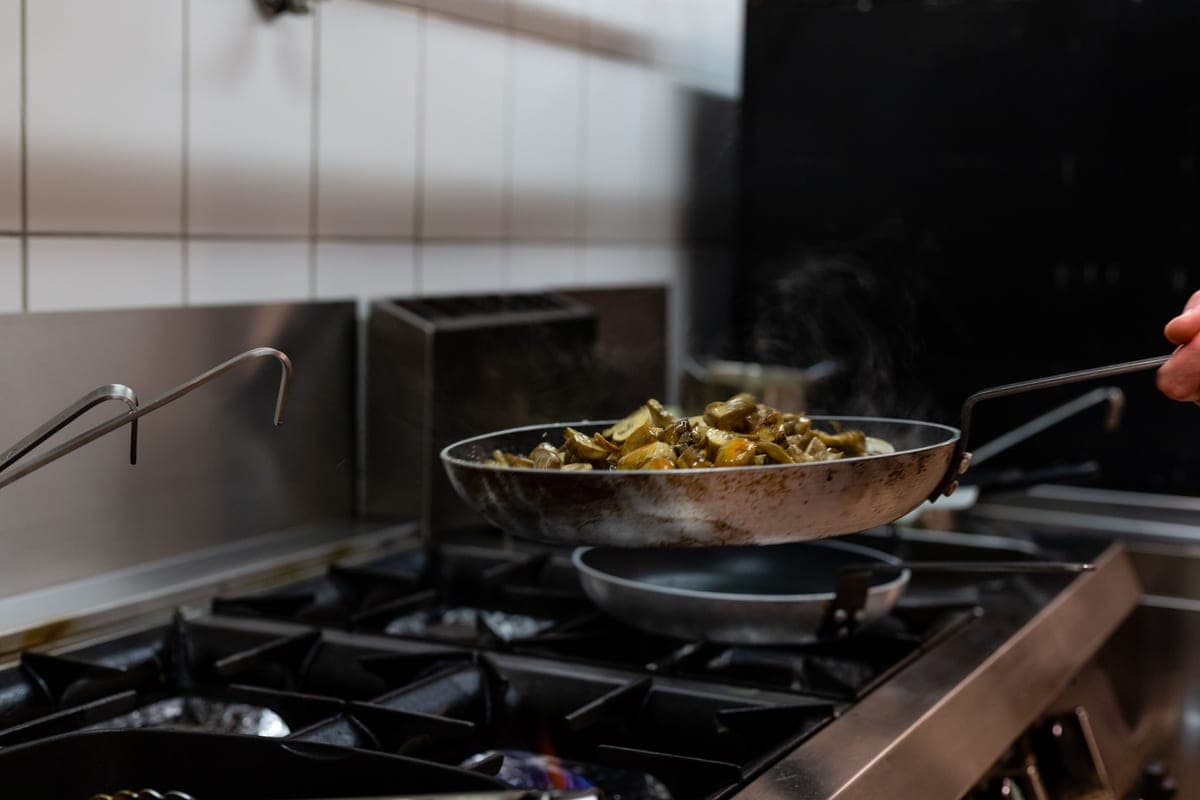 Lodge Carbon Steel SkilletTakes a flame as hard as cast iron and responds to the dial immediately. | Fast, hot gas cooking | Pressed carbon steel | |
| 5 |  GreenPan Valencia ProA ceramic coating rated higher than most, for cooks who still want non-stick on gas. | Non-stick that tolerates more heat | Hard-anodized aluminum body with the brand's diamond-reinforced ceramic coating |
Tap a row to jump to that write-up. Prices are not shown on this site because they change — the button sends you to the live Amazon listing.
What gas does to a pan that electric does not
- Concentrated hot spots. The flame heats a ring, not a disc. Thin pans show it in the food; clad and cast pans do not.
- Flame up the sides. Side walls get direct heat, which matters for a coating that stops partway up the wall and for plastic or silicone handle components.
- Faster overshoot on an empty pan. The dangerous condition for a fluoropolymer coating is a dry pan on high heat, and gas gets there fastest.
- Instant response. The upside: turn a gas burner down and the heat drops immediately, which thin carbon steel exploits better than anything else.
- No magnetism requirement. Unlike induction, gas works with solid ceramic, plain aluminum and glass. More materials are on the table.
The one rule that matters most on gas
Do not preheat a coated pan empty on a high flame. That single habit is responsible for most of the real-world coating degradation in home kitchens, and it is the specific condition the overheating literature is about. Put the fat in first, use medium heat, and a ceramic coating will reach the end of its normal life rather than a premature one.
If your cooking style is high flame and fast, the honest recommendation is to stop buying coated pans for that job and use carbon steel or cast iron instead.
What we ruled out
Thin uncoated aluminum, which warps and hot-spots badly over a flame. Glass stovetop cookware, which is not designed for direct flame contact. And solid ceramic for gas specifically — it works, but it is slow and its thermal shock tolerance is a worse match for a flame that can be turned to maximum in one movement; it is a better fit for an electric cooktop.
The picks in full
1. Best for Gas, flat out
Lodge Cast Iron Skillet (10.25 in)
Nothing to degrade, and thermal mass that evens out a flame's hot spot.
- Made of
- Bare cast iron, factory-seasoned with vegetable oil
- Certified to
- Manufacturer claimManufacturer claim; no third-party certification published.
- Coating
- None. Polymerized oil seasoning only
- Oven safe
- Manufacturer states oven, grill and campfire safe
- Induction
- Yes
Cast iron is the natural match for gas. It has no coating to break down at any temperature a domestic burner reaches, and its thermal mass absorbs the ring-shaped hot spot a gas flame creates and spreads it across the cooking surface. Flame up the sides does nothing to it. If your stove is gas and you are buying one pan, this is the pan.
What you give up
Weight, maintenance, and no long acidic cooking. It also takes several minutes to preheat, which is the price of the thermal mass.
Who it's for
Searing, roasting, bread, anything high-heat on a gas burner.
Who should skip it
Tomato sauces, delicate fish, and anyone with an iron-overload condition.
2. Best for Even heat on a flame
All-Clad D3 Stainless
A full aluminum core turns a ring of flame into an evenly hot base.
- Made of
- 3-ply bonded stainless: 18/10 stainless interior, aluminum core, magnetic exterior
- Certified to
- Manufacturer claimManufacturer claim; no third-party certification published.
- Construction
- 3-ply bonded
- Cooking surface
- 18/10 stainless steel
- Made in
- Manufacturer states USA for the D3 line
Gas's weak point is uneven heating, and a full-clad aluminum core is the direct fix: aluminum conducts heat sideways far better than stainless, so the burner's ring shape stops being visible in your food. There is no coating, so there is no upper temperature at which something degrades, and the handle is rated for the oven too.
What you give up
Cost, and the technique that comes with uncoated stainless. The exterior will discolor where flame licks up the sides, which is cosmetic.
Who it's for
Everyday cooking on gas where even heat matters — sauces, reductions, searing.
Who should skip it
Anyone who wants to cook eggs with no fat.
3. Best for Braising on gas
Le Creuset Enameled Dutch Oven
Enamel over iron. High-heat tolerant, inert, and ideal for low flame over hours.
- Made of
- Cast iron core with a fired vitreous enamel interior and exterior
- Certified to
- Manufacturer claimManufacturer claim; no third-party certification published.
- Interior
- Sand-colored vitreous enamel
- Seasoning needed
- No
- Induction
- Yes
A gas burner at its lowest setting is excellent for long braises, and enameled cast iron is the vessel for them: the iron spreads the flame's heat, the enamel is inert against tomato and wine, and nothing in the construction has an expiry. It moves from the burner to a hot oven without a second thought.
What you give up
Price and chip risk, plus real weight. Avoid empty high-heat preheating, which can damage the enamel.
Who it's for
Stews, beans, bread, anything that starts on the hob and finishes in the oven.
Who should skip it
High-heat dry searing, which is what bare iron is for.
4. Best for Fast, hot gas cooking
Lodge Carbon Steel Skillet
Takes a flame as hard as cast iron and responds to the dial immediately.
- Made of
- Pressed carbon steel, factory-seasoned with vegetable oil
- Certified to
- Manufacturer claimManufacturer claim; no third-party certification published.
- Coating
- None. Seasoning only
- Weight
- Lighter than cast iron at the same diameter
- Oven safe
- Yes
Carbon steel is the professional answer to a gas burner: it tolerates any flame temperature, and because it is thin it responds to the dial in seconds instead of minutes. For stir-frying, searing and anything where you want to cut the heat and have the pan actually cool down, it beats cast iron.
What you give up
Less thermal mass means a cold steak will drop its temperature. Seasoning upkeep is the same as cast iron, and the handle gets hot.
Who it's for
Cooks who want control on a flame rather than thermal inertia.
Who should skip it
Long acidic cooking, dishwashers, and the maintenance-averse.
5. Best for Non-stick that tolerates more heat
GreenPan Valencia Pro
A ceramic coating rated higher than most, for cooks who still want non-stick on gas.
- Made of
- Hard-anodized aluminum body with the brand's diamond-reinforced ceramic coating
- Certified to
- Manufacturer claimManufacturer claim; no third-party certification published.
- Coating type
- Ceramic (Thermolon), no PTFE
- Oven safe
- Manufacturer states 600F
- Dishwasher
- Manufacturer states safe
If you want a coated pan on a gas stove, the relevant number is the coating's temperature rating, and GreenPan rates this line at 600F — higher than typical ceramic coatings and well above what you reach cooking with food in the pan. The coating is a diamond-reinforced ceramic with no PTFE, and the body is hard-anodized aluminum.
What you give up
It is still a consumable coating, still one to three years, and gas shortens that life faster than an electric cooktop does because the temperature overshoot is easier. Keep the flame moderate and never preheat it empty.
Who it's for
Eggs and fish on a gas hob, in a household that accepts a replacement cycle.
Who should skip it
Anyone who routinely cooks on a high flame, where no coating is the right choice.
How we chose, and what we did not do
Every product on this page was checked against its published material composition and its third-party certifications, with each claim labeled as certified, manufacturer-stated or independently tested by a named party. We do not run a lab and we do not claim to have used these products — the full method is here.
Questions people actually ask
Is ceramic-coated cookware safe on a gas stove?
Yes, with one rule: never preheat it empty on a high flame. Ceramic coatings have no PTFE to degrade, but overheating still shortens their life quickly, and gas overshoots fastest of any cooktop. Medium heat with fat in the pan is the whole technique.
Does gas ruin non-stick pans faster?
In practice yes, because it makes overheating easier rather than because of anything chemical. A flame can take an empty pan past 500F in a couple of minutes, which is the condition that degrades coatings.
What cookware works best on a gas flame?
Cast iron and carbon steel, because nothing in them can degrade at burner temperatures, and clad stainless, because an aluminum core evens out the flame's ring-shaped hot spot.
Does flame licking up the sides of the pan matter?
For a coated pan it can, since coatings often stop partway up the wall and side heat is unmoderated by food. For uncoated metal it is purely cosmetic discolouration.
Sources
Read next
Kitchen & Cookware
Best non-toxic cookware for induction cooktops
Induction-compatible cookware with published materials, and the magnet test that settles compatibility in two seconds.
Kitchen & Cookware
Best non-toxic cookware for electric and glass-top stoves
Cookware for electric coil and glass-top stoves: flat bases, thermal mass, and the scratch question answered.
Kitchen & Cookware
Cast iron cookware, bare and enameled
Bare versus enameled cast iron: iron transfer, acidic cooking limits, seasoning chemistry and who should avoid it.
Kitchen & Cookware
Best non-toxic cookware of 2026 — certification-checked picks
The flagship roundup: six cookware options sorted by material, each with its published composition and certification position.
Written by Selena H., owner of Glass & Cotton.