Kitchen & Cookware
Lodge cast iron review: a two-word specification and a fifty-year life
The cheapest cookware on this site and the longest-lived. The only real criticism is the factory seasoning.
Last reviewed October 13, 2026 — Selena H.

Lodge's specification is two words long: cast iron, seasoned with vegetable oil. There is no coating, no ply construction, no proprietary chemistry and nothing undisclosed, because there is nothing left to disclose. For a site that exists to ask what products are made of, that is the shortest possible conversation.
It is also, by a wide margin, the best price-to-lifespan ratio in any category we cover. A skillet costs less than a takeaway meal and will outlive the person who buys it.
Quick picks
| # | Product | Best for | Material | Price |
|---|---|---|---|---|
| 1 | Lodge Cast Iron Skillet (10.25 in)Iron and polymerized oil, cast domestically, under thirty dollars. | The product reviewed | Bare cast iron | |
| 2 |  Lodge Carbon Steel SkilletSame seasoning chemistry, much lighter, faster response. | A third less weight | Pressed carbon steel | |
| 3 | 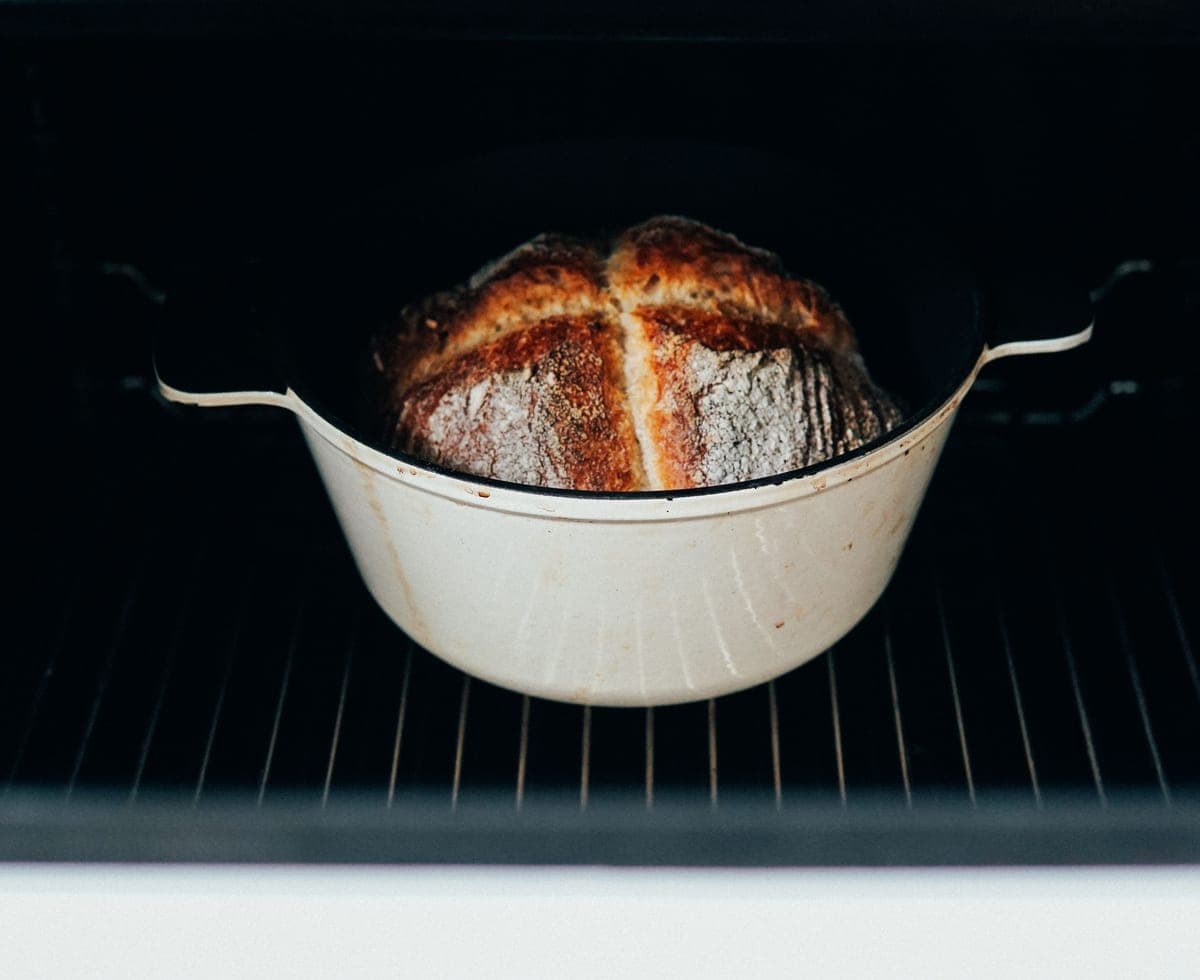 Le Creuset Enameled Dutch OvenIron core under inert fired enamel: the version with no iron in the food. | No iron transfer | Cast iron core with a fired vitreous enamel interior and exterior |
Tap a row to jump to that write-up. Prices are not shown on this site because they change — the button sends you to the live Amazon listing.
What it is actually made of
Iron, cast in Tennessee, with a factory seasoning of vegetable oil polymerized onto the surface by heat. The seasoning is not a coating in the industrial sense — it is cooking oil chemically bonded to the metal, which is why it can be stripped and rebuilt indefinitely.
That distinction is the most important thing on this page. Every other non-stick surface in cookware is consumable: when it wears out you buy a new pan. Seasoning is repairable, with heat and oil, forever.
What it is certified to
Nothing third-party, and it does not need to be. The label is manufacturer claim, and the claim is "this is iron with oil baked onto it" — a statement no certification could usefully add to.
The one genuine material consideration is iron transfer into food, which is not a contaminant but a property. Cooking in bare cast iron adds iron, more so with acidic ingredients and longer cooking.
What owners complain about
The factory seasoning, consistently. It is thinner than the product photographs suggest, and a new pan generally needs several cooks — or a couple of deliberate seasoning passes — before it behaves the way people expect. Buyers who try to fry an egg in a brand-new Lodge pan on day one are usually disappointed, and that is a fair criticism of the expectation the packaging sets.
The second complaint is surface roughness compared with vintage cast iron, which was machined smoother. It matters less than the internet suggests once seasoning builds up, but it is real.
The third is weight, which is inherent to the material rather than to the brand.
What you give up
Weight, a minute of upkeep a week, and the ability to cook acidic food for long periods. You also give up dishwasher convenience — though not soap, which modern formulations do not strip from polymerized seasoning.
What you do not give up is money. This is the one place on this site where the lower-tox option is also the cheapest option by a factor of several.
Who it is for, and who should skip it
- For searing, roasting, baking, frying and anyone on a tight budget.
- For anyone who wants cookware that improves with use rather than degrading.
- Skip it if you have hemochromatosis or another iron-overload condition. Use enameled cast iron instead, which has no iron transfer.
- Skip it if you cannot comfortably lift a heavy pan one-handed — carbon steel is a third lighter with the same material story.
- Skip it for long tomato or wine cooking, which strips seasoning and tastes metallic.
Alternatives we would pick instead
A lighter version with identical chemistry, or the enameled route for anyone avoiding iron transfer or cooking acidic food.
The picks in full
1. Best for The product reviewed
Lodge Cast Iron Skillet (10.25 in)
Iron and polymerized oil, cast domestically, under thirty dollars.
- Made of
- Bare cast iron, factory-seasoned with vegetable oil
- Certified to
- Manufacturer claimManufacturer claim; no third-party certification published.
- Coating
- None. Polymerized oil seasoning only
- Oven safe
- Manufacturer states oven, grill and campfire safe
- Induction
- Yes
No coating, no undisclosed chemistry, works on every heat source including induction and open fire, and the surface is repairable rather than consumable. Nothing else in cookware offers this price-to-lifespan ratio.
What you give up
Thin factory seasoning that needs building up, real weight, and no long acidic cooking.
Who it's for
Searing, baking and anyone starting a lower-tox kitchen cheaply.
Who should skip it
Iron-overload conditions, and anyone with limited grip strength.
2. Best for A third less weight
Lodge Carbon Steel Skillet
Same seasoning chemistry, much lighter, faster response.
- Made of
- Pressed carbon steel, factory-seasoned with vegetable oil
- Certified to
- Manufacturer claimManufacturer claim; no third-party certification published.
- Coating
- None. Seasoning only
- Weight
- Lighter than cast iron at the same diameter
- Oven safe
- Yes
If weight is the objection, carbon steel keeps everything that makes cast iron good — no coating, repairable surface, any temperature — at about two-thirds the mass, and responds to the dial in seconds.
What you give up
Less heat retention, so slightly worse at searing thick cuts.
Who it's for
Anyone who found cast iron too heavy.
Who should skip it
Acidic cooking and dishwasher households.
3. Best for No iron transfer
Le Creuset Enameled Dutch Oven
Iron core under inert fired enamel: the version with no iron in the food.
- Made of
- Cast iron core with a fired vitreous enamel interior and exterior
- Certified to
- Manufacturer claimManufacturer claim; no third-party certification published.
- Interior
- Sand-colored vitreous enamel
- Seasoning needed
- No
- Induction
- Yes
The direct substitute for anyone with an iron-overload condition, and the right vessel for the acidic cooking bare iron cannot do.
What you give up
Price, weight, and chip risk that ends its life.
Who it's for
Braises, acidic food, iron-overload conditions.
Who should skip it
High-heat dry searing, and tight budgets.
How we chose, and what we did not do
Every product on this page was checked against its published material composition and its third-party certifications, with each claim labeled as certified, manufacturer-stated or independently tested by a named party. We do not run a lab and we do not claim to have used these products — the full method is here.
Questions people actually ask
Is Lodge cast iron pre-seasoned enough to use immediately?
Technically yes, practically not really. The factory seasoning is thinner than the photos suggest, and most pans want a few cooks or a couple of deliberate seasoning passes before they release food well.
Can you use soap on Lodge cast iron?
Yes. Modern dish soap does not strip polymerized seasoning — the myth dates from when soaps contained lye. Long soaking, dishwashers and acidic cooking are what actually damage it.
Who should not use cast iron?
Anyone with hemochromatosis or another iron-overload condition, because bare cast iron transfers iron into food. Enameled cast iron is the direct substitute and has no transfer.
Is Lodge made in the USA?
Lodge casts and seasons its iron in Tennessee, and has operated the foundry there since 1896. Country of manufacture is not a safety claim, but it is one more thing stated rather than implied.
How long does Lodge cast iron last?
Effectively indefinitely. Rust and stripped seasoning are both repairable by scrubbing back to bare metal and re-seasoning, which is why hundred-year-old cast iron is still in daily use.
Sources
Read next
Kitchen & Cookware
Cast iron cookware, bare and enameled
Bare versus enameled cast iron: iron transfer, acidic cooking limits, seasoning chemistry and who should avoid it.
Kitchen & Cookware
Enameled vs bare cast iron
Bare versus enameled cast iron: iron transfer, acidic cooking, searing and maintenance.
Kitchen & Cookware
Best budget non-toxic cookware
Uncoated cookware under $50, and the cost-per-year arithmetic that makes it cheaper than coated sets.
Kitchen & Cookware
Non-toxic cookware made in the USA
US-made cookware with published composition, and an honest account of what domestic manufacture does and does not prove.
Written by Selena H., owner of Glass & Cotton.