Kitchen & Cookware
Carbon steel vs cast iron
Materially these are near-twins. In the hand they are nothing alike, and that is the whole decision.
Last reviewed October 17, 2026 — Selena H.
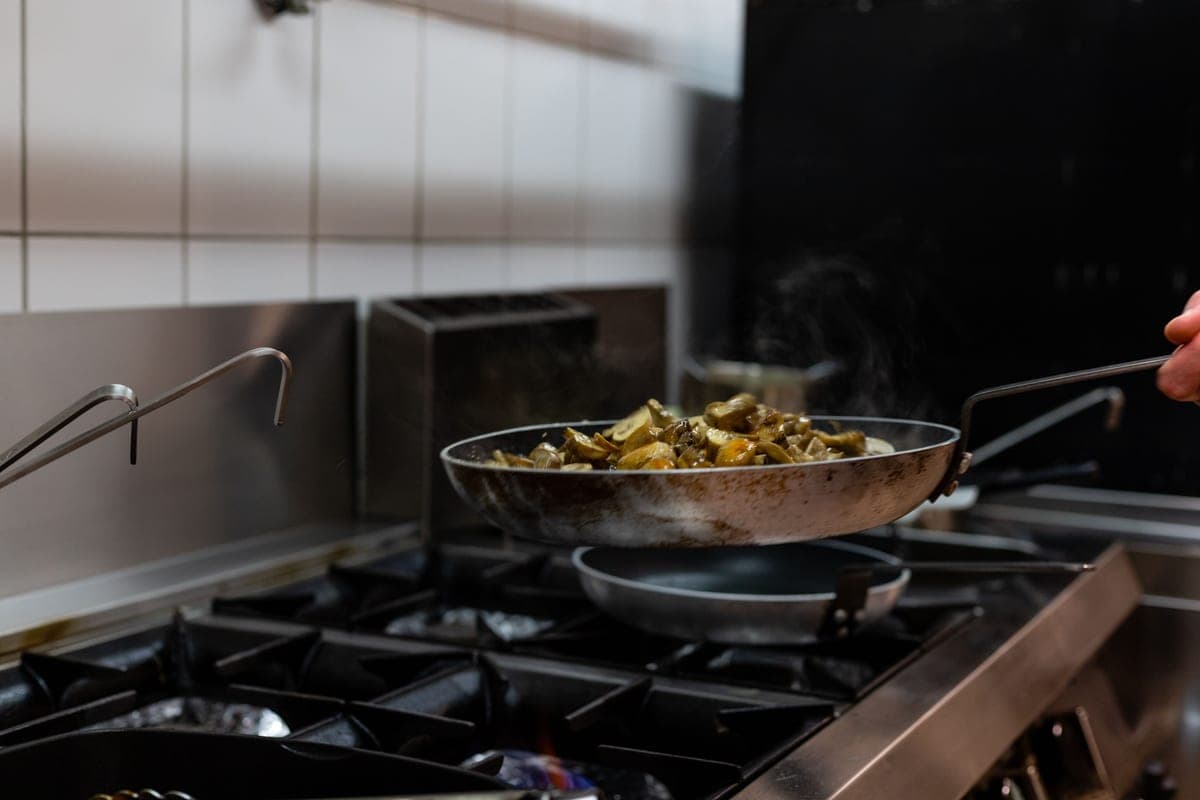
Buy carbon steel if you want a pan you will pick up and move — stir-frying, fast searing, eggs, anything where you want the heat to change when you change the dial. Buy cast iron if you want a pan that holds temperature through a thick cold steak and does not care that it weighs five pounds. Both are uncoated iron with a seasoning you build, so the safety question is identical; the difference is thickness.
Carbon steel is pressed or hammered sheet steel, typically 2 to 3mm thick. Cast iron is poured into a mold, typically 4 to 6mm. Everything people argue about downstream — responsiveness, searing power, weight, warping, how fast seasoning builds — falls out of that single number.
Quick picks
| # | Product | Best for | Material | Price |
|---|---|---|---|---|
| 1 | de Buyer Mineral B Carbon Steel PanThick French carbon steel with a riveted iron handle and no coating anywhere. | The carbon steel to buy | Carbon steel with a beeswax finish applied at the factory | |
| 2 | 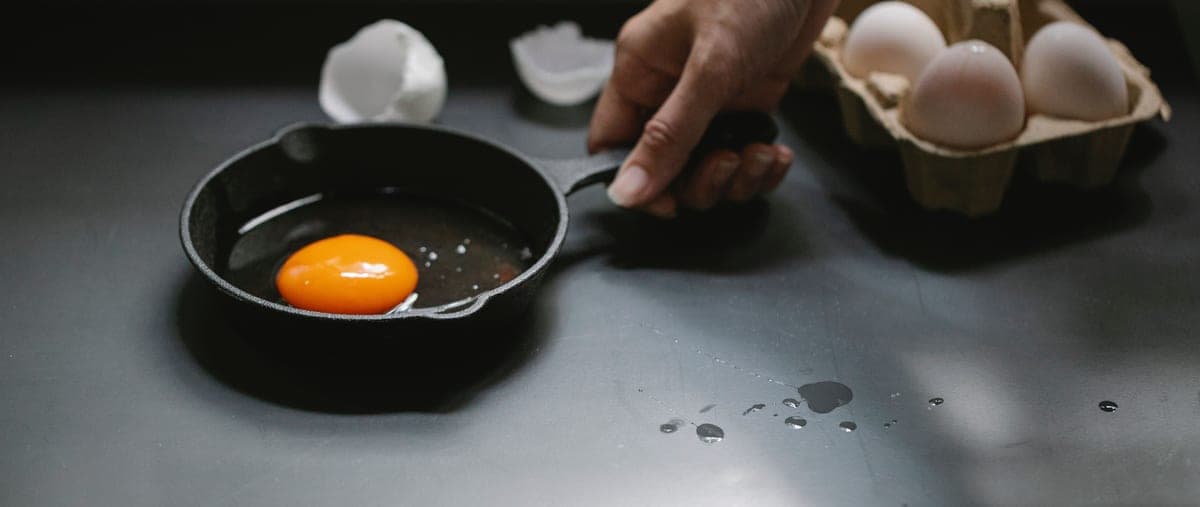 Lodge Cast Iron Skillet (10.25 in)Factory-seasoned, 10.25 inches, and cheaper than almost any pan in this comparison. | The cast iron to buy | Bare cast iron | |
| 3 | Lodge Carbon Steel SkilletPressed carbon steel, factory-seasoned, noticeably lighter than the cast iron above. | Trying carbon steel cheaply | Pressed carbon steel | |
| 4 | 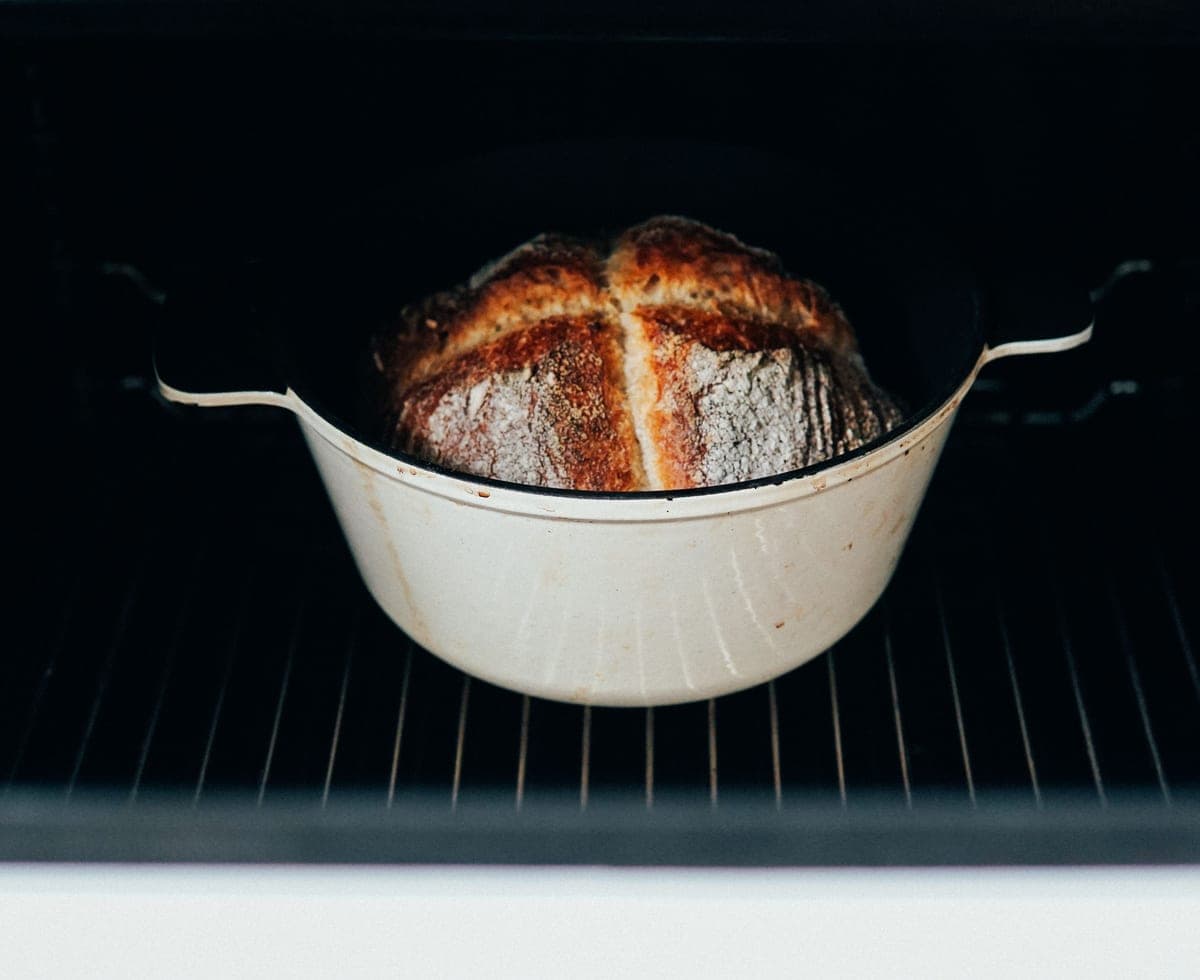 Le Creuset Enameled Dutch OvenEnameled cast iron: the same thermal mass, an inert fired surface, and acid is fine. | Cast iron without the seasoning | Cast iron core with a fired vitreous enamel interior and exterior |
Tap a row to jump to that write-up. Prices are not shown on this site because they change — the button sends you to the live Amazon listing.
The decision in one table
| Carbon steel | Cast iron | |
|---|---|---|
| Typical thickness | 2 to 3mm pressed sheet | 4 to 6mm poured |
| Weight, 10 inch | Roughly half the cast iron | Heavy, and that is the point |
| Heat response | Fast — seconds | Slow — minutes, in both directions |
| Searing a thick steak | Good | Better. Mass holds the temperature |
| Stir-frying, tossing food | Better. You can lift it | Poor |
| Eggs, once seasoned | Excellent | Good |
| Seasoning build speed | Faster — smoother surface | Slower, but very durable |
| Warping risk | Real on thin pans | Essentially none |
| Acidic cooking | No | No, unless enameled |
| Coating | None, ever | None, unless enameled |
| Price | Low to high | Lowest in the kitchen |
Where the safety question lands
It lands in the same place for both, which is why this comparison is about cooking rather than chemistry. Neither pan has an applied non-stick layer, so there is no PTFE, no PFOA and nothing with a temperature ceiling — the concerns set out in what PFAS actually means do not apply to either. The seasoning on both is polymerized cooking oil, the same substance, built the same way.
The one real material consideration for both is iron itself: these pans transfer some iron into food, more with acidic cooking and longer cooking. For most people that is neutral or mildly beneficial. For anyone with hemochromatosis or another iron-overload condition it is a genuine reason to choose clad stainless instead, and that is worth saying plainly rather than treating iron transfer as a selling point.
Seasoning: the same job, different difficulty
Seasoning is oil heated past its smoke point until it polymerizes into a hard, slick layer bonded to the metal. Thin oil coats, high heat, repeated — that is the whole method, and it is identical on both pans. Carbon steel gets there faster because the surface is smoother to begin with, so fewer rounds produce a usable release. Cast iron's rougher cast texture takes longer but holds seasoning more tenaciously once built.
Both fail the same three ways: left wet, so it rusts; used for tomato or wine, so the acid strips the layer; or scrubbed with detergent and a scouring pad, so the layer goes with the food. All three are reversible with re-seasoning, which is the structural advantage of a surface you built over one a factory applied.
So which one
- Buy carbon steel if you cook eggs often, stir-fry, or want to toss food in the pan. Also if you have any grip or wrist concern — the weight difference is not subtle.
- Buy cast iron if you sear thick cuts, bake cornbread, roast, or want the cheapest lifetime pan that exists.
- Buy enameled cast iron if you mainly braise and want acid to be a non-issue.
- Buy both if you cook a lot. They cost less together than one mid-range coated set, and they do genuinely different jobs.
- Buy neither if you will not keep a pan dry and oiled. Clad stainless is uncoated too, and asks nothing.
The picks in full
1. Best for The carbon steel to buy
de Buyer Mineral B Carbon Steel Pan
Thick French carbon steel with a riveted iron handle and no coating anywhere.
- Made of
- Carbon steel with a beeswax finish applied at the factory
- Certified to
- Manufacturer claimManufacturer claim; no third-party certification published.
- Coating
- None. Beeswax shipping finish, then user seasoning
- Handle
- Riveted iron, not oven-limited
- Induction
- Yes
This is the reference version of the category: heavier gauge than most pressed pans so it warps less, a riveted iron handle with no plastic or temperature limit, and a beeswax shipping finish you strip before building your own seasoning. It is the pan that makes the carbon steel argument honestly rather than cheaply.
What you give up
You season it yourself and the first few weeks are work. The handle gets hot — it is iron, by design. No acidic cooking, no dishwasher, no sitting wet.
Who it's for
Stir-frying, eggs, fast searing, anyone who wants a lifetime pan they can lift.
Who should skip it
Tomato sauce, dishwasher kitchens, low-maintenance households.
2. Best for The cast iron to buy
Lodge Cast Iron Skillet (10.25 in)
Factory-seasoned, 10.25 inches, and cheaper than almost any pan in this comparison.
- Made of
- Bare cast iron, factory-seasoned with vegetable oil
- Certified to
- Manufacturer claimManufacturer claim; no third-party certification published.
- Coating
- None. Polymerized oil seasoning only
- Oven safe
- Manufacturer states oven, grill and campfire safe
- Induction
- Yes
Cast iron's case is thermal mass, and this is the cheapest way to own it. It arrives seasoned with vegetable oil so it works on the first cook, the brand rates it for oven, grill and campfire, and the surface is repairable indefinitely — a damaged seasoning is re-seasoned rather than a dead pan.
What you give up
Weight is the real cost, not price. Slow to respond to the burner, needs lifting rather than sliding on glass cooktops, and no long acidic simmering.
Who it's for
Steak, cornbread, roasting, anything that wants to stay hot.
Who should skip it
Quick temperature changes, acidic cooking, and anyone with wrist or grip limitations.
3. Best for Trying carbon steel cheaply
Lodge Carbon Steel Skillet
Pressed carbon steel, factory-seasoned, noticeably lighter than the cast iron above.
- Made of
- Pressed carbon steel, factory-seasoned with vegetable oil
- Certified to
- Manufacturer claimManufacturer claim; no third-party certification published.
- Coating
- None. Seasoning only
- Weight
- Lighter than cast iron at the same diameter
- Oven safe
- Yes
If the carbon steel argument appeals but the French price does not, this is the low-risk way in: it ships seasoned so it releases reasonably on the first cook, and it is lighter than cast iron at the same diameter, which is the main thing people actually want from carbon steel.
What you give up
Thinner than the Mineral B, so more prone to warping on a fierce burner, and the factory seasoning needs building on. Same no-acid, no-dishwasher rules.
Who it's for
A first carbon steel pan, and anyone replacing a worn coated skillet on a budget.
Who should skip it
Very high heat on a small burner, where thin steel warps.
4. Best for Cast iron without the seasoning
Le Creuset Enameled Dutch Oven
Enameled cast iron: the same thermal mass, an inert fired surface, and acid is fine.
- Made of
- Cast iron core with a fired vitreous enamel interior and exterior
- Certified to
- Manufacturer claimManufacturer claim; no third-party certification published.
- Interior
- Sand-colored vitreous enamel
- Seasoning needed
- No
- Induction
- Yes
If what you want from cast iron is thermal mass rather than a seasoning project, enameled cast iron gets you there: cast iron core, fired vitreous enamel inside and out, no seasoning, and acidic braises are no problem at all. It is the version of this category for tomato-based cooking.
What you give up
Enamel chips if you knock it, and it crazes under repeated empty-pan preheating, so it is the wrong pan for a hard dry sear. Heavy and expensive.
Who it's for
Braises, stews, beans, bread, anything long and acidic.
Who should skip it
Dry searing at maximum heat, and tight budgets.
How we chose, and what we did not do
Every product on this page was checked against its published material composition and its third-party certifications, with each claim labeled as certified, manufacturer-stated or independently tested by a named party. We do not run a lab and we do not claim to have used these products — the full method is here.
Questions people actually ask
Is carbon steel healthier than cast iron?
No — they are materially the same answer. Both are uncoated iron with a polymerized oil seasoning, so neither carries a fluoropolymer or a temperature ceiling. Choose between them on weight and heat response, not on safety.
Which is better for searing?
Cast iron, because thermal mass is what keeps the pan hot when cold food lands in it. A thinner carbon steel pan drops more temperature on contact, which is the difference between a crust and gray steamed meat.
Which is easier to maintain?
Carbon steel builds usable seasoning faster because its surface is smoother. Cast iron holds seasoning better once established. Day to day the routine is identical: dry it, wipe a thin film of oil, do not cook acid in it.
Does carbon steel warp?
Thin pressed pans can, usually from high heat on a burner smaller than the pan or from cold water hitting a hot pan. Thicker gauge pans resist it. Cast iron effectively does not warp.
Can either pan go in the dishwasher?
No. Dishwasher detergent strips seasoning and the drying cycle leaves bare iron damp, which rusts. Hot water, a brush, dry on the hob, thin film of oil.
Sources
Read next
Kitchen & Cookware
Carbon steel cookware
Carbon steel explained: seasoning, heat response, weight, and what it is wrong for.
Kitchen & Cookware
Cast iron cookware, bare and enameled
Bare versus enameled cast iron: iron transfer, acidic cooking limits, seasoning chemistry and who should avoid it.
Kitchen & Cookware
Enameled vs bare cast iron
Bare versus enameled cast iron: iron transfer, acidic cooking, searing and maintenance.
Kitchen & Cookware
Safest cookware for high heat
Four uncoated pans for searing, broiling and wok heat, where every coated pan is the wrong tool.
Written by Selena H., owner of Glass & Cotton.