Kitchen & Cookware
Le Creuset vs Lodge enameled cast iron
Both are fired glass over iron. The real difference is that one of these companies will tell you what is in the glaze.
Last reviewed October 27, 2026 — Selena H.
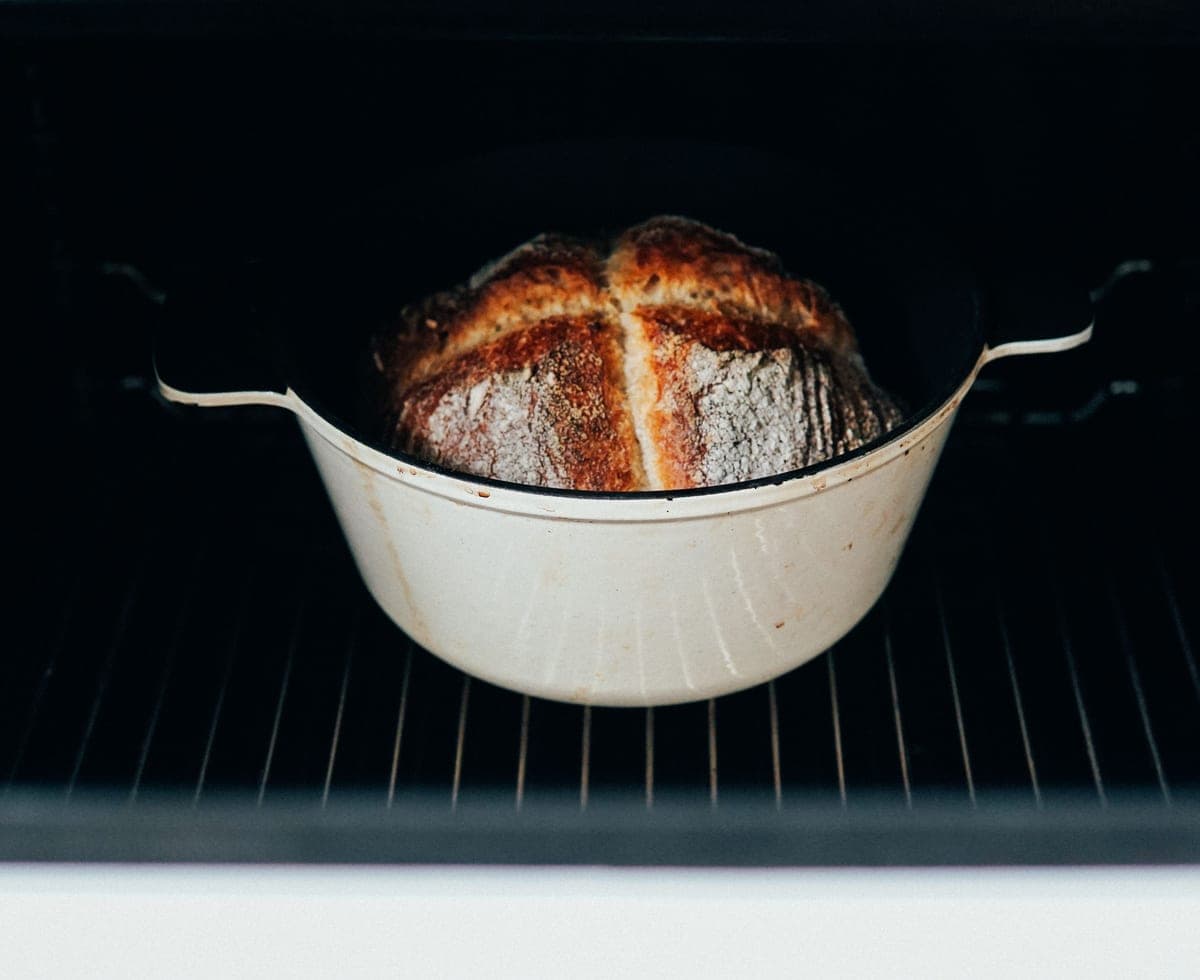
These two pots do the same thing by the same method. Both are cast iron with a porcelain enamel fired onto it, both have a pale interior so you can read a fond, both are oven-safe, induction-compatible and unbothered by a four-hour tomato braise. Nobody needs convincing that either one cooks well. The question every buyer actually asks is whether the Le Creuset is worth three or four times the Lodge, and the usual answers — fit and finish, resale value, the color range — are true but not very useful.
There is a more decisive difference, and it runs the opposite way to the price. Lodge publishes a California AB 1200 disclosure that lists, by name, the designated chemicals present in its enameled cast iron, including a note attaching cadmium compounds to red and orange items only. Le Creuset publishes a detailed care and use page with temperature ceilings by component, and no comparable composition statement at all.
For a buyer who filters on what a thing is made of, that asymmetry is the story. The counter-intuitive part is that the brand listing more chemicals is the one behaving better, and this page is largely about why that is so and what you should do about it.
Quick picks
| # | Product | Best for | Material | Price |
|---|---|---|---|---|
| 1 | Lodge Enameled Cast Iron Dutch OvenThe only enameled dutch oven here whose maker lists what is in the glaze, by color. | Published disclosure, and change left over | Cast iron core with a fired porcelain enamel interior and exterior | |
| 2 | Le Creuset Enameled Dutch OvenThe reference enameled dutch oven, with the best published heat guidance and no composition statement. | The object you keep for thirty years | Cast iron core with a fired vitreous enamel interior and exterior |
Tap a row to jump to that write-up. Prices are not shown on this site because they change — the button sends you to the live Amazon listing.
The disclosure gap, in detail
Lodge's California disclosure page lists designated chemicals for each product line. For enameled cast iron the list runs: iron, phosphorus, manganese and manganese compounds, strontium, antimony compounds, steel, nickel and nickel compounds, copper, and chromium compounds — plus cadmium compounds and sulfate, which carry the note "Red and Orange items only." Carbon, silicon, sulfur and steel are marked as ingredients California does not classify as Candidate Chemicals, which Lodge lists anyway. The same page states: "Our cookware is made without PFOA and PTFE."
That list looks alarming for about ten seconds, and then it stops looking alarming. California's AB 1200 regime requires cookware makers to disclose designated chemicals present in food-contact materials; a company producing that list is complying with a transparency law, not confessing to anything. Several entries — iron, manganese, chromium, nickel — are simply what cast iron and stainless hardware are made of, and they appear on the bare seasoned cast iron list too, where the only extra entry is soybean oil.
Le Creuset does not publish an equivalent list. What it does publish, and publishes well, is care guidance: temperature ceilings broken out by component, instructions to heat and cool gradually, and a clear instruction to stop using a pot whose interior enamel has chipped. That is genuinely useful and we cite it elsewhere on this site. It is not a composition statement, and treating it as one would be a mistake.
So the honest scoring is: Lodge, a published chemical-by-color disclosure. Le Creuset, a manufacturer claim with no published composition detail behind it. That is the same label we gave it in our best non-toxic dutch ovens roundup, and nothing we found during this update changes it.
Side by side
One row below is newer than most comparisons of these two brands account for. Lodge now sells a USA Enamel line alongside its long-running Essential Enamel and Luxe ranges, and its product page describes it as "Proudly made in the USA with imported hardware" and as "the first of its kind to be made on US soil." For years the standard, correct criticism of Lodge enamel was that unlike its bare cast iron it was not American-made. For one line, that is no longer true.
| Lodge enameled | Le Creuset | |
|---|---|---|
| Construction | Cast iron with porcelain enamel, pale interior | Cast iron with porcelain enamel, sand-colored interior |
| Composition disclosure | Full AB 1200 chemical list, with a red/orange cadmium note | None published |
| PFOA / PTFE statement | States cookware is made without PFOA and PTFE | No equivalent statement located |
| Published heat limits | 500F on the USA Enamel line's product page | By component: 660F all-iron, 500F stainless knob, 390F phenolic knob |
| Chipped enamel guidance | Not stated on the product pages we read | Explicit: stop using a pot with a chipped interior |
| Made in the USA | The USA Enamel line only, stated as made in the USA with imported hardware | No; the cast iron is European-made |
| Price bracket | Entry to mid-market across 1.5 to 7.5 quart sizes | Premium, several times the Lodge at the same capacity |
The color rule, and where it bites
Cadmium is a pigment problem rather than a pot problem. It produces bright reds, oranges and certain yellows in ceramic glazes, which is exactly why Lodge's disclosure attaches cadmium compounds and sulfate to "Red and Orange items only" rather than to the enameled line as a whole. That one note is more actionable than any amount of "non-toxic" marketing language: it tells you the mechanism and it tells you the fix, which is to buy a blue, green, gray or cream pot.
There is an irony worth flagging. The launch colorways of Lodge's new US-made enamel line include a red described on its own product page as "a fiery red color." If the color rule is the reason you are reading this page, the American-made option and the color you would pick under that rule do not currently overlap as neatly as you might want. Lodge sells plenty of non-red enamel; it is just not all from the US line.
Two things keep this proportionate. First, interior color is what matters most, because the interior is the surface in prolonged contact with acidic food — and both brands use a pale interior regardless of the exterior. Second, a disclosure is a statement of presence, not of migration; the FDA's leach limits for ceramic food-contact surfaces are about what comes out, which is a different measurement entirely. We go through that distinction properly on our lead-free dinnerware page.
Where the money actually goes
Not into safety. Both pots are fired enamel over iron and both will outlast a decade of weekly braising if you do not chip them. What the premium buys is enamel quality and consistency, a tighter lid fit, a lighter pot for the same capacity, a much wider color range, a lifetime warranty position, and a resale market that genuinely exists. Those are real things. They are just not materials things.
The Lodge, in exchange, gives up some of that finish and nearly all of the resale value, and returns the difference as cash and as disclosure. If your budget covers one pot and one skillet rather than one pot, that is not a compromise; it is a better-equipped kitchen.
The one place the premium does something measurable is the published heat ceiling. Le Creuset states 660F for an all-enameled-cast-iron piece, dropping to 500F with a stainless knob and 390F with a phenolic knob — which is the number that catches people out, because a 450F bread bake exceeds it. Lodge's USA Enamel page gives 500F for the pot. If you bake bread at high heat, check the knob on whichever pot you buy and swap a plastic one for metal.
What ends either pot
- A chip in the interior. Both brands' enamel exposes bare iron when it chips, and Le Creuset's care guidance is explicit that a pot with a chipped interior should stop being used. This is how enameled cookware dies, far more often than wear.
- Thermal shock. A hot pot into cold water, or a cold pot onto a roaring burner. Applies identically to both.
- Empty preheating on high. Enamel does not like it. If dry high-heat searing is the job, use bare cast iron and keep the enameled pot for anything wet.
- The knob, in an oven that is hotter than the knob. A phenolic knob is the lowest-rated part of the whole pot. Both brands sell metal replacements.
- Metal utensils and the sink. The chip that retires the pot usually starts with one or the other. Wood and silicone cost nothing.
A third answer, if neither convinces you
If the enamel is the part you are unsure about, the logically clean move is a pot without one. Bare cast iron has no glaze, no pigment and nothing to disclose beyond iron and oil — Lodge's own disclosure for seasoned cast iron lists exactly that, with soybean oil as the seasoning. It costs a fraction of either pot here and the damage is repairable rather than terminal.
The trade is that bare iron is bad at the one thing an enameled dutch oven is best at: long acidic cooking. We set that argument out in full in enameled vs bare cast iron, and the brand itself gets a closer look in our Lodge cast iron review.
Which to buy
Buy the Lodge if the published disclosure is what you came for, if you want change left over, or if the US-made line matters more to you than the color rule. Choose a non-red colorway and you have acted on the only variable the disclosure actually gives you.
Buy the Le Creuset if you want the nicer object and you are comfortable buying a care sheet rather than a composition statement. That is a legitimate choice — the pot is excellent and the brand's heat guidance is the best in the category — but be clear with yourself that the extra money is buying finish, weight and warranty, not a safer surface.
The picks in full
1. Best for Published disclosure, and change left over
Lodge Enameled Cast Iron Dutch Oven
The only enameled dutch oven here whose maker lists what is in the glaze, by color.
- Made of
- Cast iron core with a fired porcelain enamel interior and exterior
- Certified to
- Manufacturer claimManufacturer claim; no third-party certification published.
- Coating
- Fired porcelain enamel, no PTFE or PFOA per Lodge
- Cadmium disclosure
- Lodge lists cadmium compounds for red and orange items only
- Seasoning needed
- No
Lodge's AB 1200 page names the designated chemicals in its enameled line and attaches cadmium compounds to red and orange items only, which is the most actionable sentence either brand publishes. The same page states the cookware is made without PFOA and PTFE.
What you give up
Finish and consistency are a step below, resale value is near zero, and the color you may want under the cadmium note is not the one the new US-made line launched in.
Who it's for
Braises, stews, bread, chili, and buyers who would rather read a disclosure than a slogan.
Who should skip it
Anyone buying a heirloom object, and anyone set on a red pot.
2. Best for The object you keep for thirty years
Le Creuset Enameled Dutch Oven
The reference enameled dutch oven, with the best published heat guidance and no composition statement.
- Made of
- Cast iron core with a fired vitreous enamel interior and exterior
- Certified to
- Manufacturer claimManufacturer claim; no third-party certification published.
- Interior
- Sand-colored vitreous enamel
- Seasoning needed
- No
- Induction
- Yes
Thick enamel, a tight lid, a readable interior and the clearest care documentation in the category — temperature ceilings broken out by knob type, gradual heating guidance and an explicit instruction to retire a chipped pot.
What you give up
Several times the price, real weight, and the composition disclosure, which Lodge publishes and Le Creuset does not.
Who it's for
Daily braising, buy-once kitchens, and cooks who will read the care sheet.
Who should skip it
Anyone whose deciding factor is a published glaze composition, or a tight budget.
How we chose, and what we did not do
Every product on this page was checked against its published material composition and its third-party certifications, with each claim labeled as certified, manufacturer-stated or independently tested by a named party. We do not run a lab and we do not claim to have used these products — the full method is here.
Questions people actually ask
Is Lodge enameled cast iron as safe as Le Creuset?
On everything either company publishes, yes — and Lodge publishes more. Both are fired porcelain enamel over cast iron with a pale interior. Lodge additionally lists the designated chemicals in its enameled line under California's AB 1200 regime and states its cookware is made without PFOA and PTFE. Le Creuset publishes no comparable composition statement.
Why does Lodge list cadmium and Le Creuset does not?
Because Lodge publishes an AB 1200 disclosure and Le Creuset does not publish one we could find. Listing a chemical is compliance with a transparency law, not an admission that it leaches. Lodge's note restricts cadmium compounds to red and orange items, which identifies the pigment as the source and gives you a simple action: choose a different color.
Is Lodge enamel made in the USA?
One line of it now is. Lodge's USA Enamel dutch oven product page describes it as made in the USA with imported hardware and as the first of its kind made on US soil. The longer-running Essential Enamel and Luxe ranges are not described that way. Lodge's bare seasoned cast iron has been US-made throughout.
How hot can each pot go?
Le Creuset publishes its limits by component: 660F for an all-enameled-cast-iron piece, 500F with a stainless knob and 390F with a phenolic knob. Lodge's USA Enamel product page gives 500F and warns that prolonged high heat can damage the enamel. Check your own model before a high-temperature bread bake.
Is a chipped enameled dutch oven safe to use?
No. Le Creuset's own care guidance says to stop using a pot whose interior enamel has chipped, and the reasoning applies to any brand: the chip exposes bare iron that will rust and react with acidic food, and the damaged edge keeps spalling. Retire it from cooking.
Which should a first-time buyer get?
The Lodge, in a color other than red or orange. It gives you the published disclosure, it does the cooking, and if it turns out you braise twice a year you have not spent much finding out. Upgrade later if the pot earns it — the cooking case for the premium is real, just smaller than the price gap.
Sources
- Lodge Cast Iron — California AB 1200 designated-chemical disclosure — Lists cadmium compounds for enameled cast iron under 'Red and Orange items only', and states the cookware is made without PFOA and PTFE
- Lodge Cast Iron — cast iron made without PFAS (manufacturer)
- Lodge Cast Iron — USA Enamel cast iron dutch oven (manufacturer product page) — Described as 'Proudly made in the USA with imported hardware' and 'the first of its kind to be made on US soil'; porcelain enamel, 500F oven limit
- Lodge Cast Iron — enameled cast iron collection (manufacturer store) — Current enameled line: Essential Enamel, Luxe and USA Enamel dutch ovens in 1.5 to 7.5 quart sizes
- Le Creuset — Care and Use (manufacturer) — Published temperature ceilings by handle/knob type and the instruction to stop using a chipped interior
- Le Creuset (manufacturer)
- US FDA — compliance policy guidance on lead in ceramicware (ASTM C738 leach test)
- California OEHHA — Proposition 65
Read next
Kitchen & Cookware
Best non-toxic dutch ovens
Enameled, clay and bare-iron dutch ovens ranked by what each maker actually publishes about its glaze.
Kitchen & Cookware
Enameled vs bare cast iron
Bare versus enameled cast iron: iron transfer, acidic cooking, searing and maintenance.
Kitchen & Cookware
Lodge cast iron review: a two-word specification and a fifty-year life
Lodge cast iron assessed: material, factory seasoning, the iron-transfer exception, and real lifespan.
Kitchen & Cookware
Cast iron cookware, bare and enameled
Bare versus enameled cast iron: iron transfer, acidic cooking limits, seasoning chemistry and who should avoid it.
Kitchen & Cookware
Best lead-free dinnerware
Glass and ceramic dinnerware compared on published lead and cadmium positions, not on marketing language.
Written by Selena H., owner of Glass & Cotton.