Kitchen & Cookware
Best non-toxic dutch ovens
There is no non-stick layer on any of these. The thing to check is the glaze, and only one brand here publishes a plain answer about it.
Last reviewed October 20, 2026 — Selena H.
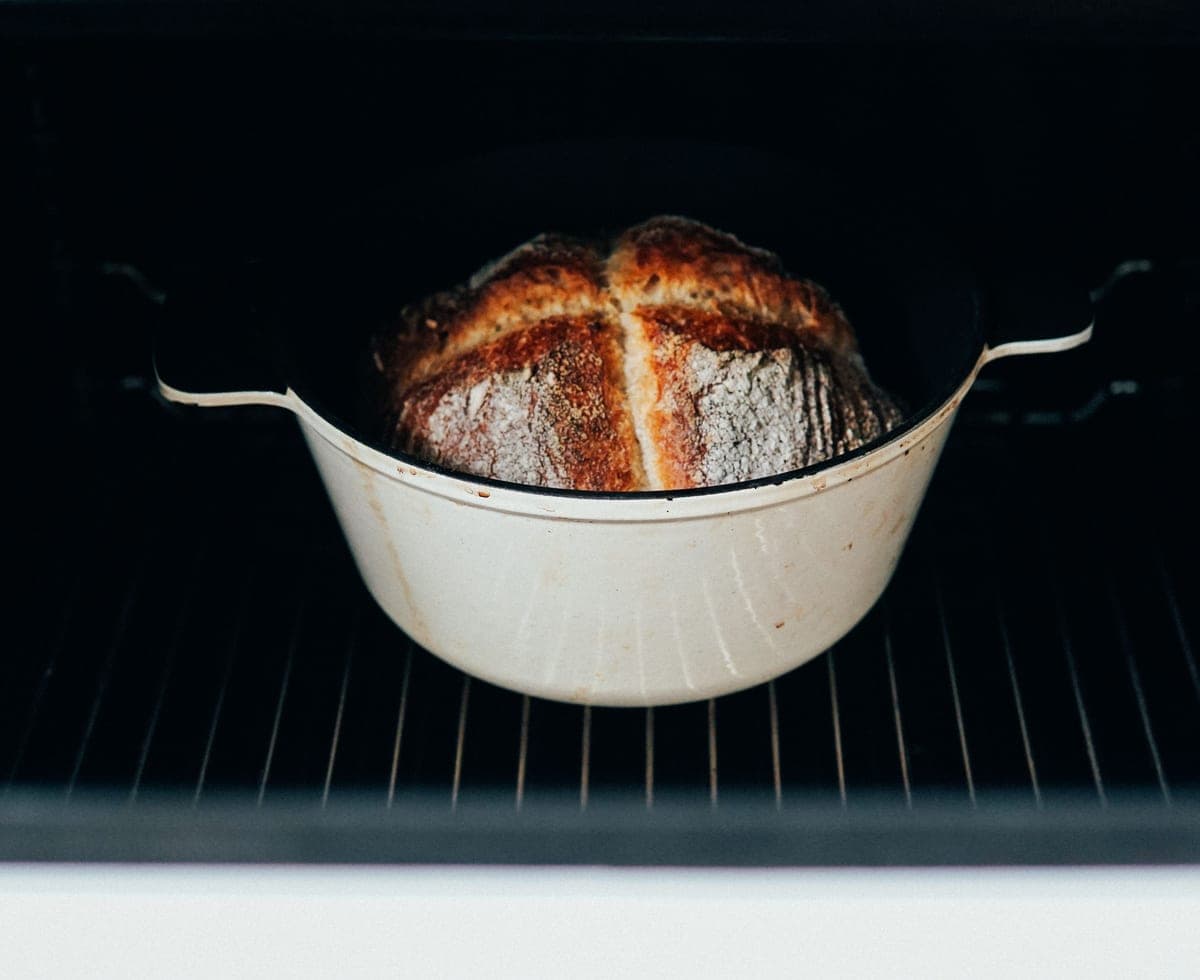
A dutch oven is the easiest piece of cookware in the house to buy safely, because the thing that worries people about non-stick pans is not present in any of them. There is no fluoropolymer, no sol-gel ceramic coating and nothing with a service life measured in years. What there is instead is a fired glaze, and the only real question on this page is what that glaze is made of and who will tell you.
On that question the field splits cleanly. Emile Henry publishes a flat statement that there is no lead or cadmium in its products. Lodge publishes a California disclosure that names cadmium compounds in its enameled line for red and orange items only, which is unusually specific and genuinely useful. Le Creuset publishes a detailed care page and no comparable composition statement at all. Bare cast iron sidesteps the whole conversation because it has no glaze.
So the pick below is not "which pot is safest" — all four are reasonable — but which disclosure you want to buy into, and what you are willing to trade for it in weight, heat behavior and price.
Quick picks
| # | Product | Best for | Material | Price |
|---|---|---|---|---|
| 1 | Lodge Enameled Cast Iron Dutch OvenEnameled cast iron from the brand that publishes which colors contain what, at mid-market money. | The clearest disclosure for the money | Cast iron core with a fired porcelain enamel interior and exterior | |
| 2 |  Emile Henry Flame Round StewpotCeramic through the body, from the only maker here with a plain published lead-and-cadmium position. | No metal anywhere under the glaze | High-fired Burgundy clay ceramic with a fired glaze | |
| 3 | Le Creuset Enameled Dutch OvenThe reference enameled dutch oven, with the best published care guidance and the least published composition detail. | The one that gets used for thirty years | Cast iron core with a fired vitreous enamel interior and exterior | |
| 4 |  Lodge Cast Iron Double Dutch Oven (5 qt)Bare cast iron and polymerized oil. Nothing applied, nothing to chip, and the lid is a second pan. | Skipping the glaze question entirely | Bare cast iron |
Tap a row to jump to that write-up. Prices are not shown on this site because they change — the button sends you to the live Amazon listing.
What we checked, in order
Notice what is not on that list: how it cooks. We have not run a braise in all four of these and we are not going to pretend otherwise. What this page can do honestly is read what each manufacturer publishes, compare it, and tell you where the gaps are — which is the same standard applied in how to check cookware is non-toxic.
- Does the maker publish what the glaze contains? A flat statement, a California disclosure or a Prop 65 reference counts. "Non-toxic" on a box does not.
- Is there a coating with a service life? On a dutch oven there usually is not, and any brand selling one with a non-stick interior gets ruled out on this page.
- What happens when it chips? Enamel over iron exposes iron; ceramic through the body exposes more ceramic. Both makers tell you to stop cooking in a chipped pot.
- Published temperature ceiling, by component. The knob is almost always the limiting part, and it is the number people get wrong.
- Is it actually purchasable right now? Every pick above was checked against live retail listings during this update, not against a memory of the catalog.
Enamel, clay or bare iron
The practical difference between the first two rows is weight and heat behavior, not safety. Cast iron stores heat and gives it back hard; high-fired clay diffuses it gently, which is why Emile Henry describes its Flame line as a heat diffuser rather than a conductor. If your cooking starts with a hard sear in the same pot, the iron rows win. If it is all oven time, the clay row is easier to live with.
The third row is a different proposition entirely, and worth taking seriously rather than treating as the budget option. The material story on bare iron is the shortest in this entire category: iron, and oil you put there. For the longer version of that argument see our cast iron cookware material page and the head-to-head on enameled versus bare cast iron.
| Construction | What touches food | Chip behavior | Best at |
|---|---|---|---|
| Enameled cast iron | Fired porcelain enamel over an iron core | Exposes bare iron. Maker guidance is to stop using it | Braising, acidic cooking, anything long and wet |
| Ceramic through the body | Fired glaze over the same clay underneath | Exposes more ceramic. Still retire it | Low-and-slow oven work, beans, stews |
| Bare cast iron | Iron plus polymerized oil you maintain | Nothing to chip. Damage is repairable by re-seasoning | Searing, bread, high heat, campfires |
The color thing is real, and it is specific
Cadmium is a pigment problem, not a pot problem. It is used to produce bright reds, oranges and some yellows in ceramic glazes, which is why Lodge's California disclosure attaches cadmium compounds to its enameled cast iron line with the note "Red and Orange items only" rather than to the line as a whole. The same logic is visible at the other end of the category: the Fiesta company's own explanation of its glazes talks about encapsulated cadmium in colored glaze, not in the clay body.
What follows from that is a buying rule rather than an alarm. A disclosure is not a warning that a pot leaches; California's AB 1200 regime requires cookware makers to list designated chemicals present in food-contact materials, and listing them is the company complying rather than confessing. But if you want the shortest possible ingredient list on the inside of your pot, choose a pale interior in a non-red exterior, and you have removed the only variable in this section without giving up anything you can taste.
Interior color matters more than exterior color, because the interior is the surface in contact with acidic food for hours. Most enameled dutch ovens — including every pick here — use a pale cream or sand interior regardless of the outside color, which is the single best thing about the category.
What actually damages a dutch oven
None of those are safety hazards in themselves. They matter because the way a dutch oven stops being a safe pot is almost always mechanical — a chip that exposes the substrate — rather than chemical. A pot you do not thermal-shock is a pot that never reaches that question.
- Thermal shock. A hot pot into cold water, or a cold pot onto a roaring burner. Le Creuset's care guidance is explicit about gradual heating and cooling, and it applies to every pot here.
- Empty preheating on high. Enamel and clay both hate it. Iron tolerates it, which is one reason the bare pot above is the searing pick.
- The knob. A phenolic knob is the lowest ceiling on the whole pot, often around 390F. If you bake bread at 450F, swap it for a stainless knob or buy a model with an integral cast-iron handle.
- Metal utensils on enamel. Not an instant failure, but the chip that retires the pot usually starts here or with a drop in the sink.
- Dishwashers, for the bare-iron pot only. Enameled pots survive it; seasoning does not.
What we ruled out
Ceramic-coated aluminum "dutch ovens." These exist, they are light and they look the part, but the construction is a coated pan in a pot shape: there is an applied non-stick layer with a service life, in a vessel whose whole job is hours of wet acidic cooking. That is the worst possible use case for a coating. If you want a coated pan, buy a coated pan — see best non-toxic nonstick pans — and keep it off braising duty.
We also ruled out unbranded enameled pots sold with no maker, no care sheet and no disclosure of any kind. The entire argument of this page is that disclosure is the differentiator, so a pot with none cannot be ranked against pots that have one. And we left out vintage enamelware, which is a genuinely real lead risk: pre-regulation glazes were a different world, and nothing about a pot's age tells you which world it came from.
Which one to buy
If you want the best balance of disclosure, price and ordinary usefulness, buy the Lodge enameled dutch oven in a color other than red or orange. If your objection is to metal in contact with food rather than to coatings, buy the Emile Henry and accept that it is a gentle-heat pot. If you want the object you will still be braising in when your children inherit it, the Le Creuset is that pot, with the caveat that you are buying a care sheet rather than a composition statement.
And if the glaze question is the whole reason you are reading this, buy the bare Lodge, spend the difference on good salt, and never think about it again. It is the cheapest pot on the page and the one with the shortest list of things in it.
If the decision has narrowed to the two enameled pots most people end up choosing between, we take that one apart in detail in Le Creuset vs Lodge enameled — including what Lodge's new US-made enamel line changes.
The picks in full
1. Best for The clearest disclosure for the money
Lodge Enameled Cast Iron Dutch Oven
Enameled cast iron from the brand that publishes which colors contain what, at mid-market money.
- Made of
- Cast iron core with a fired porcelain enamel interior and exterior
- Certified to
- Manufacturer claimManufacturer claim; no third-party certification published.
- Coating
- Fired porcelain enamel, no PTFE or PFOA per Lodge
- Cadmium disclosure
- Lodge lists cadmium compounds for red and orange items only
- Seasoning needed
- No
Lodge's California AB 1200 page lists the designated chemicals in its enameled cast iron line by category, and the cadmium compounds entry carries the note "Red and Orange items only." That is a more useful sentence than any marketing claim on this page: it tells you the pigment family is where cadmium lives in a glaze, and it tells you the exact action to take, which is to buy a blue, gray, green or cream pot instead of a red one. The same page states the cookware is made without PFOA and PTFE. Construction is ordinary enameled cast iron, which is to say good: slow and even heat, oven-safe, no seasoning, no surface that wears out.
What you give up
The red and orange colorways are the ones most people want, and those are precisely the ones Lodge discloses cadmium compounds for. You also give up US manufacturing here — Lodge's enameled line is made overseas, unlike its bare cast iron. And chipped enamel ends the pot's life for cooking regardless of brand.
Who it's for
Anyone who wants enameled cast iron and would rather read a disclosure than a slogan. Braising, bread, stews, chili.
Who should skip it
People set on a red pot, and anyone who needs the piece to be made in the USA.
2. Best for No metal anywhere under the glaze
Emile Henry Flame Round Stewpot
Ceramic through the body, from the only maker here with a plain published lead-and-cadmium position.
- Made of
- High-fired Burgundy clay ceramic with a fired glaze, through the body
- Certified to
- Manufacturer claimManufacturer claim; no third-party certification published.
- Material
- Ceramic through the body, no metal under the glaze
- Brand statement
- No lead or cadmium; glazes meet California Prop 65
- Made in
- Marcigny, France, per the manufacturer
This is the pick for the buyer whose actual objection is metal, not coatings. Flame cookware is high-fired Burgundy clay all the way through rather than a glaze over iron, so there is no substrate to expose if the surface chips, and the brand's own About page states there is no lead or cadmium in its products and that its glazes meet California Prop 65. It is also dramatically lighter than cast iron, which matters more than people expect on a pot you lift full.
What you give up
Ceramic diffuses heat rather than conducting it, which the manufacturer says outright — this is a low-and-slow pot and it will not hold a hard sear the way iron does. It is breakable, thermal shock is a real failure mode, and induction needs a separate disk. Price per quart is high.
Who it's for
Slow braises, beans, stews, oven baking, and anyone avoiding metal food contact specifically.
Who should skip it
Searing before braising in the same pot, induction cooktops, and households where cookware gets dropped.
3. Best for The one that gets used for thirty years
Le Creuset Enameled Dutch Oven
The reference enameled dutch oven, with the best published care guidance and the least published composition detail.
- Made of
- Cast iron core with a fired vitreous enamel interior and exterior
- Certified to
- Manufacturer claimManufacturer claim; no third-party certification published.
- Interior
- Sand-colored vitreous enamel
- Seasoning needed
- No
- Induction
- Yes
Nothing here matches it as an object: the enamel is thick, the sand-colored interior lets you read a fond, the fit is tight and the resale market tells you what owners think of longevity. Le Creuset's care page is also the most useful document any of these brands publishes — it gives temperature ceilings by component (350C / 660F for an all-enameled-cast-iron piece, 260C / 500F with a stainless knob, 200C / 390F with a phenolic knob), says to warm and cool gradually, and instructs owners to stop using a pot whose interior enamel has chipped.
What you give up
The composition disclosure. Le Creuset does not publish the kind of flat lead-and-cadmium statement Emile Henry does or the chemical-by-color disclosure Lodge does, so the honest label here is a manufacturer claim with no published composition detail behind it. It is also the most expensive pot on this page by a wide margin, and it is heavy.
Who it's for
Buy-once kitchens, daily braising, and cooks who will actually read a care sheet.
Who should skip it
Anyone whose deciding factor is a published glaze composition, and anyone who struggles with a heavy pot.
4. Best for Skipping the glaze question entirely
Lodge Cast Iron Double Dutch Oven (5 qt)
Bare cast iron and polymerized oil. Nothing applied, nothing to chip, and the lid is a second pan.
- Made of
- Bare cast iron, foundry-seasoned with vegetable oil. No enamel or glaze
- Certified to
- Manufacturer claimManufacturer claim; no third-party certification published.
- Food contact
- Iron and polymerized oil. Nothing applied
- Lid
- Converts to a 10.25-inch skillet
- Made in
- Manufacturer states USA for bare cast iron
If the glaze is the thing you are unsure about, the logically clean answer is to buy a pot that does not have one. Lodge's double dutch oven is foundry-seasoned bare iron — the cooking surface is iron and oil you can see and rebuild — and Lodge states its bare cast iron is made without PFAS and is manufactured in the USA. The lid doubles as a 10.25-inch skillet, which is the sort of thing that sounds like a gimmick and then gets used weekly. It is also by a long way the cheapest pot here.
What you give up
Everything enamel was invented to fix. Long acidic simmering strips seasoning and picks up iron, it cannot go in the dishwasher, it must be dried immediately, and the loop handles get very hot. Seasoning is a habit, not a one-time task.
Who it's for
Bread baking, searing, camp cooking, and anyone who wants the simplest possible material story.
Who should skip it
Tomato-heavy braises, dishwasher households, and anyone who wants to put a wet pot in the rack and walk away.
How we chose, and what we did not do
Every product on this page was checked against its published material composition and its third-party certifications, with each claim labeled as certified, manufacturer-stated or independently tested by a named party. We do not run a lab and we do not claim to have used these products — the full method is here.
Questions people actually ask
Are enameled dutch ovens non-toxic?
The glaze on a modern enameled dutch oven from a named brand is a fired, vitrified surface designed for food contact, and the makers on this page state their cookware is made without PTFE and PFOA. Where brands differ is disclosure: Emile Henry publishes a flat no-lead-and-no-cadmium statement, Lodge publishes a chemical list that names cadmium compounds for red and orange items only, and Le Creuset publishes neither. Vintage enamelware is a separate question and a genuine risk.
Does the color of a dutch oven matter for safety?
For the exterior enamel, it is the one variable worth acting on. Cadmium is used to make bright red and orange ceramic pigments, which is why Lodge's California disclosure attaches cadmium compounds specifically to red and orange items in its enameled line. Interiors on all four picks here are pale, which is the surface that matters most since it is what sits against acidic food.
Is a chipped dutch oven safe to use?
No, and the manufacturers say so themselves — Le Creuset's care guidance tells owners to stop using a pot whose interior enamel has chipped. On enameled cast iron a chip exposes bare iron, which will rust and will react with acidic food. The chip is also a mechanical failure point that spreads. Retire it from cooking or keep it as a planter.
Is bare cast iron safer than enameled?
It is simpler rather than safer. A bare pot's food-contact surface is iron plus polymerized cooking oil, with no glaze and no pigment involved, so there is nothing to disclose. The trade is that it leaches some iron into long acidic cooking, needs seasoning, and cannot be left wet. For most people that is a maintenance preference, not a safety decision.
How hot can a dutch oven go in the oven?
The pot body is rarely the limit — the knob is. Le Creuset publishes 350C / 660F for an all-enameled-cast-iron piece, 260C / 500F with a stainless knob and 200C / 390F with a phenolic knob. Check your own model's published figure before a 450F bread bake, and swap a plastic knob for a metal one if you bake often.
Can a dutch oven replace a stockpot and a braiser?
Mostly yes, and that is the real argument for owning one. A 5 to 6 quart round pot covers braises, soups, chili, beans, bread and small-batch frying for a household of two to four. Where it falls down is boiling a large pot of pasta, where the weight and the heat retention are both working against you.
Sources
- Lodge Cast Iron — California AB 1200 designated-chemical disclosure — Lists cadmium compounds for enameled cast iron under 'Red and Orange items only', and states the cookware is made without PFOA and PTFE
- Lodge Cast Iron — cast iron made without PFAS (manufacturer)
- Emile Henry — About (manufacturer) — Brand statement: no lead or cadmium in its products; glazes meet California Prop 65
- Le Creuset — Care and Use (manufacturer) — Published temperature ceilings by handle/knob type and the instruction to stop using a chipped interior
- US FDA — compliance policy guidance on lead in ceramicware (ASTM C738 leach test)
- California OEHHA — Proposition 65
Read next
Kitchen & Cookware
Le Creuset vs Lodge enameled cast iron
The two best-known enameled dutch ovens, compared on published glaze disclosure, heat limits and where they are made.
Kitchen & Cookware
Enameled vs bare cast iron
Bare versus enameled cast iron: iron transfer, acidic cooking, searing and maintenance.
Kitchen & Cookware
Cast iron cookware, bare and enameled
Bare versus enameled cast iron: iron transfer, acidic cooking limits, seasoning chemistry and who should avoid it.
Kitchen & Cookware
Best non-toxic cookware of 2026 — certification-checked picks
The flagship roundup: six cookware options sorted by material, each with its published composition and certification position.
Kitchen & Cookware
Best lead-free dinnerware
Glass and ceramic dinnerware compared on published lead and cadmium positions, not on marketing language.
Written by Selena H., owner of Glass & Cotton.