Kitchen & Cookware
Best non-toxic pressure cookers
Nothing about pressure makes a pot dangerous. What matters is whether the pot you bought has a coating in it — and about half of them do.
Last reviewed October 27, 2026 — Selena H.

Pressure cooking worries people for the wrong reason. The fear is usually the pressure itself — a sealed pot, superheated steam, the stories your grandmother told — and that part is a solved engineering problem, governed by several redundant release mechanisms on every cooker sold in the US. The part worth your attention is much more boring and much more consequential: what the pot is lined with.
That is where the category splits in two, and the split does not follow price. A good number of popular electric multicookers ship with a ceramic-coated or non-stick-coated inner pot, because a coated insert releases rice and browns with less scrubbing afterwards. Others ship with bare stainless steel. Both are sold at the same price points by the same brands, sometimes as two versions of the same model, and the box rarely makes the difference obvious.
This page only ranks cookers whose food-contact surface is uncoated stainless steel, and only where the maker publishes what that steel is. That is a short list, which is the point. Everything else here — electric versus stovetop, gasket life, how much it actually gets used — is a cooking decision rather than a materials one, and we will keep those separated.
Quick picks
| # | Product | Best for | Material | Price |
|---|---|---|---|---|
| 1 | Instant Pot DuoThe default electric multicooker, and one of the ones whose inner pot has nothing applied to it. | The electric one that is actually uncoated | Stainless steel inner pot | |
| 2 | 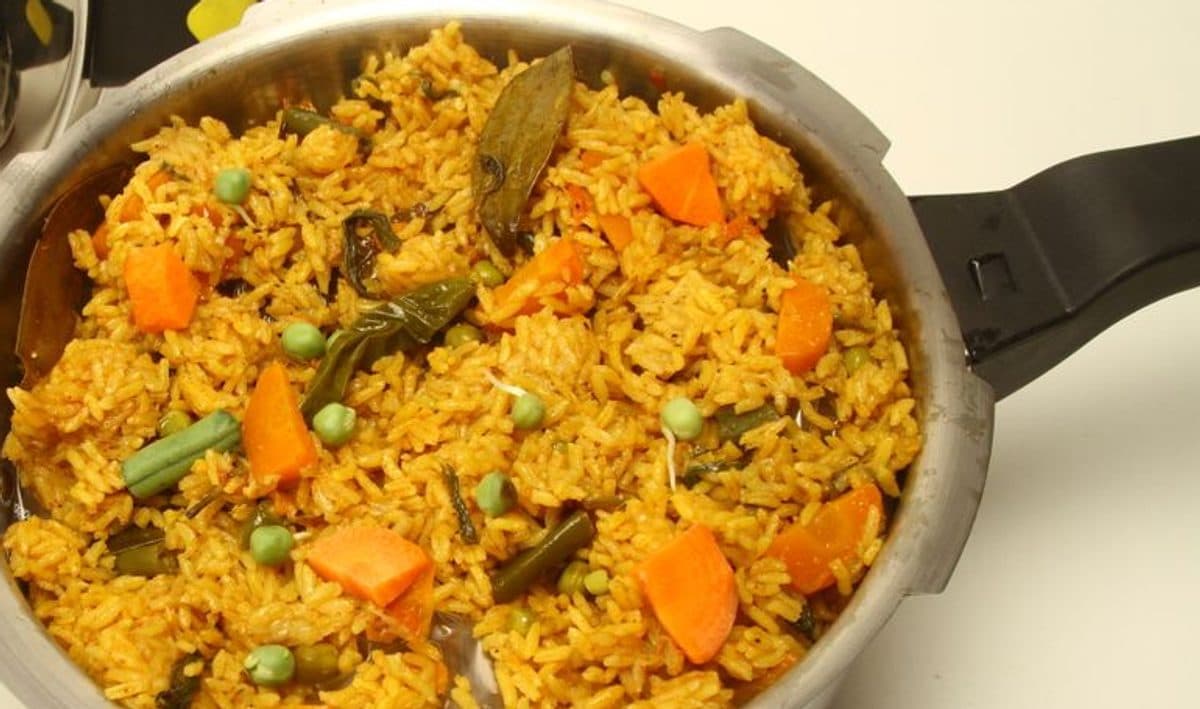 Presto 6-Quart Stainless Steel Pressure CookerA plain stovetop stainless pot with a tri-clad base, a jiggler valve and nothing to go wrong. | The most cooker for the least money | Stainless steel body and lid over a tri-clad base with an aluminum core | |
| 3 | 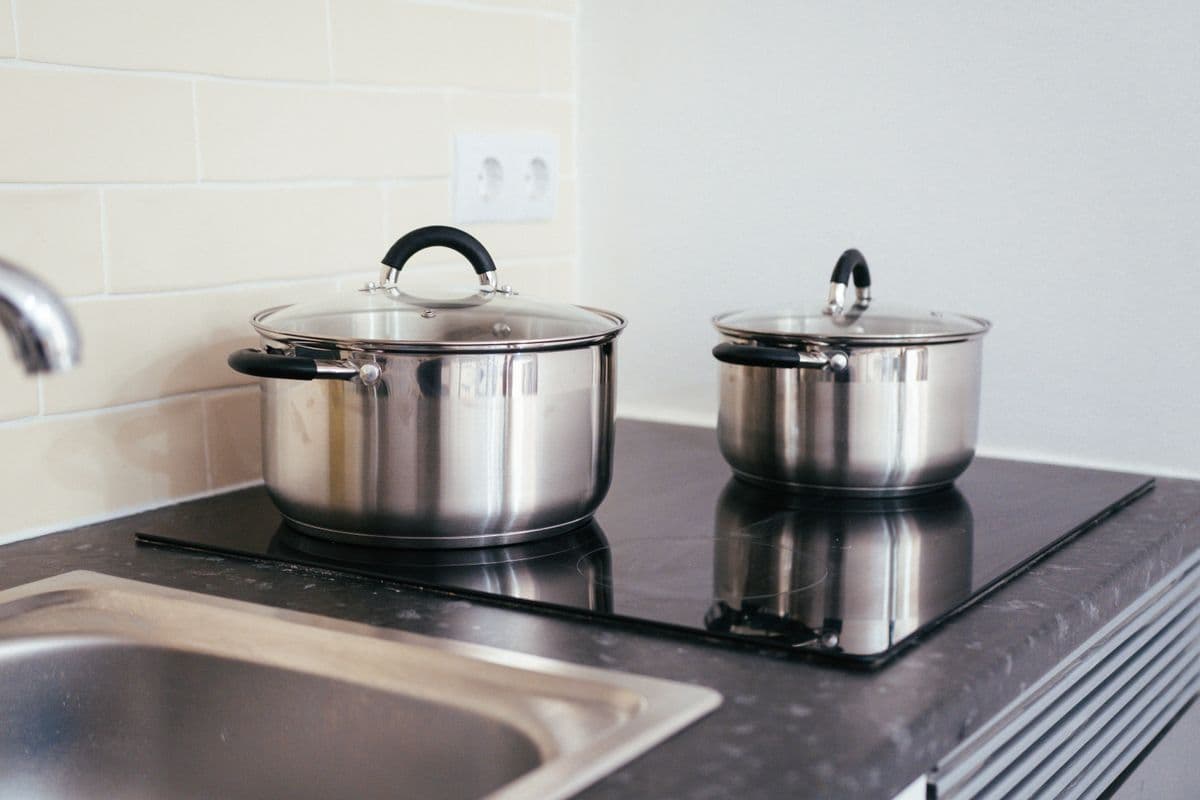 Kuhn Rikon Duromatic Inox18/10 stainless over an aluminum sandwich base, Swiss-made, and almost silent at pressure. | The quiet one you buy once | 18/10 stainless steel over a solid aluminum sandwich base | |
| 4 | 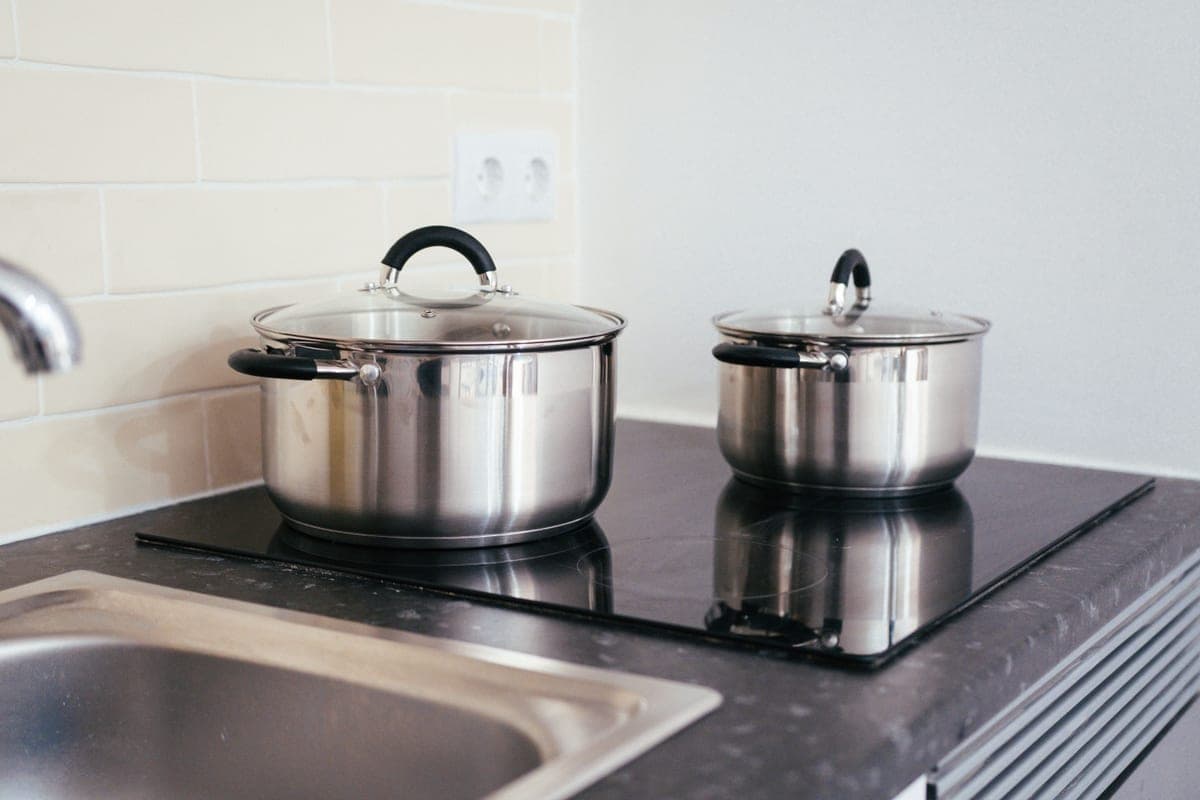 Fissler Vitaquick Premium Pressure Cooker18/10 stainless that the maker states is up to 90% recycled, made in Germany, with a 15-year warranty on the steel. | The clearest material story on the page | 18/10 stainless steel |
Tap a row to jump to that write-up. Prices are not shown on this site because they change — the button sends you to the live Amazon listing.
What we checked, in order
Five checks, in this order. What is deliberately missing from them is a cooking verdict based on months of use: we have not run identical bean batches through four cookers and we are not going to imply we did. What this page does is read what each maker publishes, check the product is really on sale, and compare the published positions side by side — the same standard we apply in how to check cookware is non-toxic.
- Is the insert coated? This is the only question that separates a non-toxic pressure cooker from an ordinary one. Bare stainless passes; ceramic-coated and PTFE-coated inserts are ruled out on this page regardless of brand or price.
- Does the maker publish the steel? "Stainless steel" on a box means very little. 18/8, 18/10 or 304 on the manufacturer's own page means something, and three of the four picks above state it.
- What else touches food? The gasket. Every pressure cooker has one, it is silicone or rubber, it sits in the steam path, and it is the one consumable part in the whole appliance.
- Is the base bonded or coated? A tri-clad or sandwich base puts aluminum between stainless layers, which is a heat-conduction choice, not a food-contact one — the aluminum never meets your food.
- Is it purchasable right now? Every pick above was checked against the manufacturer's own live store during this update. Two well-regarded brands came off the list for failing exactly this test.
Electric or stovetop
This is the first decision and it has nothing to do with safety. Both types can have a bare stainless food-contact surface and both types can have a coated one. What they differ on is how much of the cooking you supervise, how hot they get before sealing, and how many parts can fail.
| Electric multicooker | Stovetop pressure cooker | |
|---|---|---|
| Food-contact surface | Bare stainless or a ceramic coating, depending on the model | Almost always bare stainless or bare aluminum |
| Supervision | Set it and leave the kitchen | Stay with it, especially while it comes up to pressure |
| Saute heat | Limited by the heating element; browning is slow | As hot as the burner goes; proper browning |
| Parts that can fail | Control board, element, gasket, valve | Gasket, valve, overpressure plug |
| Working pressure | Typically lower, so cook times run longer | Typically higher, so cook times run shorter |
| Noise | Near silent until the release | Jiggler designs are loud; spring-valve designs are quiet |
The insert is the whole question
If you remember one thing from this page, make it this: in an electric multicooker, the inner pot is a separate component with its own part number, and the same outer appliance is sold with different inserts. That means two things. First, you cannot tell what you are buying from the model name alone — you have to read the inner pot spec. Second, if you already own a multicooker with a coated insert, you may be able to replace just the insert with the stainless one rather than replacing the whole appliance.
Why does it matter? Not because a ceramic coating is dangerous in normal use. It matters because a coating is a consumable. Sol-gel ceramic coatings lose their release properties over roughly one to three years of regular use, and when they do, what you have is a scratched, chalky surface shedding into food — which is the same thing we say about ceramic-coated frying pans and for the same reason. A pressure cooker insert gets metal spoons, scouring, long acidic simmers and the occasional scorch. It is a hostile posting for a coating.
A coated insert is also where the acronyms start mattering. A ceramic sol-gel coating and a fluoropolymer coating are different chemistries with different failure modes, and the terms printed on the box — PTFE, PFA, FEP, PFOA-free — are routinely used in ways that obscure which one you are buying. We decode all of them in PTFE, PFA and FEP coatings.
Bare stainless has no such clock. The trade is real and worth stating plainly: food sticks to it, the saute step before sealing leaves fond, and some of that fond will read as a scorch warning. The fix is deglazing with liquid before you seal, not a coating.
The gasket is the part nobody checks
Every pressure cooker on this page has a silicone or rubber sealing ring, and it is the only component in the appliance with a service life measured in months. It sits in the lid, it is in the steam path for the whole cook, and silicone is porous enough to pick up smells — which is why households that cook both curry and cheesecake usually end up owning two rings.
Three practical rules, none of them alarming. Replace the ring when it stiffens, cracks or stops holding pressure on the first try, which is typically every twelve to eighteen months on a cooker used weekly. Buy the manufacturer's own ring rather than a generic one, because the groove tolerance is what keeps the lid sealing. And wash it separately: the manufacturers that allow the pot in a dishwasher — Presto and Instant among them — specifically exclude the sealing ring from that.
Silicone itself is a reasonable material for this job. It is stable across the temperature range a pressure cooker operates in, it is not a fluoropolymer, and it is not in the same conversation as the coating question above. For the longer version of that argument see our page on silicone kitchen tools.
What we ruled out, and why
- Multicookers with ceramic-coated inner pots. Several of the best-selling electric pressure cookers ship with a coated insert as standard. They are not hazardous, but they belong to the coated-cookware category and the entire premise of this page is the uncoated one.
- Bare aluminum stovetop cookers. These are cheap, light and genuinely popular, and uncoated aluminum does transfer measurably into long acidic cooking. If aluminum is the thing you are trying to avoid, this is the category to skip — see anodized aluminum cookware for where the line actually sits.
- Unbranded cookers with no published materials. A pressure cooker is a pressure vessel. If the maker will not say what the steel is, we are not going to rank it against makers who do.
- Non-stick-coated pressure cookers. Rare, but they exist. A fluoropolymer coating inside a sealed vessel that runs hot and wet for hours is the worst possible application of that material.
- Brands we could not verify as currently on sale. One well-known US pressure cooker brand's own website now resolves to an unrelated storefront entirely, and another premium line showed only sold-out open-box stock in the US. Both came off the list for availability, not quality.
Is pressure cooking itself safe?
Mechanically, yes, and the modern designs are not the ones in the stories. Every cooker above has a primary regulated release plus at least one independent backup — an overpressure plug on the Presto, a secondary valve and a lid-lock interlock on the electrics and on the European spring-valve designs — and the lid physically cannot be rotated open while pressure remains inside. The failure mode people fear requires defeating two or three independent systems at once.
Nutritionally, pressure cooking compares well rather than badly. Shorter cooking times at higher temperature, in a sealed vessel with little water, generally retains more water-soluble vitamins than a long open simmer that discards the cooking liquid. It also reliably softens the things that are hard to cook any other way: dried beans without a soak, tough collagen-rich cuts, whole grains, and stock in an afternoon rather than a day.
The one real caution is chemical rather than mechanical and has nothing to do with the pot: do not pressure cook ingredients that foam heavily — split peas, oatmeal, large quantities of pasta — beyond the fill line, because foam blocks the vent. Every manual says this, every manufacturer draws a max-fill line inside the pot, and it is the single most common cause of a messy failure.
Which one to buy
If you have never owned a pressure cooker and are not sure you will use one, buy the Instant Pot Duo. It is the cheapest way to find out, the inner pot is published as uncoated 18/8 stainless, and if it turns out you use it twice a year it has cost you very little. Confirm when it arrives that the pot inside is bare steel rather than a coated one — that is the whole check.
If you already know you will use it and you cook on induction or want to can, buy the Presto. It is a pot rather than an appliance, Presto publishes exactly what it is made of, the consumable parts are sold individually by stock number, and the 12-year warranty tells you what the company expects of it. Budget for earplugs or a quieter kitchen.
If this is a daily tool and the noise or the lifespan matters more than the money, the Kuhn Rikon is the quiet, repairable, 18/10 answer. And if you want a maker that publishes where its steel came from as well as what it is, the Fissler is the only one on this page that does.
Whichever way you go, the next pages to read are best non-toxic slow cookers if you want the same job done without pressure, and stainless steel cookware for what bare stainless does and does not transfer into food over a long cook.
The picks in full
1. Best for The electric one that is actually uncoated
Instant Pot Duo
The default electric multicooker, and one of the ones whose inner pot has nothing applied to it.
- Made of
- Stainless steel inner pot, steel housing, silicone sealing ring
- Certified to
- Manufacturer claimManufacturer claim; no third-party certification published.
- Food contact
- Stainless steel inner pot
- Coating
- None in the inner pot
- Functions
- Includes rice and slow cook programs
Instant Brands publishes the inner pot material in plain words on the product page — "Crafted from stainless steel (18/8) with a tri-ply bottom" — and on its stainless inner-pot listings it goes further and states the pot has no non-stick or chemical coatings and no leaching heavy metals. That is an unusually direct answer to the question this page exists to ask, and it is the reason the Duo rather than a coated competitor sits at the top. The cooking case is the obvious one: seven functions, thirteen programs, a pot that goes in the dishwasher, and the largest accessory and recipe ecosystem of any appliance in this category.
What you give up
Bare stainless sticks, and under pressure that means a scorch layer on the bottom whenever you saute aromatics before sealing — the famous burn notice is usually fond, not a fault. You are also buying an electronic appliance: a control board, a plastic housing and a silicone gasket that absorbs odors and wants replacing every year or two. It will not sear the way a stovetop pot on a hot burner does.
Who it's for
Beans, stock, tough cuts, weeknight batch cooking, and anyone who wants pressure cooking without watching a burner.
Who should skip it
Small kitchens with no counter to spare, and anyone who wants a pot that will still work in twenty years with no electronics in it.
2. Best for The most cooker for the least money
Presto 6-Quart Stainless Steel Pressure Cooker
A plain stovetop stainless pot with a tri-clad base, a jiggler valve and nothing to go wrong.
- Made of
- Stainless steel body and lid over a tri-clad base with an aluminum core
- Certified to
- Manufacturer claimManufacturer claim; no third-party certification published.
- Food contact
- Bare stainless steel. No interior coating listed
- Base
- Tri-clad: aluminum between two stainless layers
- Cooktops
- Manufacturer states gas, electric, smooth-top and induction
Presto publishes the construction in one sentence — a tri-clad base with "a layer of aluminum sandwiched between two layers of stainless steel" — and lists no interior coating anywhere on the page. It works on gas, electric, smooth-top and induction, it is dishwasher safe with the sealing ring and overpressure plug removed, and Presto backs it with a 12-year limited warranty, which is a long time for a product at this price. There is no control board, no display and no firmware; the parts that wear are a sealing ring, an overpressure plug and a pressure regulator, and Presto sells all three separately by stock number.
What you give up
It is loud. A weighted-regulator cooker rocks and hisses the whole time it is at pressure, and you cannot leave the kitchen the way you can with an electric. There is no timer, no keep-warm and no walk-away. Some retailer listings for this model incorrectly show a "non-stick interior" field set to yes — buy from a listing that matches Presto's own page, and check the pot when it arrives.
Who it's for
Canners, batch cooks, anyone on induction, and anyone who would rather own a pot than an appliance.
Who should skip it
People who want to set it and leave the house, and anyone sensitive to noise in a small apartment.
3. Best for The quiet one you buy once
Kuhn Rikon Duromatic Inox
18/10 stainless over an aluminum sandwich base, Swiss-made, and almost silent at pressure.
- Made of
- 18/10 stainless steel over a solid aluminum sandwich base, silicone gasket
- Certified to
- Manufacturer claimManufacturer claim; no third-party certification published.
- Food contact
- 18/10 stainless steel, uncoated
- Cooktops
- Manufacturer states all hobs including induction
- Dishwasher
- Manufacturer states hand wash only
This is the spring-valve design rather than the weighted-jiggler design, which is why it is quiet: pressure is held by a spring-loaded valve with indicator rings instead of a weight that rocks and vents continuously. Kuhn Rikon publishes the material directly — 18/10 stainless steel with a solid aluminum Superthermic sandwich base — states it suits all hobs including induction, and makes it in Rikon, Switzerland. Nothing in the food path is coated, plated or painted, and the gasket, valve and handles are all individually replaceable, which is what actually determines whether a pot lasts thirty years.
What you give up
The price. This is three to four times a Presto and more than most electrics, and the cooking it does is not three times better. Kuhn Rikon also states hand wash only, so the one convenience the cheaper stovetop pot has, this one does not. And a spring valve gives you less audible feedback, which some cooks find harder to judge than a jiggler.
Who it's for
Daily pressure cooking, open-plan kitchens where noise carries, and buy-it-for-life households.
Who should skip it
Occasional users, dishwasher households, and anyone for whom this is a first pressure cooker.
4. Best for The clearest material story on the page
Fissler Vitaquick Premium Pressure Cooker
18/10 stainless that the maker states is up to 90% recycled, made in Germany, with a 15-year warranty on the steel.
- Made of
- 18/10 stainless steel, published as up to 90% recycled, silicone gasket
- Certified to
- Manufacturer claimManufacturer claim; no third-party certification published.
- Food contact
- 18/10 stainless steel, uncoated
- Recycled content
- Brand states up to 90% recycled steel
- Origin
- Brand states made in Germany
Fissler is the only brand here that publishes where its steel came from as well as what it is: the Vitaquick and Vitavit Premium lines are described on Fissler's own US store as sustainably crafted from up to 90% recycled, satin-finished 18/10 stainless steel, made in Germany, with a 15-year warranty on stainless steel parts. For a buyer whose objection to coated cookware is partly about what gets manufactured and discarded, that is a materially different sentence from anything else on this page. The cooking hardware matches: a bonded base, a spring valve with visual pressure indication, and a cook-and-release mechanism that does not need the pot moved to the sink.
What you give up
It is the most expensive route into this category, and the sets inflate that further with skillets and glass lids you may never use. The recycled-steel claim is a manufacturer claim with no third-party certification published alongside it, and "up to 90%" is a ceiling rather than a floor. Like the Kuhn Rikon, the sophistication is mostly in the lid, and the lid is the part that eventually needs service.
Who it's for
Cooks replacing a whole category at once, and buyers weighing material provenance alongside food contact.
Who should skip it
Anyone pressure cooking twice a year, and anyone who wants the cheapest honest answer — which is the Presto.
How we chose, and what we did not do
Every product on this page was checked against its published material composition and its third-party certifications, with each claim labeled as certified, manufacturer-stated or independently tested by a named party. We do not run a lab and we do not claim to have used these products — the full method is here.
Questions people actually ask
Is the Instant Pot non-toxic?
The inner pot is the part that matters, and on the Duo, Instant Brands publishes it as "Crafted from stainless steel (18/8) with a tri-ply bottom." On its stainless inner-pot listings the company states there are no non-stick or chemical coatings. Note that Instant also sells ceramic-coated inner pots as a separate accessory, so check which pot came with your model rather than assuming.
Do pressure cookers have a non-stick coating?
Some do and some do not, and it is not predictable from the price or the brand. Electric multicookers are the ones to check: the inner pot is a separately sold component and the same appliance line is often offered with either a bare stainless pot or a ceramic-coated one. Stovetop pressure cookers are almost always uncoated.
Is stainless steel safe for pressure cooking?
Yes, with one known and measured caveat that applies to all stainless cookware: long acidic cooking pulls small amounts of nickel and chromium out of the steel. A 2013 study in the Journal of Agricultural and Food Chemistry measured that effect in tomato sauce over six hours. Pressure cooking is short by comparison, which works in its favor.
Is aluminum in a pressure cooker base a problem?
Not in a clad base. A tri-clad or sandwich base puts the aluminum between two layers of stainless steel, so it conducts heat and never touches food. A bare aluminum pressure cooker, where the aluminum is the cooking surface, is a different product and a fair thing to avoid.
How often should you replace the sealing ring?
Roughly every twelve to eighteen months on a cooker used weekly, and sooner if it stiffens, cracks, smells permanently of the last six dinners, or stops sealing first time. Use the manufacturer's own ring rather than a generic one, and hand wash it even when the pot itself is dishwasher safe.
Can you still get a pressure cooker made in the USA or Europe?
Yes, though the field is narrower than it used to be. Kuhn Rikon publishes that its Duromatic cookers are made in Rikon, Switzerland, and Fissler states its Vitaquick and Vitavit Premium lines are made in Germany. Presto is a US company whose cookers are widely sold here, but its product page does not state a country of manufacture.
Sources
- Instant Pot — Duo 6QT Multi-Use Pressure Cooker (manufacturer product page) — Inner pot published as 'Crafted from stainless steel (18/8) with a tri-ply bottom'; inner pot stated dishwasher safe
- Instant Pot — Evo Series 6-quart stainless steel inner pot (manufacturer product page) — Published as 'Premium quality 304 (18/8) stainless-steel cooking pot' with 'no non-stick or chemical coatings and no leeching heavy metals'
- National Presto Industries — 6-Quart Stainless Steel Pressure Cooker, stock no. 01362 (manufacturer product page) — Tri-clad base described as 'a layer of aluminum sandwiched between two layers of stainless steel'; no interior coating listed; 12-year limited warranty
- Kuhn Rikon — DUROMATIC INOX pressure cooker, 7.0 L / 22 cm (manufacturer product page) — Published as 18/10 stainless steel with a solid aluminum Superthermic sandwich base, all hobs including induction, hand wash only, Swiss made
- Fissler — pressure cookers (manufacturer US store) — Vitaquick and Vitavit Premium published as 'up to 90% recycled, satin-finished 18/10 stainless steel', made in Germany, 15-year warranty on stainless parts
- Kamerud, Hobbie and Anderson (2013), Stainless Steel Leaches Nickel and Chromium into Foods During Cooking, Journal of Agricultural and Food Chemistry
- US FDA — Food Packaging & Other Substances that Come in Contact with Food: Information for Consumers — How food contact substances are authorized, and what migration review covers
Read next
Kitchen & Cookware
Best non-toxic slow cookers
Slow cookers compared on insert material — glazed stoneware, clay and stainless — for the longest hot contact in the kitchen.
Kitchen & Cookware
Best non-toxic rice cookers
Stainless-inner-pot rice cookers and the multicooker workaround, with the stickiness trade-off stated.
Kitchen & Cookware
Is stainless steel cookware safe?
The nickel and chromium leaching evidence stated with actual numbers, plus who should act on it.
Kitchen & Cookware
PTFE, PFA and FEP: what the coating acronyms on a pan mean
A plain decode of PTFE, PFA, FEP, ETFE and PFOA, and which of them actually changes what you buy.
Kitchen & Cookware
Best non-toxic cookware of 2026 — certification-checked picks
The flagship roundup: six cookware options sorted by material, each with its published composition and certification position.
Written by Selena H., owner of Glass & Cotton.